
The history of the Ottoman Empire fascinates people around the world, not least thanks to the enormous number of historical TV dramas. Yet life in this remarkable and powerful empire was far more complex than the palace intrigues of sultans, viziers, and concubines. In an exclusive interview with Qalam, Suraiya Faroqhi, one of the leading scholars of Ottoman history, explains the ideological foundations of the empire and what life was like in its major cities and provinces. And, of course, we also talked about the sultan’s harem.
What role did Turkic and Oghuzi The Oghuz tribal confederation founded the Yabgu state and later gave rise to the Seljuk and Ottoman empires. identity actually play for the Ottomans?
Frankly, we don’t really know very much about the identity of a people who lived in the thirteenth or fourteenth century. Also, we must be a bit cautious when we use terminology devised in the last quarter of the twentieth century. Even when I went to university in the 1960s and started to work in the 1970s, nobody had ever heard of ‘identity’ as a valid term in scholarly work.
Our first evidence on the Ottomans comes from around 1400, which means that we know very little. When people wrote at all in Anatolia in the fourteenth century, they mostly used Arabic and Persian. Writing in Turkish was quite rare and apparently considered a bit exotic. Sultan Walad, the son of Jalal al-Din RumiiJalal al-Din Rumi was a Persian-language Sufi poet based in Konya, whose followers founded the Mevlevi order of ‘whirling dervishes’., who was born and grew up in Konyai Konya, located in central Anatolia, was the capital of the Seljuk Sultanate of Rum and a major center of learning., occasionally quoted something in Turkish, probably to add an exotic touch to one of his poems. But he also quoted Greek because those were the two languages spoken on the street in thirteenth-century Konya.
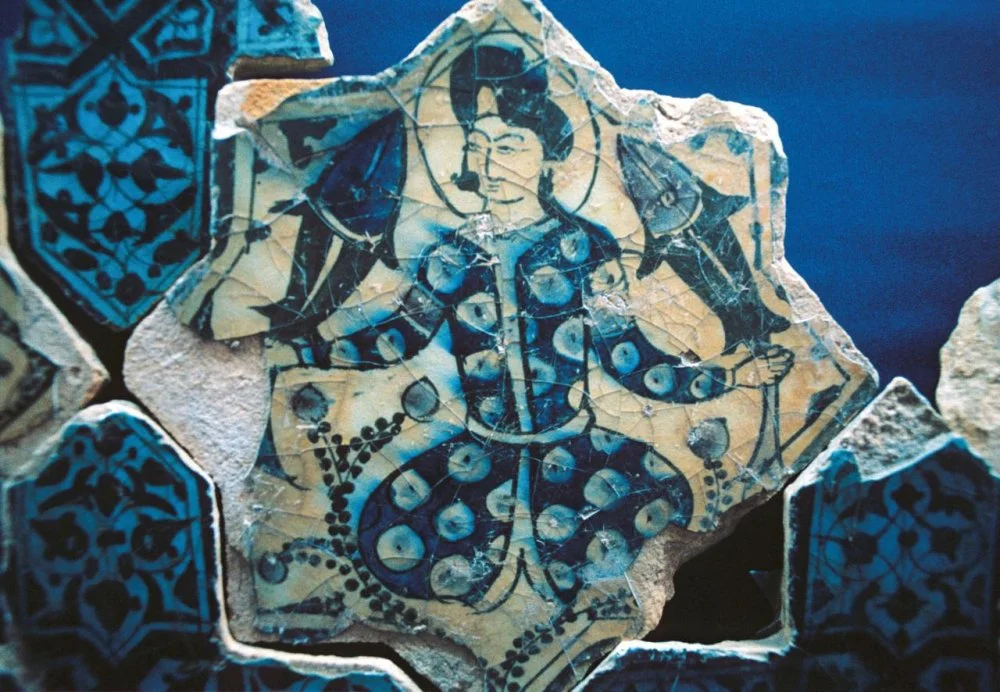
Architectural Detail of the Karatay Madrasa. Konya, Turkey / Getty Images
People have made a big deal about a Karamanid princeiThe Karamanids were a Turkic dynasty ruling south-central Anatolia, and for a long time the Ottomans’ main rivals there. who demanded that all writings should be in Turkish, but we don’t know anything about his motivation. And to approach this with a notion that was more or less invented in the last quarter of the twentieth century is very problematic.
Therefore, I would stick to concrete things like what kind of languages people used and what they used when they wrote. From what time onward do we have a literature in Turkish? These are tangible questions to which you can give a concrete answer. Very often all that we can really say is that they used Turkish when they wanted to make themselves understood.
Osman I, Founder of the Ottoman Dynasty. Portrait by an Unknown Artist / Wikimedia Commons
Educated people throughout the fourteenth century preferred Persian, and this was not necessarily their first language. Probably it wasn’t. But you know this as well as I do: in a great many cultures, the language that people use in writing is not the same as the language they use in everyday life. So I would say that yes, the Ottomans did occasionally refer to the KayıiThe Kayı were an Oghuz Turkic tribe; later Ottoman chroniclers claimed the dynasty descended from them.—the tribe and sub-tribe to which the Ottomans supposedly belonged. But every piece of evidence comes centuries later, long after the dynasty had reason to dress up its origins. OsmaniOsman I founded the Ottoman dynasty, leading a small principality in northwestern Anatolia in the early fourteenth century. died around 1326. And we have absolutely no indication of which languages he knew and used, or whether he relied on his educated collaborators. It’s important not to get romantic and build a whole castle of hypotheses on a single statement in a relatively late source.
If we’re talking about the political ideology of the Ottoman Empire, what were its main foundations?
Well, it was probably a combination of different factors. Certainly the Islamic ideology of ghaza (war against non-Muslims for the faith) was important, but they had their own interpretation of ghaza, which was not necessarily the interpretation of the scholars who lived in Egypt at the same time.
I would say that the Islamic understanding was foundational and that they were living on the borderlands of the Islamic world. Cemal Kafadar, a Harvard historian of the early Ottomans, once wrote a brilliant book on early Ottoman history, and at first it was published under the title On the Edge of the Islamic World. So the Ottomans were definitely part of the Islamic world and understood themselves to be part of it, but they were also on the edge.
It’s perhaps worth noting that the earliest surviving piece of BursaiBursa, in northwestern Anatolia, was the first major Ottoman capital and a center of silk production. silk, which bears the name of Yıldırım BayezidiBayezid I, known as Yıldırım (‘Thunderbolt’), was the Ottoman sultan from 1389 until 1402, when Timur defeated him., has been preserved in an Orthodox monastery. We don’t know for sure how it got there, but it is possible that Bayezid’s widow, who had accompanied him when he was a prisoner of Timur and later returned to Serbia (she was a Serbian princessiOlivera Despina, daughter of Prince Lazar of Serbia, married Bayezid I and shared his captivity after the Battle of Ankara.), brought this piece of silk cloth and donated it in memory of her deceased husband. But again, this is hypothetical.
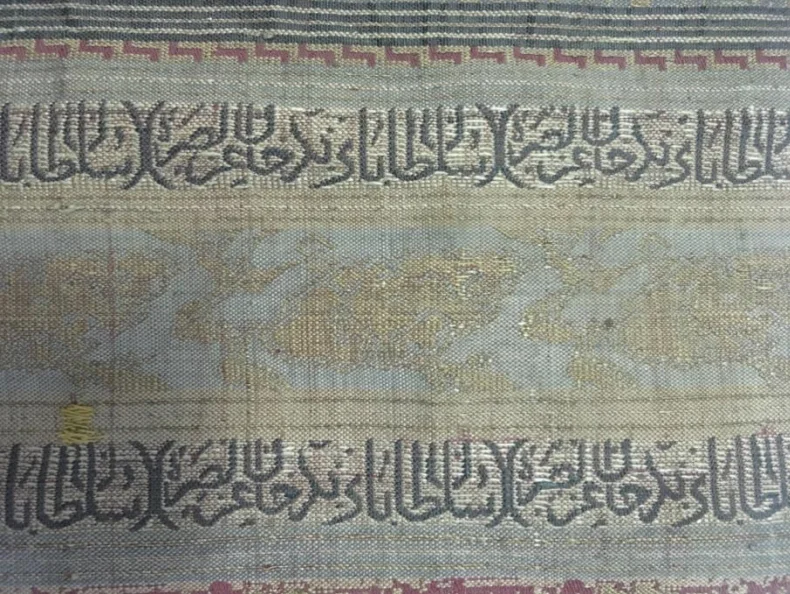
Detail of a Silk Textile Bearing the Name of Ottoman Sultan Bayezid I. Circa 1400 / Studenica Monastery, Serbia / Cornucopia
All we know is that the oldest known piece of Ottoman silk is preserved in an Orthodox monastery in what is today Serbia. I think that shows you that, on the one hand, yes, there’s definitely an elite that understands itself as being Islamic, but that at the same time interacts closely with people in the borderlands. And they had to. As you can see from the story of Bayezid marrying a Serbian princess, he was not the only one. There were several such princesses from the Balkans who became the wives of sultans. Usually they didn’t have any male offspring. Some of them had female offspring, like the wife of Bayezid I, who had two daughters, and we even know who they were married to. Otherwise, our concrete knowledge is really quite limited.
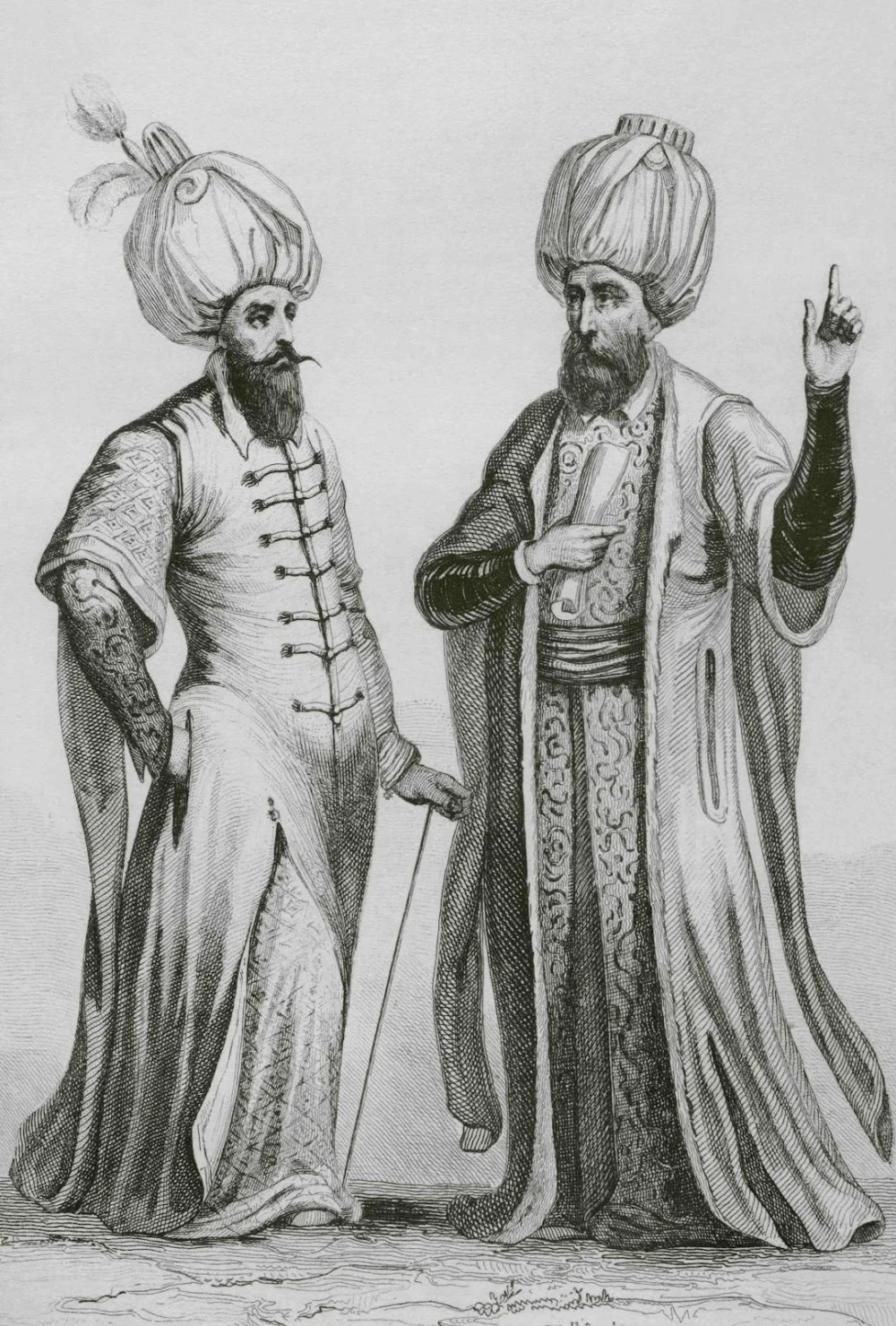
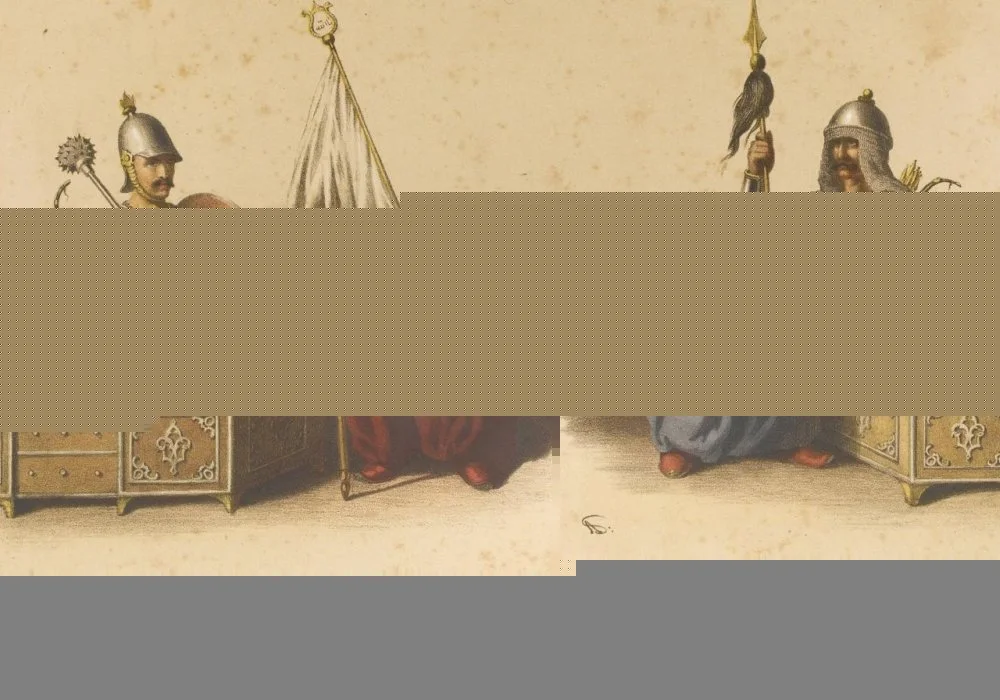
Janissary Agha (left) and Kadi, an Ottoman Judge (right). Engraving by Lemaitre, Masson and Monnin from Historia de Turquia. 1840 / Getty Images
In your book Women in the Ottoman Empire, you challenge the stereotypical image of the passive and powerless women of the East. So, what was life really like for women in the imperial palace and how much influence could they exert over politics and culture?
First of all, women of the palace are a very special category. In my book, they play a certain role, but they are not at the center of the story. My concern is really with women of the subject communities, who usually are people of some wealth and property.
When you have nothing, you have no status, and it’s almost impossible to make your voice heard. On the other hand, in the palace, the situation is very special. A lot of people tend to assume that what was valid in the palace was valid throughout Ottoman society, and I think that’s a really bad misunderstanding.
For one, the palace women were slaves, whereas the typical peasant or town woman was free, which makes an enormous difference. At the same time, it’s true that at some point in the sixteenth and seventeenth centuries, certain palace women were able to show a certain amount of power and initiative. This starts earlier than people think. Hafsa, the mother of SuleimaniSuleiman I, known in Europe as the Magnificent and in Turkey as Kanuni (‘the Lawgiver’), ruled the Ottoman Empire from 1520 to 1566., was also a figure of some prestige. She founded a sizable mosque complex in ManisaiManisa, in western Anatolia, was where Ottoman princes served as governors; Suleiman governed it before he became sultan., which her son later enlarged, but it was essentially her foundation—so much so that some people came up with the story that she was a daughter of the Crimean khan. I’m not a specialist, but some specialists say that that’s unlikely, that she must have been a slave woman like others.
The sheer fact that people invented such stories about her means that she had power and prestige on a certain level.
Suleiman came to the throne in 1520, and she died in the mid-1530s. So, obviously, she was a presence already in the first half of the sixteenth century.
Then, yes, it’s true that we have a series of fairly powerful palace women. One of them, Hürrem, even got a biographer of her own: the American historian Leslie Peirce. Enough evidence survives on this woman that Leslie Peirce was able to write a full biography, Empress of the East. After Suleiman’s death, it’s very probable that his son, Selim IIiSelim II, son of Suleiman I and Hürrem, ruled the Ottoman Empire from 1566 to 1574., also married his favorite. Kanuni definitely had done it; in fact, he even arranged for a public festivity at the At Meydanı (the old Byzantine Hippodrome) in downtown Istanbul. So, it was a very public wedding.
His son likely also freed and married his favorite slave, but all we know about it is that the Venetians heard about it. It was customary at major family festivities in the dynasty for the Venetians to send gifts, and they wanted to know whether Selim had actually married NurbanuiNurbanu Sultan (d. 1583) was Selim II’s consort and the mother of Murad III, whose reign she shaped as valide sultan.. The answer they got was yes. So, we can see why it was not advertised in the Ottoman context.
The Venetians certainly didn’t want to spend money for nothing. Presumably, the bailo, the permanent ambassador, had his channels of information and had heard that this wedding had taken place. Selim II didn’t live much longer after that.
After his death, under Murad IIIiMurad III, son of Selim II and Nurbanu, ruled the Ottoman Empire from 1574 to 1595.], Nurbanu became a very important and wealthy person. She set up an enormous mosque complex, which, after restoration, is today largely occupied by one of Istanbul’s universities. Nurbanu also corresponded with the Venetian authorities. She claimed to be of aristocratic Venetian descent. It may not be true—it’s probably not true—but it was convenient for both sides to accept it as truth.
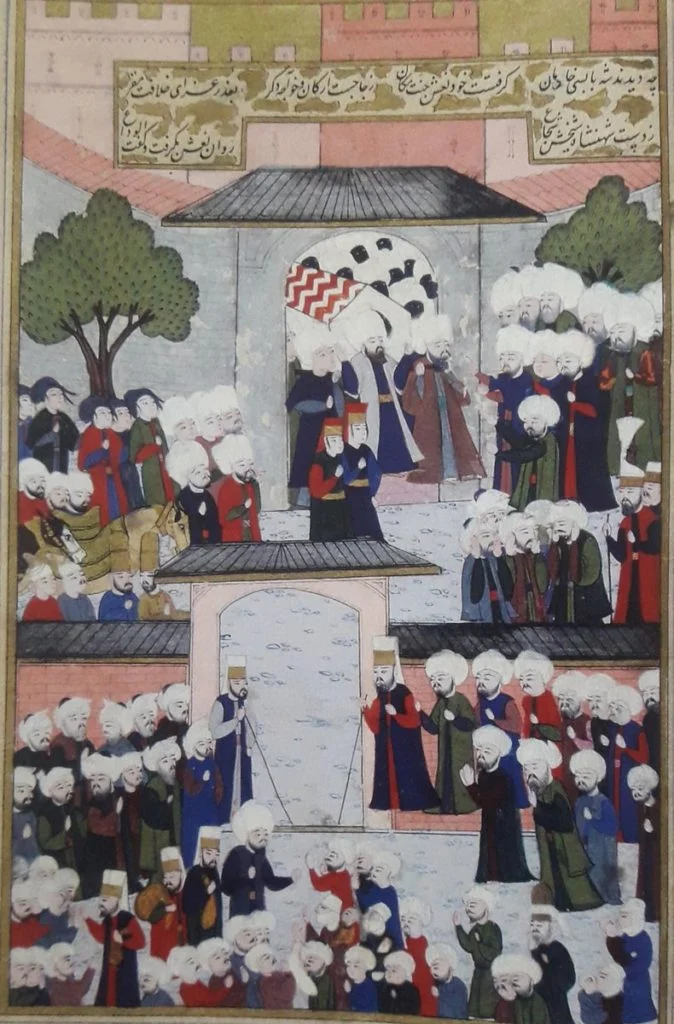
Funeral of Nurbanu Sultan, Mother of Ottoman Sultan Murad III. Miniature from the Shahanshahnama. Late 16th Century / Wikimedia Commons
After Nurbanu’s death, we have SafiyeiSafiye Sultan was Murad III’s consort and, as mother of Mehmed III, valide sultan from 1595 to 1603., whose mosque is still extant in Cairo. Then we have the figures of the early seventeenth century: KösemiKösem Sultan (c. 1589–1651) was among the most powerful women in Ottoman history, acting as regent for her sons and grandson., who was a favorite of Ahmed IiAhmed I ruled the Ottoman Empire from 1603 to 1617 and commissioned the Sultan Ahmed (Blue) Mosque in Istanbul. and became the valide (the sultan’s mother) for his descendants. She continued to be a valide—the büyük valide (the grand valide)—after the death of her son, taking charge of her grandson. Ultimately, she was pushed out of the way and killed by her rival, Hatice TurhaniHatice Turhan Sultan (d. 1683) was the mother of Mehmed IV and acted as regent after Kösem’s death in 1651., who was the valide of the reigning sultan.
In the late seventeenth century, we have the resurgence of a prominent valide, Gülnuş Sultan, who was again quite rich in the sense that her major work, the Yeni Valide Mosque, still dominates the skyline of ÜsküdariÜsküdar is a historic district of Istanbul on the Asian shore of the Bosphorus..
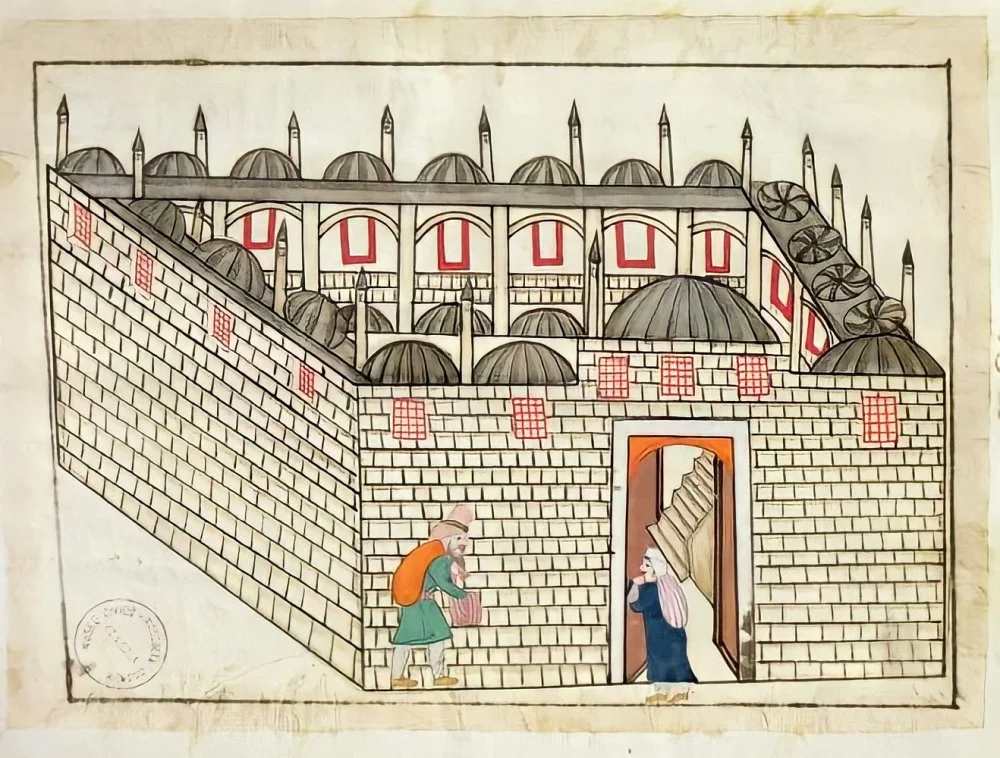
Büyük Valide Han, a Caravanserai Commissioned by Kösem Sultan in the 17th Century. Istanbul, Turkey / Wikimedia Commons
So, these women had money and influence. In the nineteenth century, Mahmud IIiMahmud II ruled from 1808 to 1839 and launched sweeping reforms, modernizing the army and administration and introducing the fez. had several companions, and BezmiâlemiBezmiâlem Sultan (d. 1853) was the mother of Abdülmecid I and a major patron of hospitals, schools, and public works in Istanbul. was one of them. She was the valide of Sultan AbdülmecidiAbdülmecid I ruled from 1839 to 1861 and launched the Tanzimat reforms, which modernized Ottoman law and administration., and her foundations are so numerous that they fill a volume of about 450 pages. She apparently took a serious interest in her foundations. One of the first public hospitals in Istanbul of the modern age was also her foundation.
She insisted on a room being set aside where she could stay when she came to inspect her foundation. So, it wasn’t just that she provided the money; she wanted to see what was going on there. Bezmiâlem was a major figure through her charities. The last person of whom that was true was the valide of AbdulaziziAbdulaziz ruled from 1861 to 1876; his mother, Pertevniyal Sultan, built a major mosque in Aksaray, Istanbul.] in the second half of the nineteenth century. In any event, quite a few palace women who came to be valides were quite wealthy.
From the late eighteenth century onward, they started to branch out into activities that were not necessarily traditional and religious. Bezmiâlem was among the sponsors of the first bridge across the Golden HorniThe Golden Horn is the inlet of the Bosphorus that divides old Istanbul from the Galata district to its north., and she also put money into a school meant to educate modern-style Ottoman bureaucrats. One of her predecessors spent a good deal of money on the water supply.
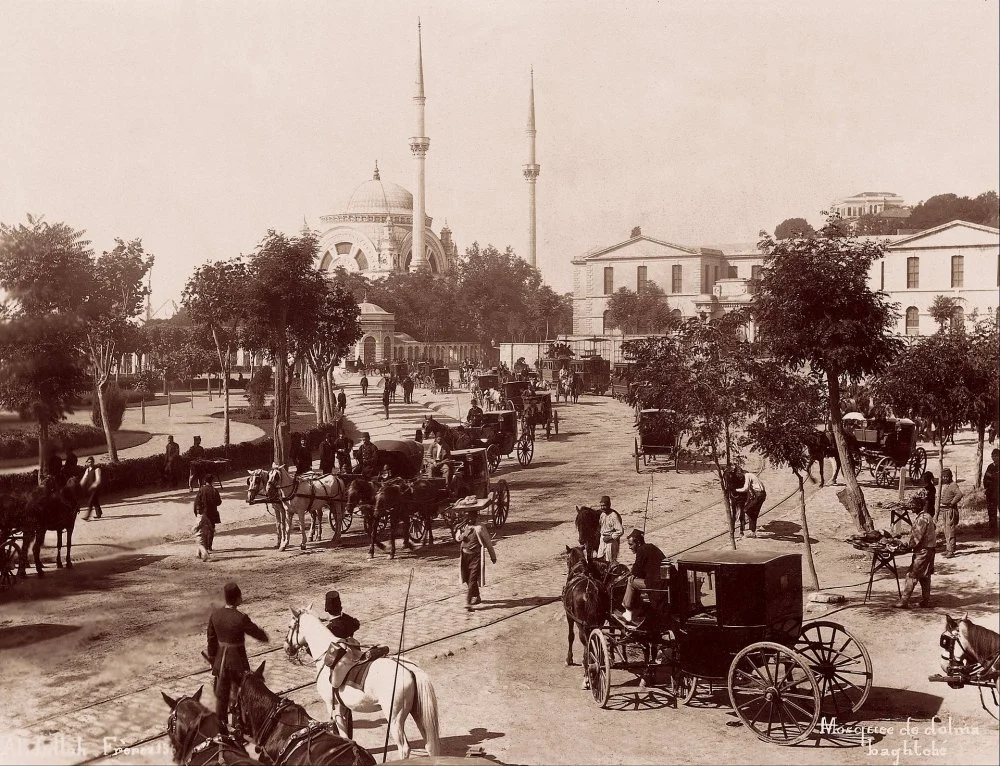
Abdullah Frères. Dolmabahçe Mosque and Square. Istanbul, Ottoman Empire. 19th Century / Google Art Project / Wikimedia Commons
Through their sons who had come to the throne and continued to respect their mothers, these women were able to show a certain amount of initiative.
On the other hand, these women were a small minority. There is a very good book by the Turkish historian Betül İpşirli Argıt available both in Turkish and in English (in English, it’s called Life After the Harem). It is about eighteenth-century women who had been manumitted. While male slaves of the sultan were never formally manumitted, when women were married off, the first step was that they were manumitted—not with much ceremony, but the fact was noted.
Then the palace found husbands for them. In the eighteenth century, some had prominent husbands, while others had middle-ranking husbands. Information on these people is available because the palace monitored their financial situation. After all, since they were former slaves of the sultan, if they didn’t have legal heirs (and sometimes even if they did), the sultan was one of the heirs. Therefore, the palace administration kept track of these women.
Presumably, they didn’t have much of a say in whom they married. They were taken into the palace as young slave girls, raised there, and served. As new girls came into the palace, those who had reached a certain age were liberated and married off.
In the eighteenth century, these ladies were known as saraylı—women of the palace. In this very interesting monograph, Betül hanım (which was not merely a polite Turkish form of address but also a title indicating social status) tells us that these women probably formed a link between the court and the urban population. There weren’t many links between the court and the urban population; a lot of the time, they lived in separate worlds. But these women, with a background of education in the palace and memories of it, married to middle-level bureaucrats, would have a circle of female friends and acquaintances if the situation was propitious. They might then bring certain customs of the palace into the society of Istanbul.
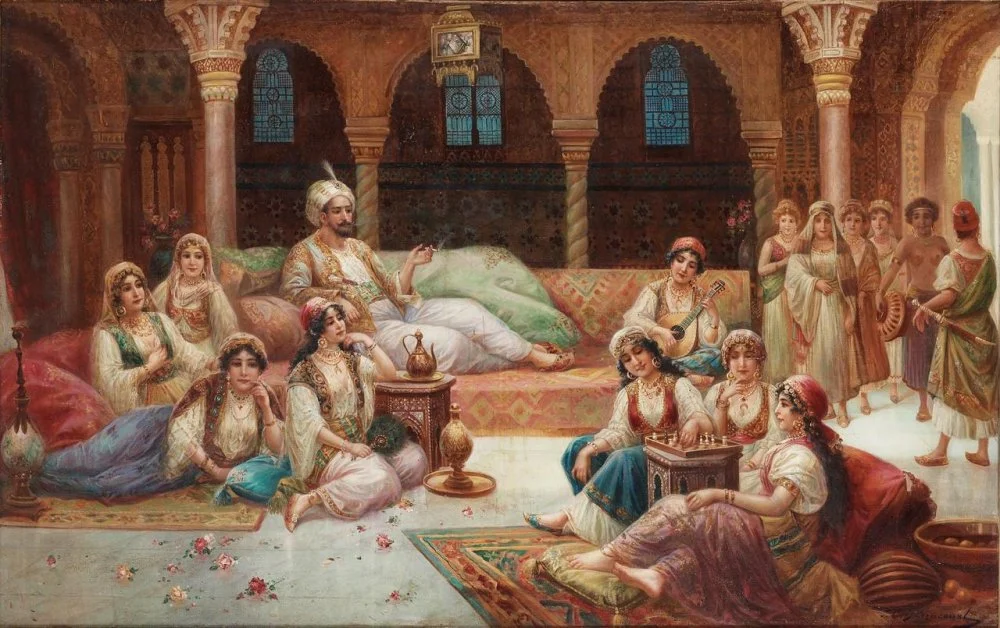
In a Harem. Private Collection / Getty Images
So, you don’t want to generalize, even among the palace women. You have Nurbanu and HürremiHürrem Sultan (d. 1558), known in Europe as Roxelana, was Suleiman I’s consort and later his wife, and among the most influential Ottoman women. on one side, and these anonymous ex-slaves studied by Betül hanım on the other. Even though they served in the same palace, their fates were very different.
Looking beyond the palace, what roles did women play in Ottoman society and the economy? You mentioned that women could own property—could they run businesses, participate in trade, crafts, and so on?
Well, they owned property, yes. That part is quite clear. First of all, they could inherit, even though sometimes they had to fight against their brothers who tried to cheat them out of their shares.
They were to get a certain amount of money or valuables from their future husband at the time of the wedding, called the mahr. Typically, part of the mahr was payable at the time of the wedding, when the husband got to see the face of his bride, and the remainder was kept for when the marriage ended (either because the husband died or divorced her, or because she died, in which case the property went to her heirs).
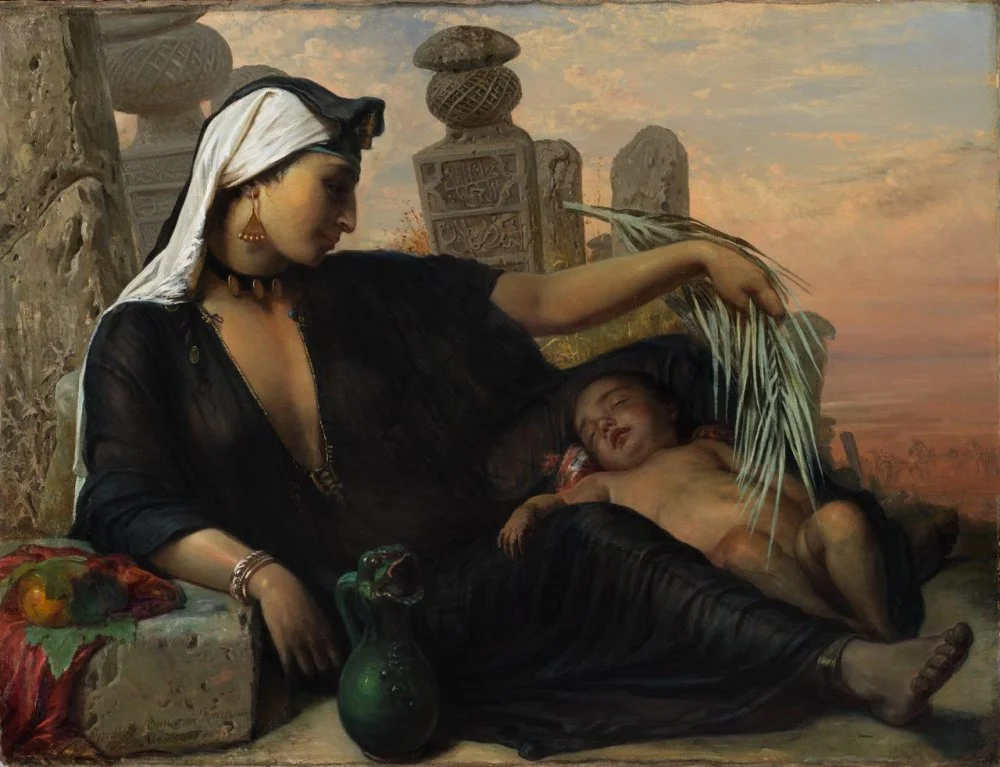
Egyptian Fellah Woman. 1872 / Wikimedia Commons
So, some women were property owners. Right now I am looking at the inheritance of a Bursa woman from the late fifteenth century who owned a whole workshop in which velvet was produced. Shortly before her death, she turned this workshop into a foundation. The person in charge (the mütevelli) was not her husband, who was very much alive at the time, but a male slave she had freed.
This man she appointed as the caretaker of her foundation. So you can see that this woman, Ayşe bint Ali, definitely had property and her own ideas as to what was to happen to that property after her death.
Of course, again, this is something special. I’m not saying that this was the rule, but it could happen.
How different was life in a major imperial city like Istanbul compared to life in the rural countryside? What were the main economic, social, and cultural contrasts between urban and provincial life in the Ottoman world?
Istanbul, in many ways, was a different world even in very basic matters. Ordinary people in provincial towns probably did not get to eat much meat, apart from Kurban Bayramı (the Feast of the Sacrifice). On the other hand, in Istanbul, enormous flocks of sheep were brought into the city every year, mainly because the JanissariesiThe Janissaries were the sultan’s elite standing infantry, originally recruited from Christian boys, until Mahmud II abolished the corps in 1826. demanded meat as part of their privileges. What’s more, there seems to have been an assumption that eating meat signaled elite status. I once saw a document that spelled it out, saying Istanbul is full of high-status people who need to eat meat.
Then, there are the less desirable cuts, like the heads of sheep. I still remember when I was a student in Istanbul, around Edirnekapı (a neighborhood by Istanbul’s old land walls), there were shops that sold cooked sheep’s heads. I must say, I never liked that sight very much, but apparently the customers didn’t object. Sheep’s heads and trotters were made into a certain kind of soup, which was a recognized craft specialty.
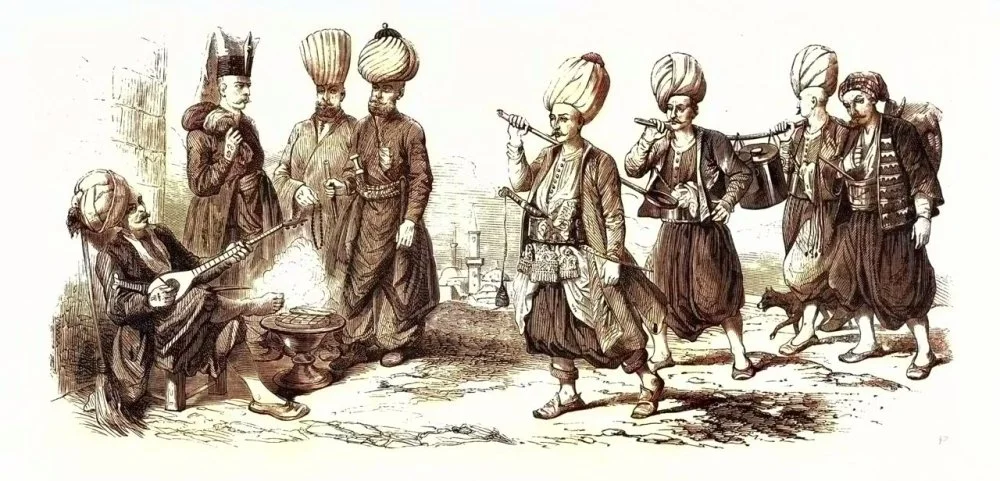
Officials of the Ottoman Janissary Corps: Paymaster, Unit Leader, Non-Commissioned Officer and Guard Chief / Getty Images
It was also something that women did, and they would then sell the broth in their neighborhood. We have a very funny document from the early eighteenth century in which the sultan reacts to a complaint from the professional cooks who made this soup who wanted the women out of business. The whole affair came to the sultan, and a counter-petition put together by the blacksmiths working in the naval arsenal still exists. We only have the summary in the records of the central government, but apparently they said:
‘Look, if our wives cannot make some extra money through making and selling paça [trotter soup], then we cannot continue to work for the arsenal, because sometimes we cannot return for several days on end to keep the fire stoked, meaning our families have nothing to eat.’
So, the solution of allowing these women to sell their paça seemed the most practical one. The sultan then overrode the guild privileges of these craft masters and said yes, the wives of the blacksmiths could continue to sell their paça. In larger towns, we had quite a few petty entrepreneurs selling paça to their neighbors, making sure they got the appropriate meat and bones and had the proper arrangements in place.
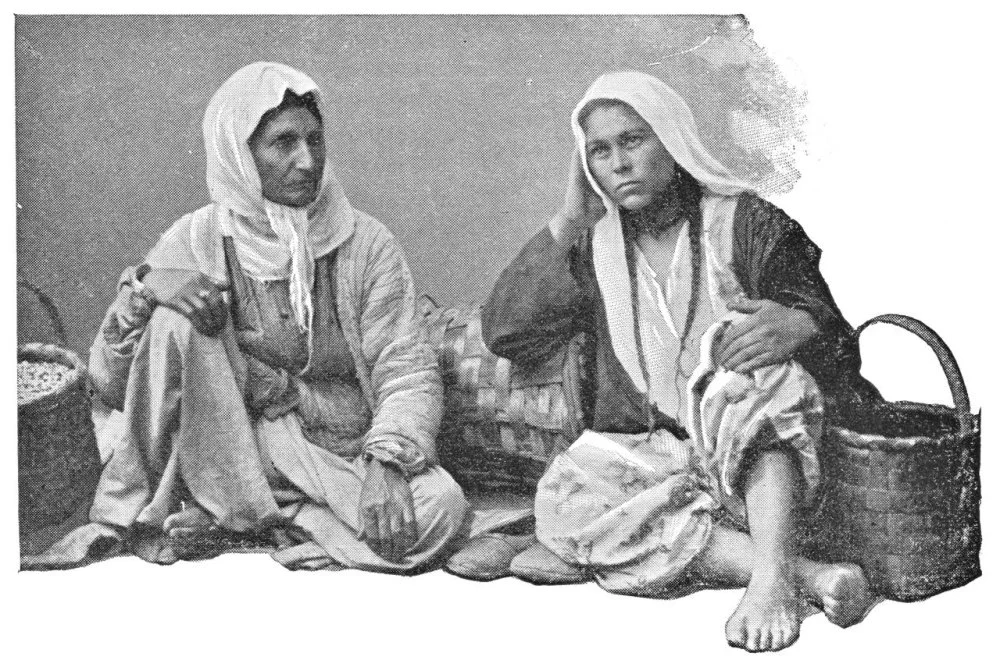
Two Women Selling Popcorn on a Street in Istanbul. Engraving, Late 19th Century / Getty Images
This apparently wasn’t so rare. The remnants that the elite considered less than desirable would have been much more easily available in Istanbul than anywhere else. The number of sheep driven into Istanbul, mostly from the Balkans but also from Anatolia, ran into the hundreds of thousands.
In terms of making a living, some women could benefit from family foundations. And whether or not they were included would depend, in part, probably, on whether or not they were able to make a contribution. There is a scholar by the name of Beshara Doumani, the author of Family Life in the Ottoman Mediterranean, who studied this phenomenon in what is today Palestine and Lebanon. She studied two towns, Nablus and Tripoli, and in one of them, the women had almost no role in family vakıfs, or waqfs (charitable endowments), and in the other one, their role was considerable. So, you could see that regional customs could vary, even during the same time frame.
Professor Doumani suggested that the reason for the difference was that for the women of Tripoli (Tarabulus in present-day Lebanon), a lot of the income came from olive groves right next to the town. It was not a problem for women to take an active role, like harvesting olives, collecting them, and bringing them to the press.
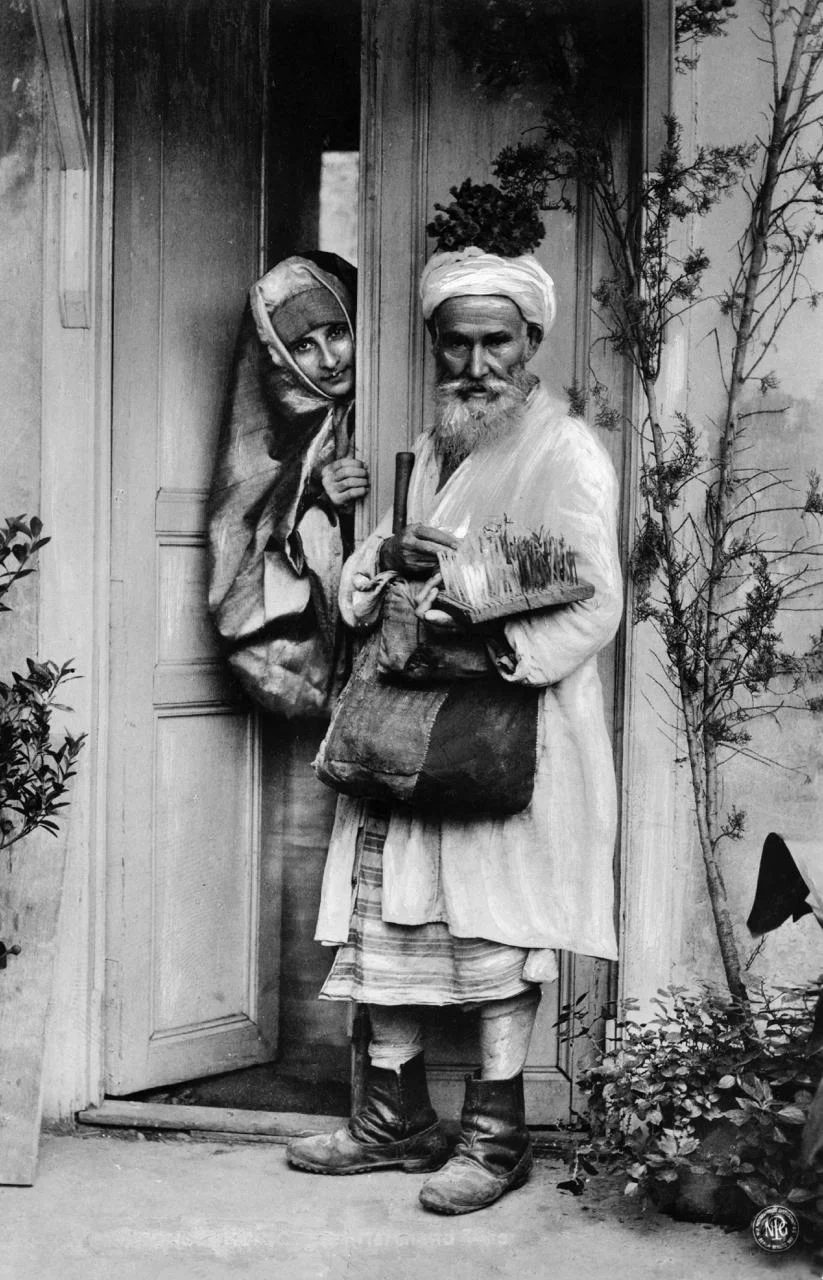
A Street Vendor Offering His Goods to a Young Woman at Her Doorstep. Constantinople, Ottoman Empire, 1907 / ullstein bild via Getty Images
On the other hand, in the Palestinian group, it was a matter of merchants visiting villages and drumming up custom, which was something women couldn’t do. Therefore, they were outside of the economic circuit, as well as outside of the vakıf circuit. That’s probably the explanation for the visible difference between the foundation practices of the two cities.
Istanbul in the sixteenth century was full of pious foundations established by women. Most of them were modest—a woman might make her house into a vakıf (foundation) because she had liberated slave women and wanted to make sure they had a place to stay. That’s a modest thing that a middle-income woman could easily do, so you didn’t have to be super rich to establish a vakıf.
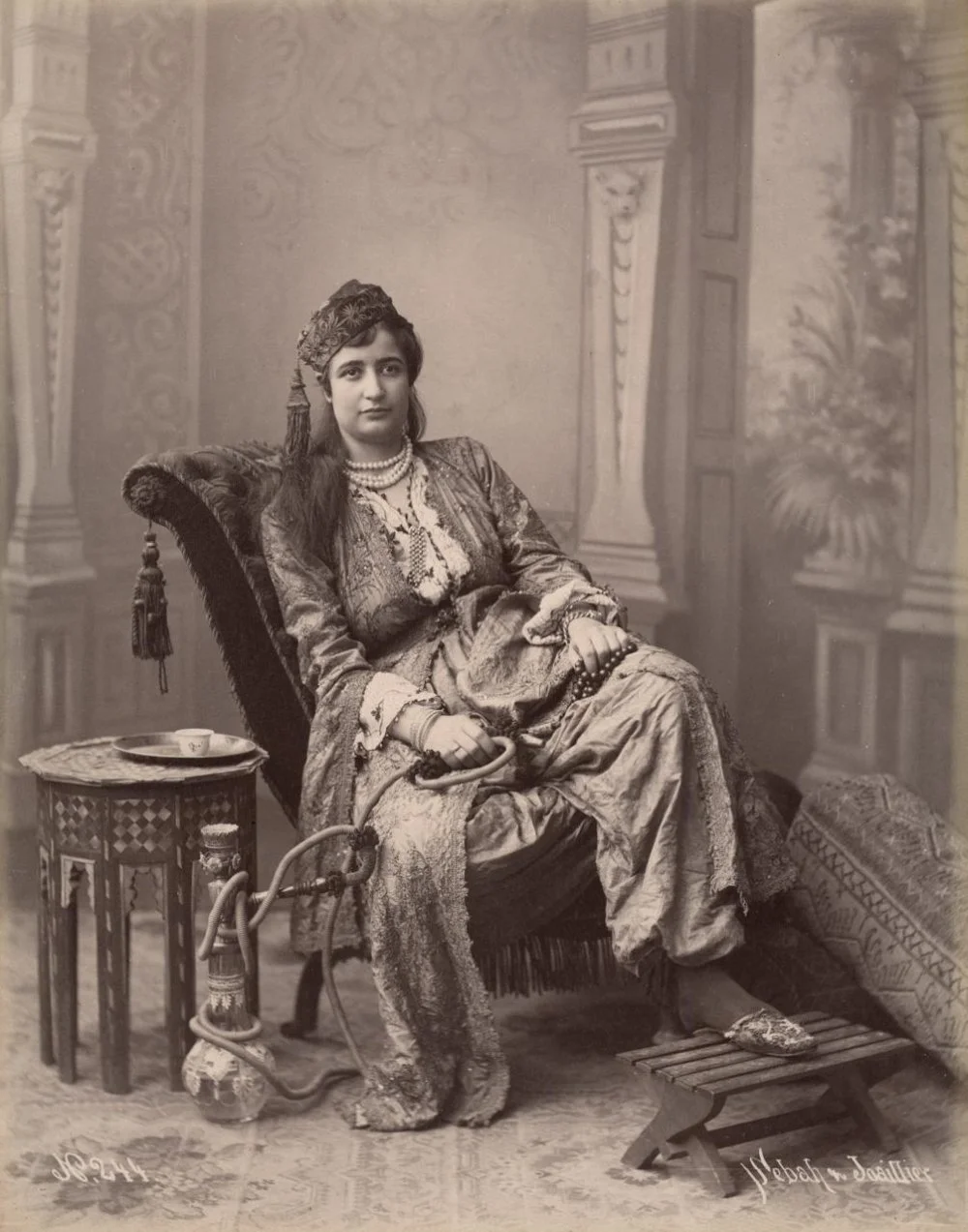
Turkish Woman. Ottoman Empire, circa 1885 / adoc-photos / Corbis via Getty Images
The proportion of women among people establishing vakıfs is amazing—at a certain point, around 40 per cent. Almost half of the people establishing foundations seem to have been women (modest foundations, but still foundations in law).
You don’t see that in provincial towns. As for whether they could make money, in larger commercial cities there were more opportunities. Our colleague Nellie Hanna, an Egyptian historian and specialist on Cairo, has shown that in Cairo there were quite a few women in different walks of life active in trade.
For instance, Ottoman observers from Istanbul were sometimes astounded to see that in Cairo bread was being sold by women, which didn’t happen in Istanbul. We have evidence from both the seventeenth and nineteenth centuries.
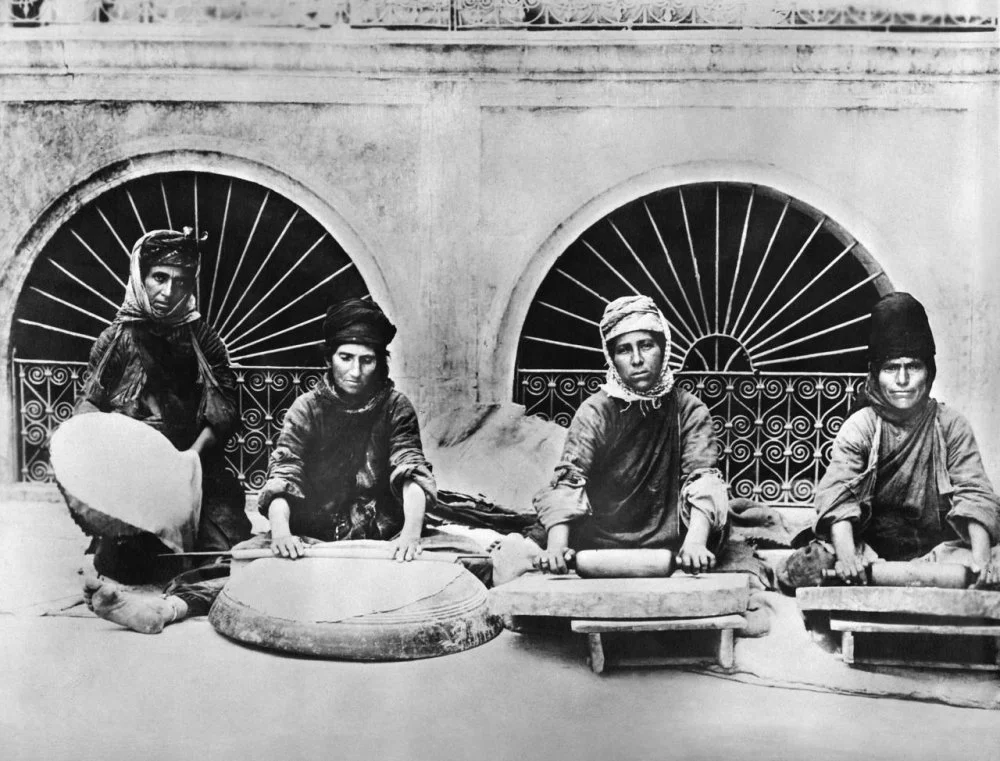
Women Baking Bread. Mosul, Mesopotamia, Ottoman Empire. Circa 1900 / ullstein bild via Getty Images
There were bakeries operated by women, and the women sold their bread. That is apparently typical of Cairo, and you don’t see it anywhere else. On the other hand, you sometimes see women who had well-established husbands but seemed to make extra money through embroidery.
One of my favorite stories is an argument between two women, both with well-established husbands. One gave the other gold thread to do some embroidery, and when the embroidery arrived, she claimed that some of the gold had disappeared.
A goldsmith was called in as an expert, and he decided that some of the gold that should have been there wasn’t. We don’t know how this ended, but what’s remarkable is that a woman of reasonably solid background made embroidery for money in a provincial town.
