

Khoja Nasreddin is far more than a character from Kazakh folktales. The stories about him and his span the entire Muslim East—from Turkey and the Balkans to the heart of Central Asia. But is he depicted or understood everywhere in the same ways in which the Kazakhs perceive him? How did Soviet ideology reshape the canonical image of Khoja Nasreddin and what new traits were attributed to him? Finally, who was the legendary Khoja Nasreddin before his tales reached Central Asia? Researcher Assiya Bagdauletkyzy traces the evolution of his image across time and cultures.
The Many Faces of Khoja Nasreddin
In Kazakh folklore, Khoja Nasreddin, known as Qojanasyr, is at once a clever trickster, an ironic sage, and a kind-hearted eccentric. His short anecdotes may appear to be simple jokes at first glance, but within Kazakh culture, this character—who arrived along with Islam—has largely lost his original religious undertones. In contrast to other regions, our Nasreddin is, above all, a virtuoso of language and sharp wit. Through humor, he exposes the vices and contradictions of human nature, becoming, in essence, a vehicle for social critique and reflection on life.
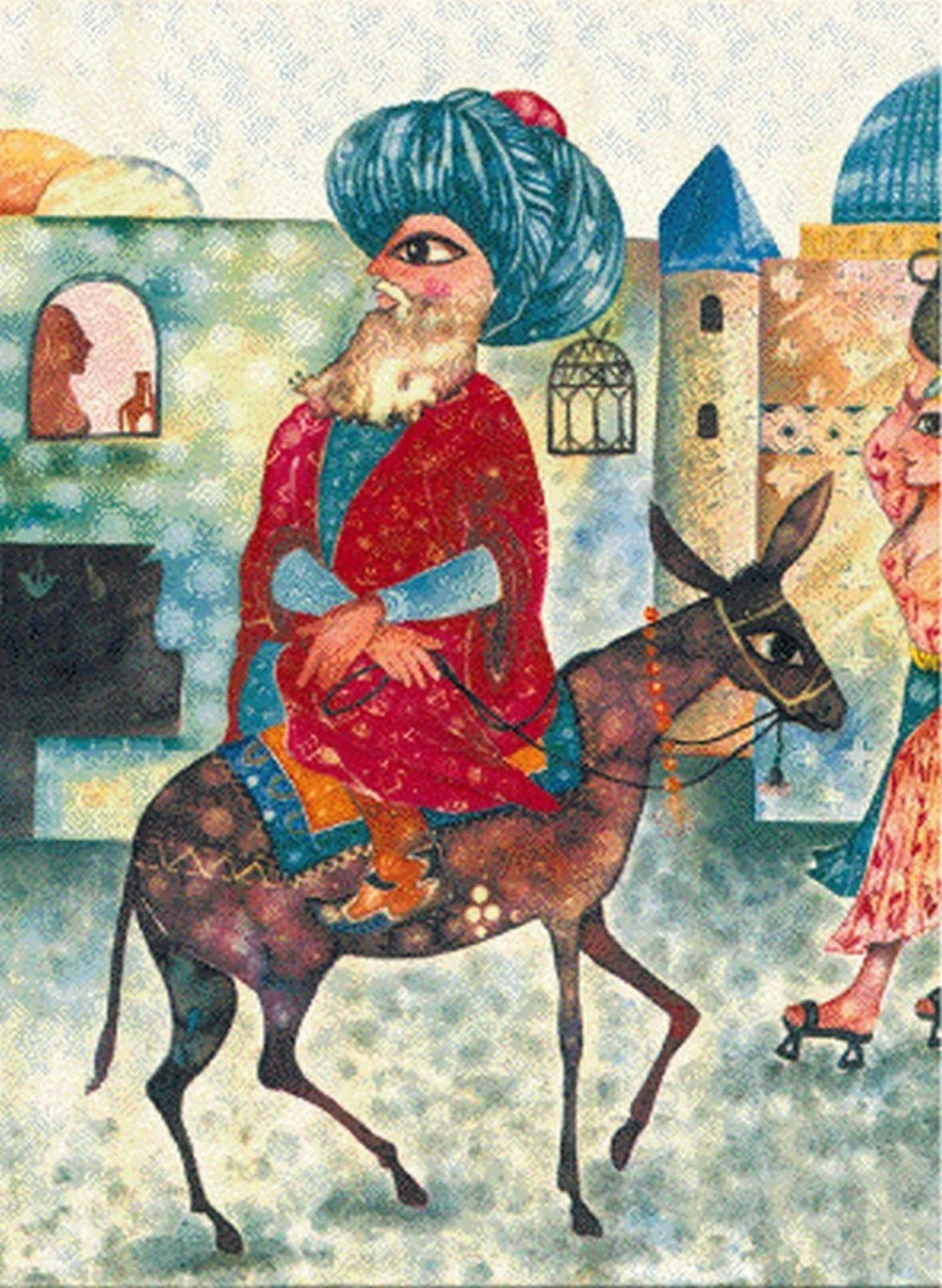
Nasreddin Khoja / Alamy
In Soviet iconography, Nasreddin is depicted as a lean man, young or middle-aged, a defender of the poor, and a figure of humble origins. Films and animated features produced in Uzbekistan, Tajikistan, and the Russian Soviet Federative Socialist Republic (RSFSR)i The Russian Soviet Federative Socialist Republic (RSFSR) was the largest and dominant constituent republic of the Soviet Union, serving as its political and economic core from the USSR's formation in 1922 until the union's dissolution in 1991., along with a monument erected in Bukhara in 1979, reinforced this image: a small turban, a worn chapaniA chapan is a traditional, thick, often quilted Central Asian robe worn by men for warmth and for formal occasions., and a modest beard, all highlighting his social background and age.
The Turkish Nasreddin looks entirely different. Indeed, he was a venerable old man with a gray beard and an enormous turban. Judging by his clothing, he was a well-to-do person, and his turban seemed almost larger than his little donkey. Though the presence of such contradictory traits in a single character might seem coincidental, research suggests that Khoja Nasreddin conceals many more mysteries we have yet to uncover.
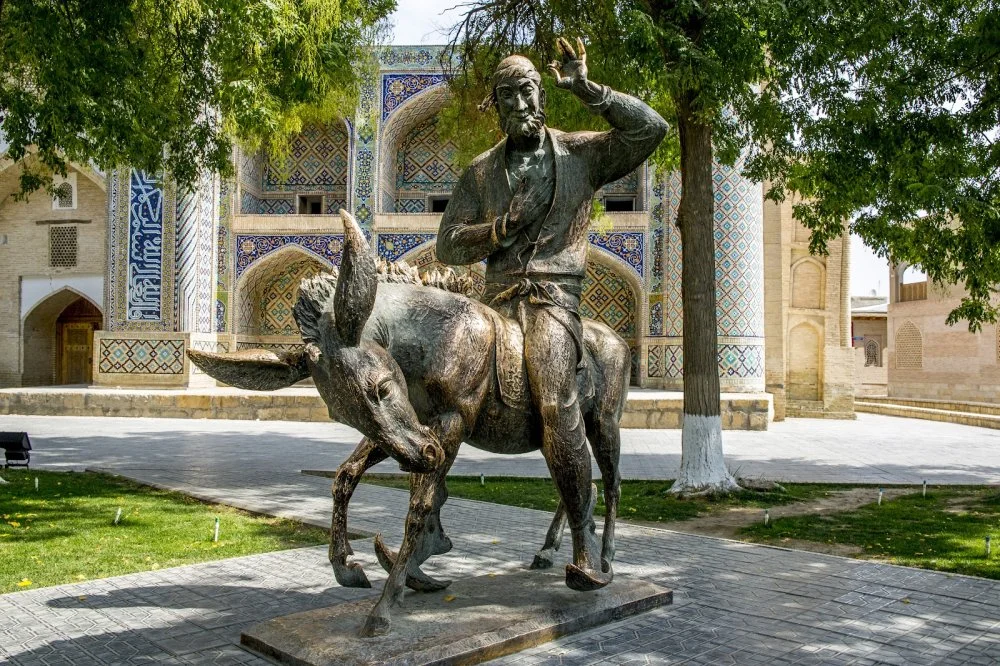
Monument to Khoja Nasreddin in Bukhara, Uzbekistan / Getty Images
In Arab culture, this character is known as Juha (Jokha or Gurha). According to scholarly research, this image emerged even before Khoja Nasreddin himself, and over time, the two well-known figures of the Islamic world became intertwined. In Iran and Afghanistan, he is known as Mulla Nasreddin. The character also gained wide popularity in the Balkan Peninsula under the influence of the Ottoman Empire, where he, similarly, appears as a man of the people.
According to folklorist Ulrich MarzolphiUlrich Marzolph. 1998. ‘What Is Folklore Good for? On Dealing with Undesirable Cultural Expression’. Journal of Folklore Research, 35.1, 5–16, Khoja Nasreddin should be understood as a ‘composite figure’ (or a focusee)—a man of the common people to whom numerous humorous and satirical stories were gradually attributed. However, in some countries, Nasreddin is regarded not merely as a folkloric hero but as a genuine historical figure. In Turkey, for example, the town of Akşehir in the Konya Province is officially regarded as his final resting place. It is believed that Nasreddin was a learned man who lived in the thirteenth century in the territory of present-day Turkey and died in Akşehir around 1284 or 1285.
In renowned academician Abduselam Arvas’s interpretation, Khoja Nasreddin exemplifies the transformation of a ‘pseudo-historical’ figure with a vague past into a folkloric archetypeiAbduselam Arvas. ‘The Place of Tamerlane in Nasreddin Hodja’s Jokes’. Karefad, 7.2 (October 2019), 167–80.
And for this reason, studies of Nasreddin generally fall into two main approaches: the first is national-historiographical, primarily Turkish, while the second is international and folkloristic, where questions of whether he actually lived and how many stories originally belonged to him are treated as secondary.
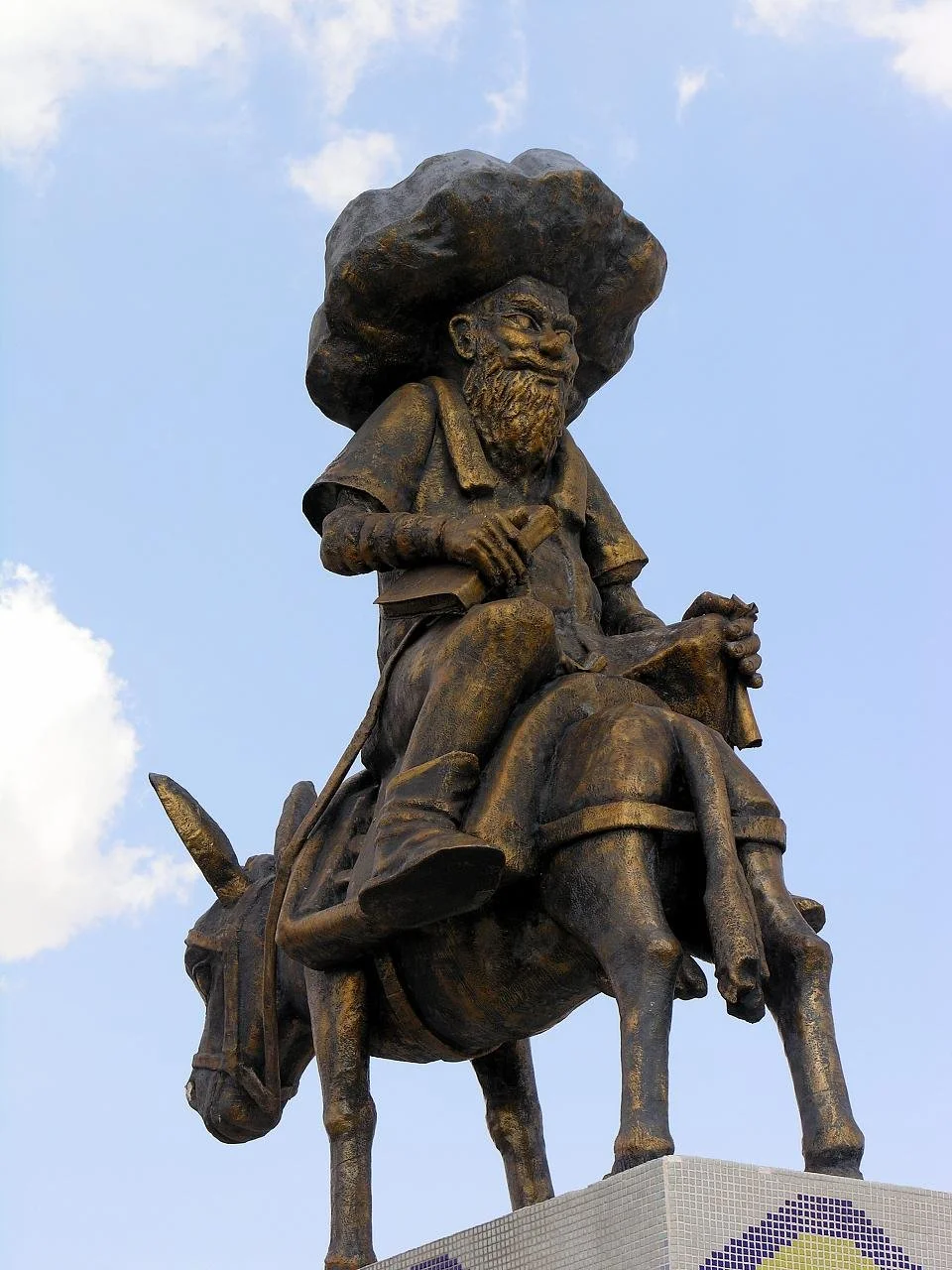
Monument to Khoja Nasreddin in Yenişehir, Turkey / Alamy
To begin with, let us focus on the image of Khoja Nasreddin in Turkey. Folklorist Jo Ann ConradiJo Ann Conrad. ‘“This Is Not Our Hoca!” Repurposing, Repacking, and Reappropriating Nasreddin Hoca.’ Terra Ridens – Terra Narrans. Festschrift zum 65. Geburtstag von Ulrich Marzolph, Beiträge zur Kulturgeschichte des Islamischen, 45, ed. Regina F. Bendix and Dorothy Noyes (Dortmund: Verlag für Orientkunde, 2018), 263–99 writes about a state initiative to ‘appropriate’ the image of Nasreddin in modern Turkey. Other scholars note that he had already been used earlier in the ‘ideological interests of the Ottomans’. For example, in many stories that spread during the Ottoman period, Nasreddin is portrayed as emerging victorious in a verbal duel with Amir Timur, leaving the powerful ruler so frustrated that he is said to ‘kick himself’ in frustration. For a state that had once suffered a crushing defeat at Timur’s hands, this served as a kind of symbolic revenge—at the level of folklore. And just as in the Ottoman Empire, the image of Nasreddin has repeatedly become an instrument of ideology: his political potential was quickly recognized in the Soviet Union as well.
Khoja Nasreddin: The History of an Image
Stories about Khoja Nasreddin have existed for centuries in oral tradition. Systematic documentation in written sources did not begin until after 1571, signaling the transition from oral transmission to the written word. One of the earliest such sources, a manuscript titled Hikayat-i Kitab-i Nasreddin Hoca, contains forty-three stories about him. In most of them, Nasreddin bears little resemblance to the image that is familiar to us today. It is clear that the character’s transformation over the centuries resulted not only from shifts in cultural norms and moral values but also from the tangible influence of various political and power dynamics.
In the earliest literary versions, Khoja Nasreddin appears as a figure who does not submit to rules and exists outside social norms. He is seen as a kind of ‘rascal’ who openly flouts religious prescriptions and rituals. And thus, in these narratives, he often comes across as a vulgar character who deliberately violates taboosiSeyfi Karabas. ‘The Use of Eroticism in Nasreddin Hoca Anecdotes.’ Western Folklore, (July) 1990, 49.3, 299–305 (301). This image was infinitely distant from the thoughtful and ironic Nasreddin we came to know in later traditions.
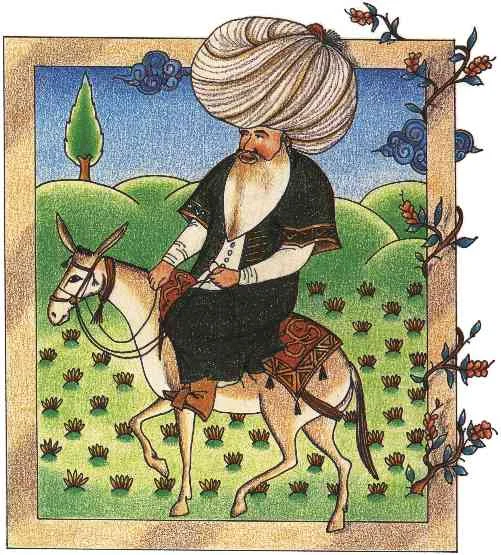
Khoja Nasreddin. 17th-century miniature / Wikimedia Commons
The evolution of Khoja Nasreddin’s persona is especially evident during the Ottoman period. It was then that he gradually became ‘socialized’—he married, had children, and was integrated into the state religious project, turning into a representative of Sunni orthodoxy. Over time, his former freedom and indecency faded away. He aged, assuming the appearance of a humble and pious aqsaqal, or village elder. Thus, the transformation of Nasreddin in Turkey from a ‘naughty rascal’ into a wise national symbol was the result of deliberate ideological adaptation.
The Soviet Khoja Nasreddin
In Central Asia, the dominance of oral tradition makes it hard to pinpoint exactly when and how the image of Khoja Nasreddin took hold. By the early nineteenth century, however, he had already assumed a ‘sanitized’ form because he was stripped of indecent or rebellious traits, and he appeared as a safe, elderly figure. All the same, he remained quite different from the Ottoman Nasreddin. In Central Asian folklore, he is a free spirit, existing outside social conventions; a man whose family is seldom mentioned. He is an eternal wanderer on a donkey, bound by neither class nor ethnic boundaries.
In the Soviet era, this beloved folk character—a bearer of multilayered cultural capital—was recreated as a modern socialist hero. The Soviet Khoja Nasreddin was portrayed as a ‘proto-socialist’—he opposed feudal injustice and defended the poor. Promoting such an image was an attempt to culturally ‘legitimize’ socialist ideology, grounded in the idea of class struggle, among the Muslim peoples of Central Asia.
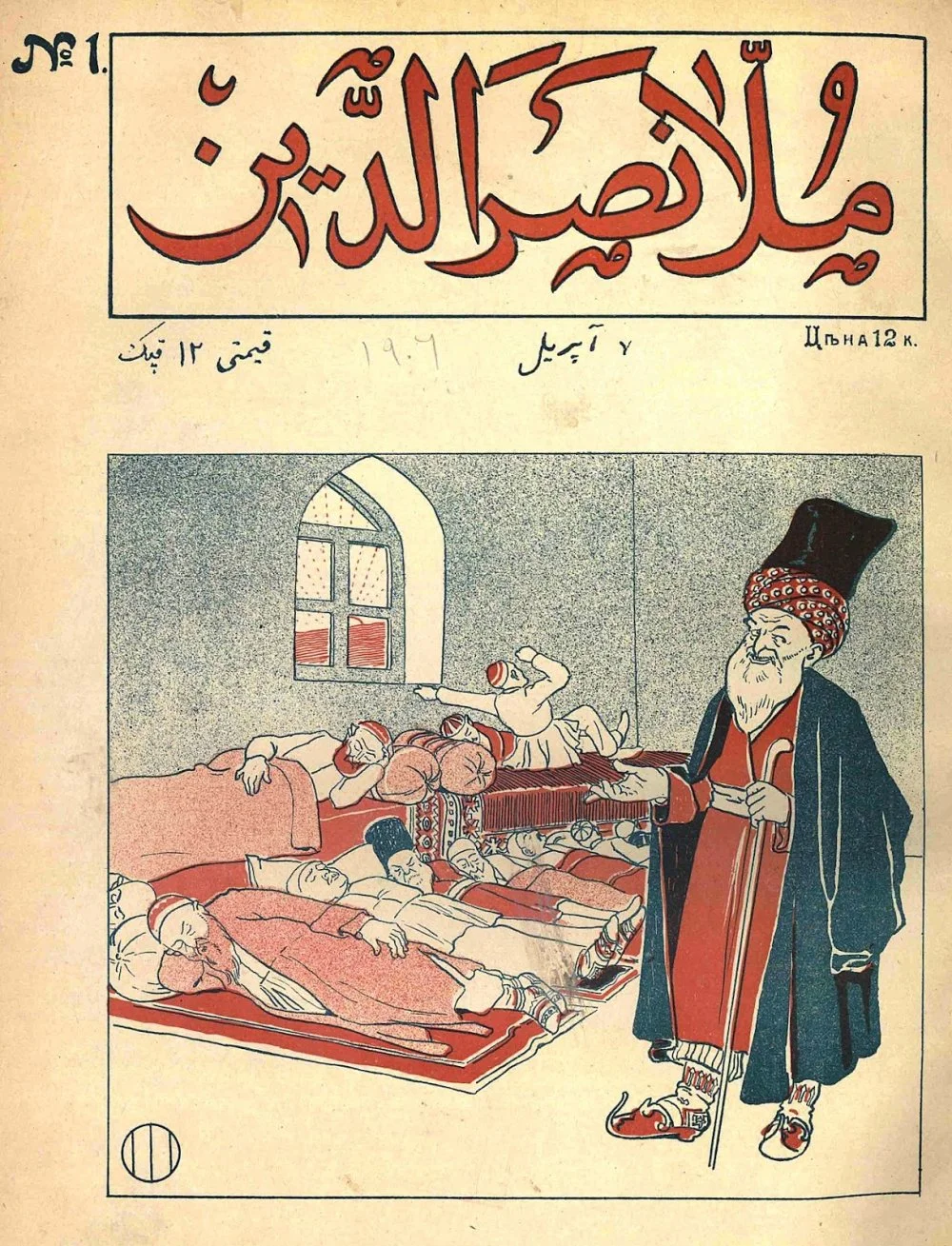
Cover of the first issue of the Azerbaijani satirical magazine Molla Nasreddin, depicting Khoja Nasreddin, 1906 / From open sources
The first person to make this character famous throughout the Soviet Union was journalist and writer Leonid SolovyoviLeonid Solovyov was a twentieth-century Russian and Soviet journalist, playwright, and novelist.. In 1938, in collaboration with screenwriter Viktor VitkovichiViktor Vitkovich was a twentieth-century Soviet playwright, screenwriter, and children's author., he wrote a screenplay about Khoja Nasreddin. This choice was not random: Solovyov’s father, Vasily Solovyov, worked in the Middle East, and Leonid himself was born in Tripoli in what is now Lebanon.
Between 1923 and 1930, Leonid Solovyov worked for the Uzbek newspaper Pravda Vostoka, where he started collecting and recording local folklore. Although these experiences later inspired a screenplay, the project was not realized at the time and remained shelved for many years. Nasreddin’s moment of glory in the Russian-speaking world came in 1940, when Solovyov reworked the accumulated material and wrote the novel The Disturber of the PeaceiVozmutitel' spokoistviya/Возмутитель спокойствия in Russian. Unexpectedly, the book became enormously popular, went through several reprints, and was translated into many languages. Soon afterward, Solovyov and Vitkovich adapted the novel into a screenplay for a feature film.
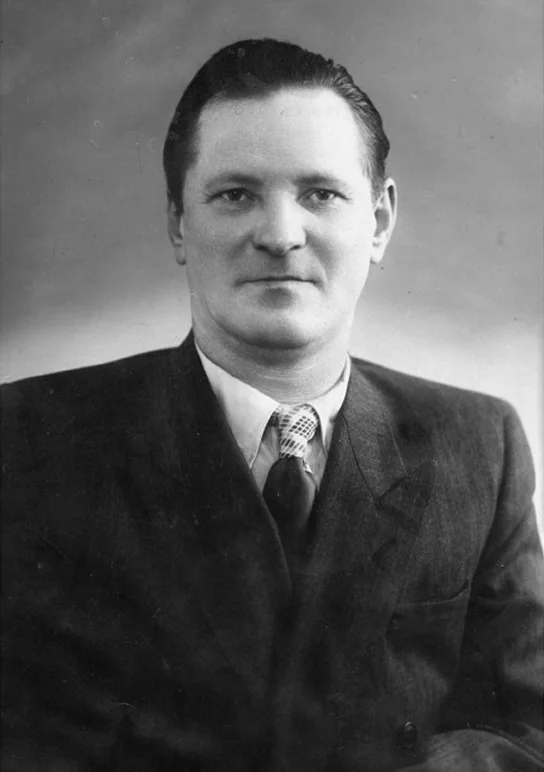
Leonid Solovyov / From open sources
At the end of 1941, when Soviet film production was evacuated to Central Asia, director Mikhail RommiMikhail Romm was a Soviet film director and screenwriter, celebrated for his epic films about the Second World War and later for his groundbreaking documentary Ordinary Fascism. was sent to Tashkent to manage the enormous industry. Not wanting to appear empty-handed before the local party leadership, he brought along a completed script about Khoja Nasreddin. After quickly receiving approval from Moscow, Romm invited Yakov ProtazanoviYakov Protazanov was a Russian and Soviet film director famed for directing the first Soviet sci-fi film Aelita (1924). from SoyuzdetfilmiSoyuzdetfilm was a major Soviet film studio, operating from 1936 to 1948, dedicated to producing movies for children and youth audiences.—who was then in Tajikistan—to direct the project.
Thus, the film Nasreddin in Bukhara went into production and was shot in 1943 at the Tashkent Film Studio. Notably, all the principal roles—Nasreddin himself, the Emir of Bukhara, Niyaz, the vizier, and other characters—were played by Soviet actors ‘of European origin’ who had come from the center. And from this moment on, the process of visually Sovietizing the image of Khoja Nasreddin began.
Nasreddin—But Not Quite the Same
At the time, the newspaper Pravda noted that ‘the return of Nasreddin to the screen will undoubtedly arouse special interest among kindred audiences in the national republics’. However, the paper did not go into detail about how exactly the image, so familiar to this very ‘kindred audience’, had been transformed under the influence of Soviet ideology.
In the folklore of the Soviet East, Nasreddin was traditionally addressed with reverence, including hodja (teacher), efendi (master), and mulla (cleric). In Azerbaijan, for example, the word ‘mulla’ denoted not only a religious status but also such qualities as education, competence, and life experience. In Central Asia, the terms ‘hodja’ or ‘hajji’ indicated both social and spiritual standing as well as the fulfillment of the hajj, or the religious duty of pilgrimage, while the very name ‘Nasreddin’ (Nasr ad-Din) literally meant ‘victory of the faith’. However, in Soviet literary and cinematic representations, these religious and spiritual layers were completely erased.
A Disturber of the Peace?
To answer this question, let us first turn to Solovyov’s novel. It is important to bear in mind that the views of Soviet writers from the European part of the country toward Central Asia were largely shaped by an orientalist tradition rooted in tsarist Russia's imperial discourse. And Solovyov was no exception. Scholarly literature has repeatedly noted that his work—especially his short prose—relied on orientalist modelsiE. Shafranskaya and T. Volokhova. ‘Central Asian Social Types as an Orientalism Pattern in Leonid Solovyov’s Prose.’ Polylinguality and Transcultural Practices, 18.2 (2021), 44–59.
Soviet orientalism sought not only to exoticize the region and emphasize its ‘otherness’, but also to present Central Asia, prior to its conquest by the Russian Empire, as a backward, stagnant land. In the novel The Disturber of the Peace, this is particularly evident. On the one hand, Bukhara is transformed into an exotic backdrop, while on the other, local society is portrayed as a symbol of feudal stagnation. The proto-socialist Khoja Nasreddin comes to the rescue of this ‘decayed’ state. Thus, one can, in fact, discern Soviet power itself hiding behind the figure of Nasreddin in the novel.
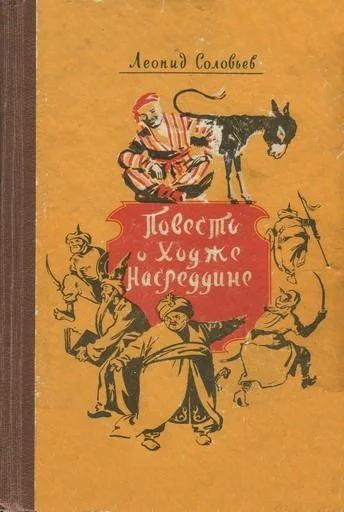
Leonid Solovyov, The Tale of Khoja Nasreddin. Molodaya Gvardiya Publishing House, 1957. Illustrated by Stanislav Zabaluev / From open sources
There is an opinion that through the image of Khoja Nasreddin, Solovyov was criticizing Stalinist power. However, in both his novel and Protazanov’s film, the ‘disturbed peace’ is clearly not the peace of Soviet authority but that of the emir. Viewed in this light, Solovyov’s work is much closer to the leader’s discourse on ‘Asian backwardness’ than to any subtle act of resistance.
Rather than opposing Soviet ideology, he reinforced its positions, employing satire easily understood by a broad audience and cloaked in orientalist imagery. This is precisely why the novel about Khoja Nasreddin became a convenient instrument of cultural control and symbolic class division.
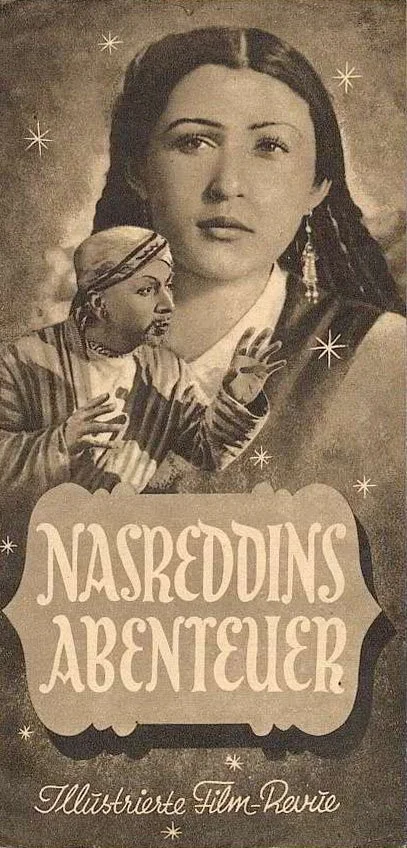
Poster for the film The Adventures of Nasreddin / Wikimedia Commons
While Solovyov’s first work, written jointly with Vitkovich, was still in the process of being adapted for the screen at the Tashkent studio, its sequel was already being created. Although the second screenplay was also intended for Yakov Protazanov, it ultimately went to the Uzbek director Nabi GanieviNabi Ganiev was a major Uzbek Soviet film director who helped establish and shape the national cinema of Uzbekistan. and was released under the title The Adventures of Nasreddin.
And Solovyov did not stop there. In 1954, he published the novel The Enchanted Prince, a sequel to The Disturber of the Peace, which served as the basis for another feature-length film produced in 1959 at the TajikfilmiTajikfilm is Tajikistan's national film studio, founded in 1930 and central to the production and development of Tajik cinema for decades. studio. All of these works became vivid manifestations of a large-scale process of Sovietization aimed at representing Central Asia through the prism of exoticized folklore.
In this context, Kazakhfilm’s interest in the character of Aldar Kose during the 1940s and 1950s—largely modeled on the same framework as the Soviet image of Nasreddin—can be seen as a continuation of the trajectory established by Solovyov.
Khoja Nasreddin—the Agitator
As scholars note, the Soviet interpretation of Khoja Nasreddin presented him as a ‘jovial jester’, deliberately stripped of Islamic elements and safely incorporated into the unofficial Soviet racial hierarchyiJo Ann Conrad. ‘“This is not our Hoca!” Repurposing, Repacking, and Reappropriating Nasreddin Hoca.’ in Terra Ridens – Terra Narrans. Festschrift zum 65. Geburtstag von Ulrich Marzolph, Beiträge zur Kulturgeschichte des Islamischen, 45, ed. by Regina F. Bendix and Dorothy Noyes (Dortmund: Verlag für Orientkunde, 2018), 263–99, 280. Solovyov and Protazanov portrayed Nasreddin as an active, lively, and energetic hero in his mid-thirties. Yet in this process of transformation, he largely ‘lost’ his independence: he became a heteronormative character who conformed to social norms, possessed a heightened class awareness, and even took on certain traits of a romantic hero.
In the film, Nasreddin falls in love with the daughter of a poor man and rescues her from the emir, who had placed her in his harem. This kind of plotline adapts Nasreddin's image to Soviet (and, to some extent, Western) narrative standards, ultimately distancing him from his original folk persona.
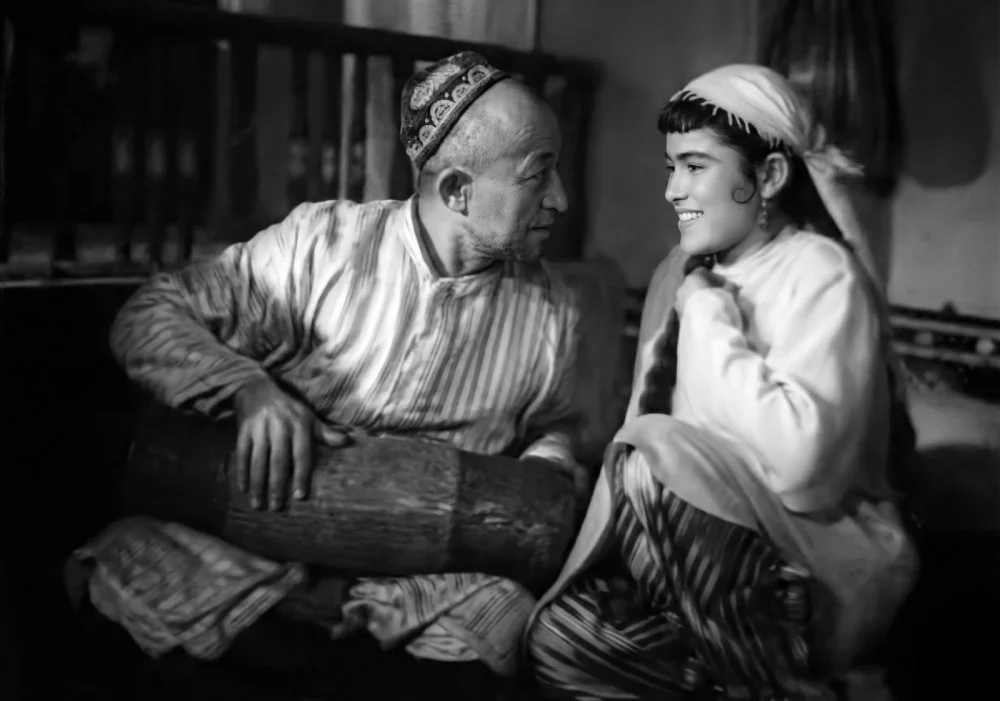
The Adventures of Nasreddin, 1946. Directed by Nabi Ganiev / From open sources
The excessive politicization of Khoja Nasreddin’s image is especially evident in his dialogues. In one scene, a poor man rescued from debt offers him a share of his earnings, to which Nasreddin replies: ‘If all masters shared their profits with their workers, what would become of this world? Would Allah or the emir tolerate such disorder?’
By portraying religious and traditional authority as a source of injustice, he becomes an agitator, giving the impression of a man ‘ready to join the ranks of the Communist Party’.
From Oral Tradition to the Silver Screen Hero
After this film, Soviet cinema repeatedly returned to the image of Khoja Nasreddin. In some works, he was overtly ‘colored’ in the spirit of socialist realism, while in others, more profound meanings and elements of social critique emerged. In 1946, at the Tashkent Film Studio, Nabi Ganiev directed The Adventures of Nasreddin, a sequel to the previous film. Razzak Khamraev, the celebrated Uzbek Soviet actor playing Nasreddin, appeared more convincing than Lev SverdliniLev Sverdlin (1901–1969) was a celebrated Soviet stage and film actor, awarded the title of People's Artist of the USSR.: his age, appearance, and mannerisms corresponded more closely to the traditional image of Khoja in Central Asian folklore.
In the cinematic fairy tale Nasreddin in Khujand, or The Enchanted PrinceiNasreddin v Khodzhente, ili Ocharovannyi prints/Насреддин в Ходженте, или Очарованный принц in Russian (1959, Tajikfilm), directed by Amo Bek-Nazarov and Erazm Karamyan, the fairy-tale elements are enhanced, and adventures and Eastern exoticism come to the forefront. Here, Nasreddin appears as a middle-aged man helping lovers, yet the film's visual and narrative style largely draws on cinematic adaptations of One Thousand and One Nights.
Uzbek Soviet actor and film director Mukhtar Aga-Mirzaev’s film The Twelve Graves of Khoja Nasreddini12 mogil Khodzhi Nasreddina/12 могил Ходжи Насреддина in Russian (1967) literally ‘teleported’ the hero to Soviet Dushanbe, breaking the boundaries of time and space and confronting the folkloric character with contemporary reality. The famous actor Arkady Raikin praised the performance of the lead actor, Bashir Safarogly, as being like a ‘southern Chaplin’. The film was a melancholic, satirical, and profound work that offered a critical reflection on Soviet reality.
In 1975, Soviet film and television director Pavel Arsenov’s musical fairy-tale film The Taste of HalvaiVkus Khalvy/Вкус Халвы in Russian presented a kind of ‘prehistory’ of Nasreddin, focusing on his formative years and youth. In the three-part television film Look HappieriGlyadi Veselei/Гляди Веселей in Russian (1982, Tajikfilm; director and lead actor: Marat Aripov), the image of Nasreddin acquired philosophical, lyrical, and ironic nuances.
Finally, during the Perestroika era, actor Anatoly Bobrovsky in The Return of Khoja NasreddiniVozvrashchenie Khodzhi Nasreddina/Возвращение Ходжи Насреддина (1989) depicted the hero as a contemporary of Amir Timur, emphasizing philosophical reflections and a critical perspective on pre-Soviet history.
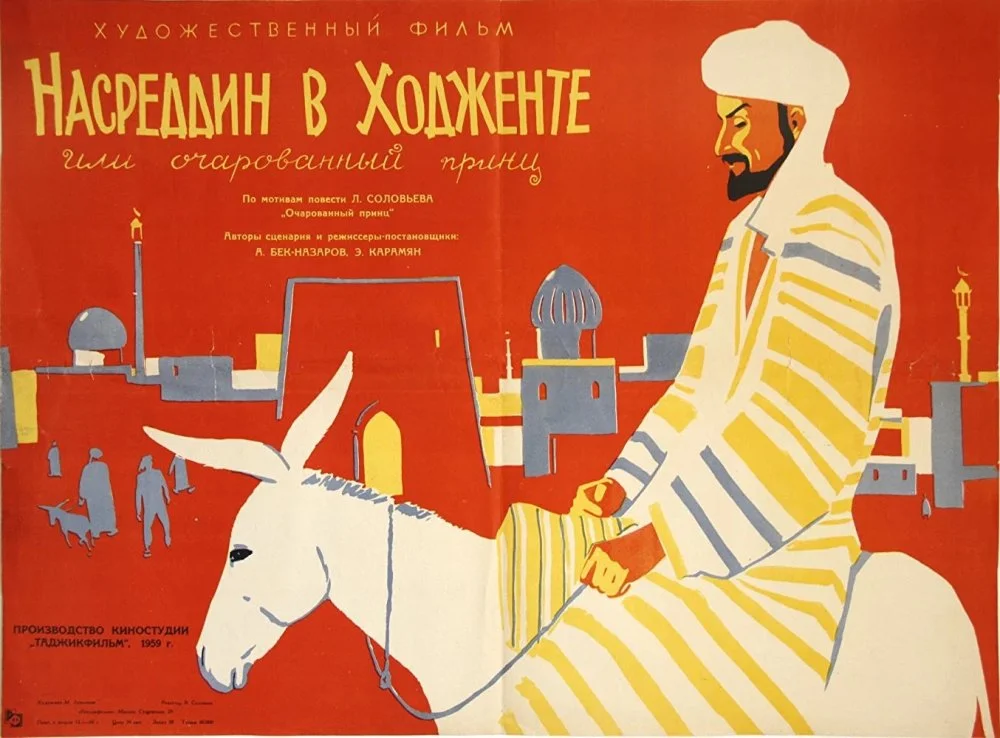
Poster for the film Nasreddin in Khujand, or The Enchanted Prince / Kinopoisk
Ultimately, during the Soviet period, Khoja Nasreddin transformed from a character of oral tradition into a frequent figure on the silver screen. His cinematic adaptations and visual portrayals represented an attempt to harness and control folklore. From 1943 onward, clad in a ‘Soviet chapan’ and cast as a defender of the poor, the screen version of Nasreddin remained loyal to socialist ideals throughout the Soviet era, evolving from a young, cheerful character into a thoughtful, critically minded sage.
Yet, the Soviet authorities never fully controlled this figure. In many instances, Nasreddin became a critic of Soviet reality himself, and as a ‘composite character’, he continued to evolve with the times, acquiring new stories and meanings. Nevertheless, because his image was most often adapted by directors from the ‘European’ regions of the Soviet Union, Nasreddin invariably retained the hallmarks of the stereotypical face of Soviet Orientalism.
