
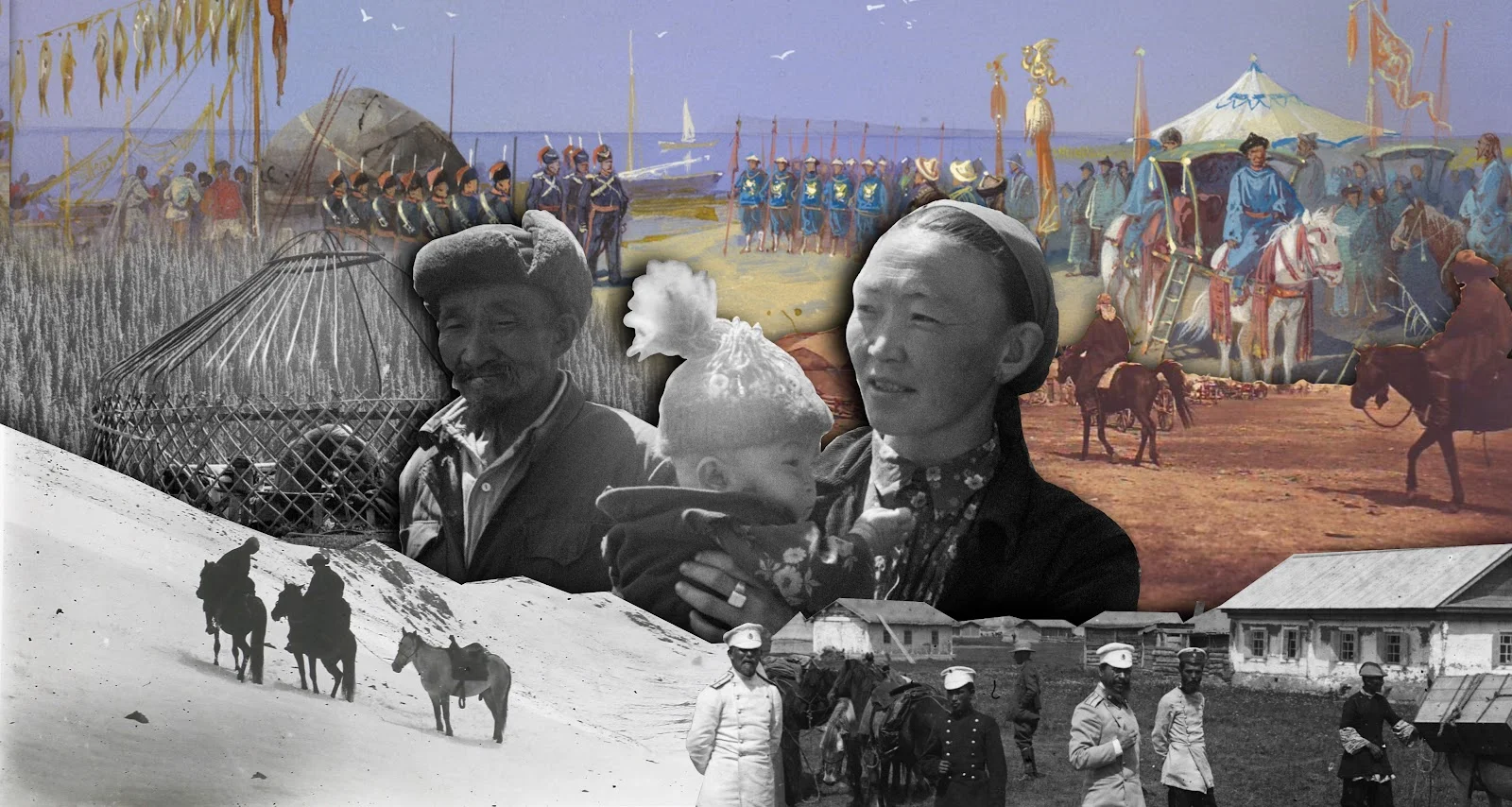
The second half of the 19th century and the beginning of the 20th century became a time of severe trials for the Kazakh people. First, the Kazakh Steppe found itself at the center of imperial interests, and then the First World War erupted, becoming the catalyst for a national liberation movement. The October Revolution and the Civil War only worsened the situation, leading to widespread devastation and forced displacement. However, throughout this entire period—from the Tsarist era through the Soviet period—the history of Kazakhstan remained inextricably linked to that of Chinese Xinjiang.
What became of the Kazakhs who fled to China after the 1916 uprising, and how did relations between Kazakhstan and Xinjiang evolve? In the concluding lecture of his course on the history of Kazakh-Chinese relations, Professor Nabijan Mukhametkhanuly examines the military-political, economic, and cultural ties between Kazakhstan and Xinjiang, and explores the fate of the Kazakhs who settled in China.
The Pivot Toward China
At the beginning of the 19th century, the Russian Empire intensified its expansion deeper into the Kazakh Steppe, seeking, among other things, to turn it into a strategic foothold for establishing ties with Chinese Xinjiang. Against this backdrop, the role of the Kazakhs in the region’s foreign trade steadily declined. Russian merchants gradually displaced local traders, taking over their niche in the markets of Ili and Tarbagatai, where Kazakh caravans had previously dominated.
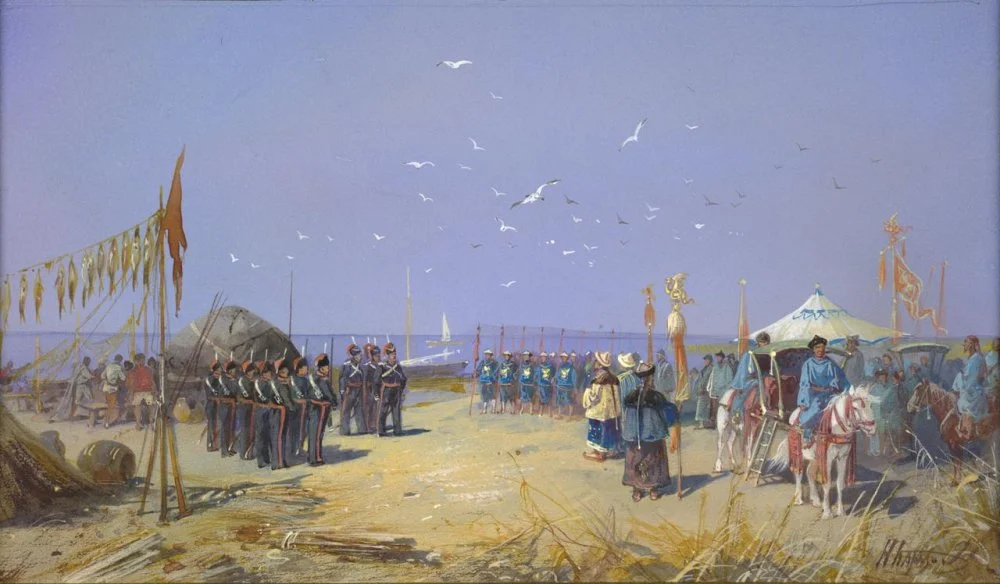
Nikolay Karazin. Ceremony of the reception of the Chinese amban by the superintendent of the Bukhtarma military fishery, 1891 / Wikimedia Commons
The expansion of Tsarist Russia's trade into Xinjiang began in the early 19th century. As early as 1807, Russian merchants were already sending caravans there, although formal economic relations between the two powers were not established until nearly half a century later, in 1851. The main trading centers for Russia became the markets of Kulja and Chuguchak.
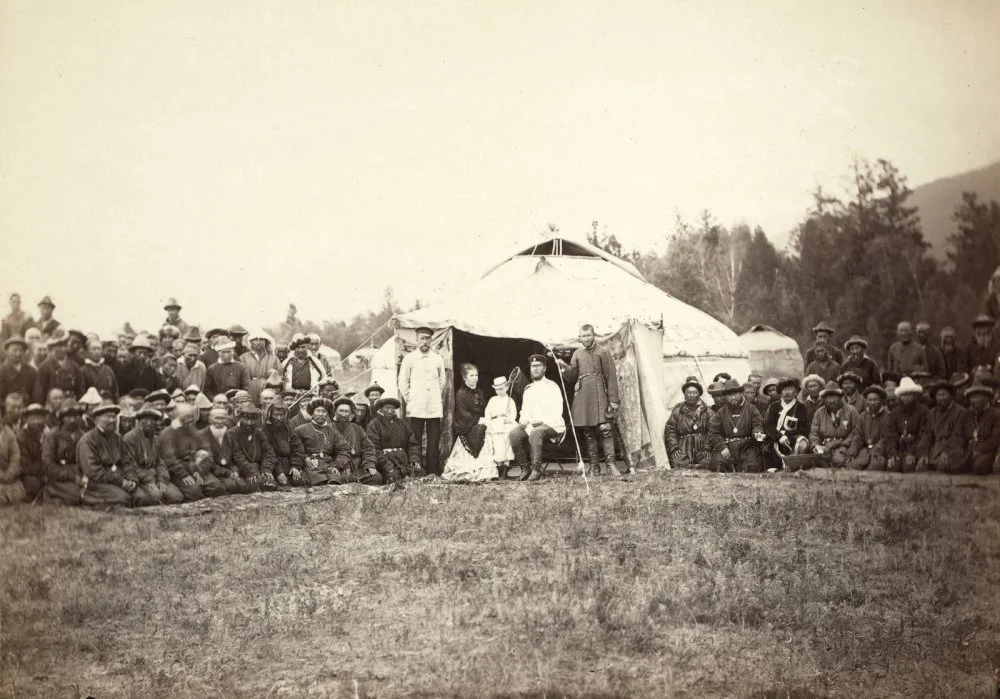
Russian officer with his family surrounded by Kazakhs. 1885–1886 / Getty Images
Within just three years after the signing of the Treaty of Kulja, the volume of Russian exports to Xinjiang increased fourfoldi Алдабек Н.Ә. Тарихы талқыға толы Шыңжаң (XVIII ғ. 1949 ж.). – Алматы: Қазақ университеті. 2024, 166 б. . Concerning Russian merchants, the Qing Empire pursued the same trade policy as it did toward the Kazakhs. Therefore, the Chinese authorities exempted them from paying taxes in Kulja and Tarbagatai (Chuguchak). This enabled Tsarist Russia not only to intensify trade with Xinjiang via Kazakhstan significantly, but also to leverage these routes to pursue broader strategic objectives.
A vivid example of this can be seen in the famous expeditions of Shokan Ualikhanov: to Kulja in August 1856 and to Kashgar in October 1858.
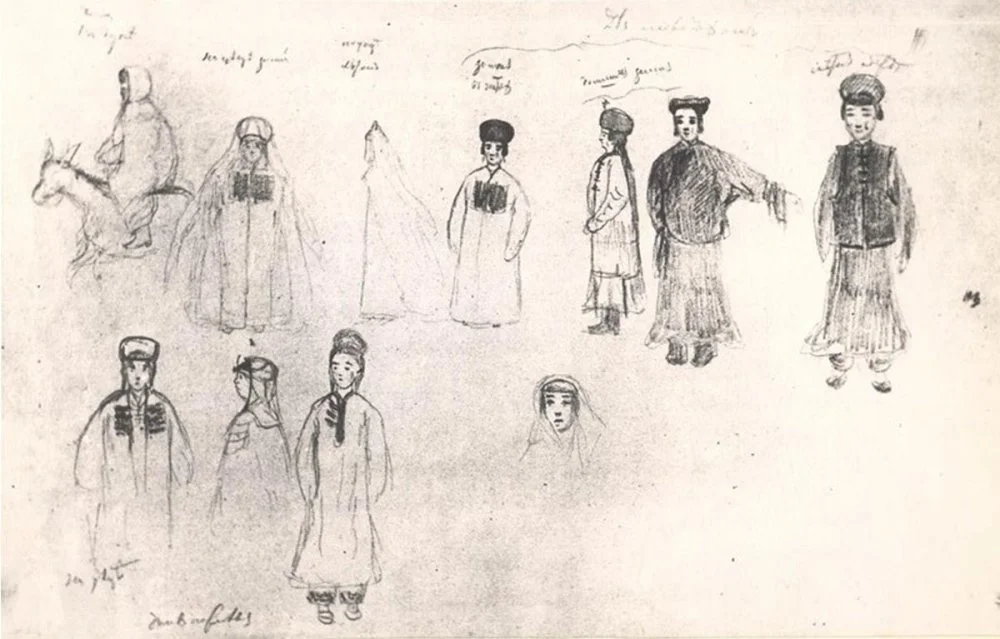
Shokan Ualikhanov. Clothing of Kashgar women, 1858 / https://shoqan.kz/
A Divided Steppe?
In October 1864, the Russian and Qing Empires, in a separate protocol, formally defined the main line of the state border between the two empires. Subsequently, the authorities of both states attempted to regulate the legal status of Kazakhs who found themselves on opposite sides of the border. However, the Kazakhs of China and the Russian Empire continued to cross the border freely at any time and place, visiting relatives without fear of being held accountable.
According to archival data from the Xinjiang Institute of Diplomatic Studies for 1910, labor migration to Kazakhstan was widespread among the local Uyghurs, Dungans, Mongols, and KazakhsiШэн Юйньлин, Вэй Чанхун. Бірінші дүниежүзілік соғыстың алды-артында Орталық Азияда болған Хуацияолар жөнінде зерттеу // Батыс өңірді зерттеу (Xiyu yanjiu). – 1999, №46, 53 б. . These findings are also confirmed by the records of the Governor of Xinjiang, Yang Zengxin, who noted:
“Most of our compatriots — huaqiaoihuaqiao are people from China living abroad or members of the Chinese diaspora — residing in Central Asia are Kazakhs, Dungans, and Uyghurs”iШэн Юйньлин, Вэй Чанхун. Бірінші дүниежүзілік соғыстың алды-артында Орталық Азияда болған Хуацияолар жөнінде зерттеу // Батыс өңірді зерттеу (Xiyu yanjiu). – 1999, №46, 53 б. .
At the same time, subjects of the Russian Empire — both Kazakhs and representatives of other ethnic groups — actively engaged in trade in the Ili, Tarbagatai, and Altai districts of Xinjiang.
More about
CENTRAL ASIA: FROM EMPIRE TO SOVIET RULE
Historian Adeeb Khalid on Colonialism, Nation-Building, and the Enduring Myths That Shape Our Understanding of the Region
Yet life along the frontier took its own course: conflicts frequently erupted between Kazakhs living on opposite sides of the border over widows, disputes arose concerning bride price (kalym), and livestock thefts also occurred. For example, in a report submitted to the court of the Qing Empire on January 25, 1883, it was stated:
“Kazakhs from Russia, wearing turbans, repeatedly raid our border guards. They break into horse-breeding farms and drive away entire herds of horses.”
In response, an imperial decree was issued ordering that the guilty parties be punished according to the severity of their offensesiЦин патшалығы Дэзун патшаның орда күнделіктері (清德宗实录). 158 т., 12 б.; Шыңжаң Ұлттарды зерттеу институты (新疆民族研究所). Цин күнделіктеріндегі Шыңжаңға қатысты материалдар жинағы (清实录新疆资料辑录 — Qingshilu Xinjiang ziliao jilu). — Үрімжі: Шыңжаң Ұлттарды зерттеу институты, 1978. 12-кітап, 5459 б. .
Interestingly, the authorities of both the Russian Empire and China entrusted the resolution of disputes arising among the Kazakhs to the biysitraditional Kazakh judges of both countries. Kazakh biys convened judicial assemblies to adjudicate all disputes and claims under customary lawiЛи Шэн. Қытай-Ресей съездерін зерттеу // Шыңжаң қоғамдық ғылымдары (Xinjiang shehuikexue — 新疆社会科学). – 1998, № 4, 68 б. .
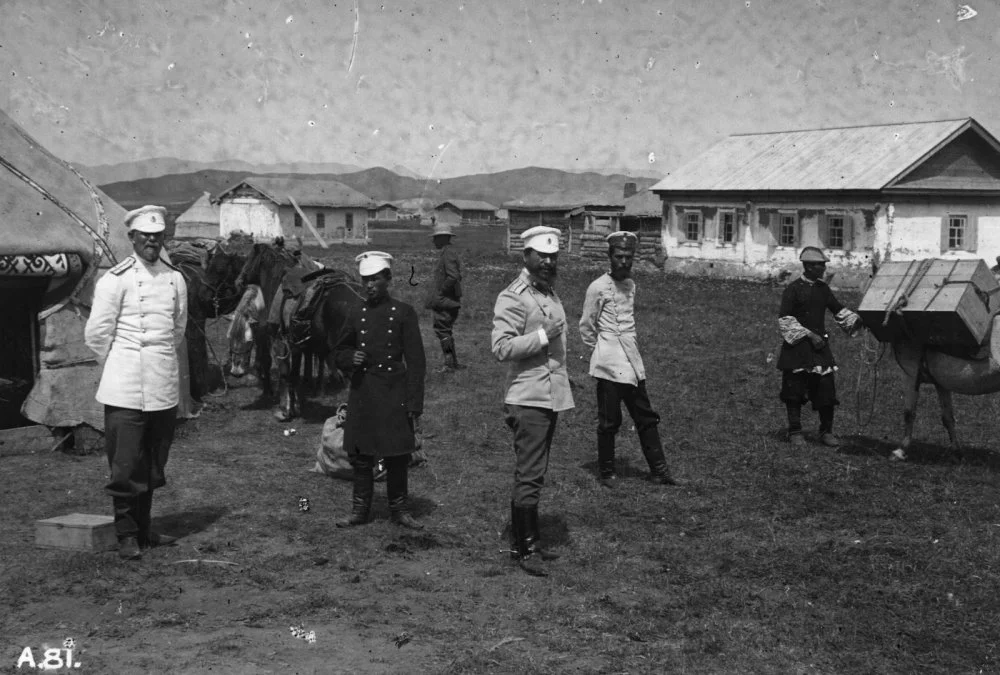
Russian troops at the border between Xinjiang, Tibet, and Kyrgyzstan, c. 1900 / Getty Images
Between 1871 and 1911, joint court sessions involving Kazakhs from China and the Russian Empire were held 14 times (not including smaller assemblies), during which tens of thousands of claims were reviewed. Marriage and family disputes accounted for about forty percent of the total judicial caseload.
The composition of the biys representing both sides at such assemblies was generally equal. For example, at the very first congress in Ili, 62 representatives from the Kazakhs of the Russian Empire arrived under the leadership of Sharshuash-biy and Zhamenke-biy. In comparison, 60 representatives, headed by Baiyeke-biy, took part on the side of the Kazakhs of China.
In every case, the biys sought to deliver the most impartial verdicts possible, placing unity and harmony between the Kazakhs of both sides above all else. The guilty party was required to pay a fine (ayyp). According to the recollections of contemporaries, people came to these gatherings as if to a great festival — “dressed in their finest clothes and carrying staffs.” This respect for the court is vividly reflected in the writings of Chinese authors who witnessed everything firsthand:
“At judicial assemblies, the Kazakhs of both countries arrive on their finest steeds, richly adorned and dressed in their most elegant festive clothing”iМа Лянның мәлімдемесі (MaLian zousu — 马良奏诉). Гуанши патшаның 18 жылы (1892 ж.), қазанның 29 күні. .
Things went so far that after the judicial assembly in Kegen in 1902, the Kazakhs from both sides organized large-scale horse races, turning the successful resolution of disputes into a loud and joyful celebrationiБәйеке би //Шыңжаң қоғамдық ғылымы. – 1995, № 3, 96 б. .
Kazakhs in Search of Refuge
Radical changes in both China and the Russian Empire marked the beginning of the 20th century. In 1911, the Xinhai Revolution brought down the centuries-old rule of the Qing Empire, and by 1912 the government of the Chinese Republic (Zhonghua Minguo) had already appeared on the political stage. At the same time, Yang Zengxin assumed the post of Governor-General of Xinjiang.
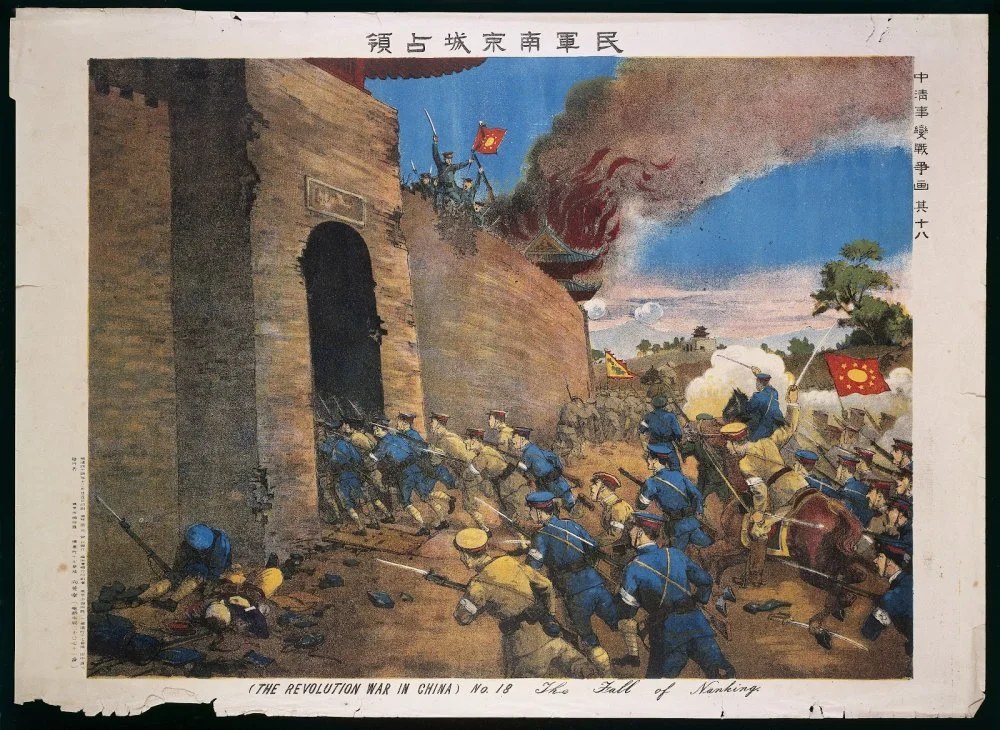
T. Miyano. The Revolutionary Army Entering Nanking. Colour lithograph, 1911. Wellcome Library, London / Wikimedia Commons
In the summer of 1914, World War I began, and by 1916 the Russian Empire, fighting on the side of the Entente, had fallen into a profound crisis. Seeking a way out of this critical situation, the emperor issued a decree conscripting Kazakhs and other peoples of Central Asia for labor service in support roles behind the front lines.
This decision sparked widespread protests that soon escalated into a national liberation uprising. However, the Tsarist authorities suppressed the revolt with unprecedented brutality, carrying out a bloody crackdown on the insurgents. Fleeing punitive detachments, the Kazakhs of Zhetysu (Semirechye) crossed the Chinese border and sought refuge deeper into Xinjiang.
That year, around 300,000 Kazakhs and Kyrgyz crossed the Xinjiang border. More than 250,000 of them were Kazakhs.
Most of them took refuge in the border regions of the Ili, Tarbagatai, and Altai districts. About ten thousand Kazakhs, fleeing together with Kyrgyz, Uyghurs, and Dungans, reached Aksu and Uchturfan in Southern Xinjiang.
This exodus provoked a serious deterioration in diplomatic relations between China and the Russian Empire. The government of Xinjiang interpreted the status of the arrivals not as “refugees,” but as “fugitive subjects,” which ultimately determined their subsequent treatment:
“We can neither kill those who have arrived nor assume responsibility for their upkeep. Providing them with assistance would be regarded as harboring rebels from a hostile state. If we move to eliminate them, we will find ourselves at the center of an international scandal. Therefore, the only course of action available to us is deportation.iЯн Цзэнсинь (杨增新) Өткен жылдар жазбаларының толықтамасы (补过斋文牍 — Buguozhaiwendu). 4 жинақ.”
The Tsarist authorities hoped to eliminate the Kazakhs who had fled abroad using Chinese troops. At the very least, the plan was to kill or arrest the leaders of the uprising. However, the Chinese authorities sharply refused, justifying their position as follows:
“The Russian Kazakhs are people who evaded military conscription, and their flight onto Chinese territory is merely an attempt to escape punitive measures by the Russian army. The only proper course is their peaceful return”iЯн Цзэнсинь (杨增新) Өткен жылдар жазбаларының толықтамасы (补过斋文牍 — Buguozhaiwendu). 4 жинақ..
Through diplomatic channels, Beijing attempted to persuade Saint Petersburg to pardon the Kazakhs. However, the Russian consulates deliberately delayed the process of their return to their homeland by creating various formal obstacles.
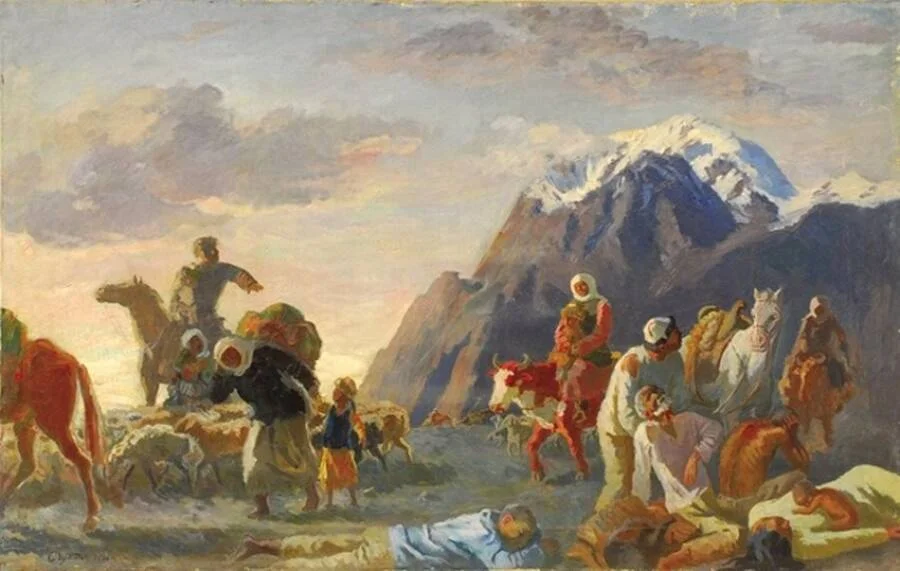
Semyon Chuikov. Fleeing rebels to China, 1936. Kyrgyz National Museum of Fine Arts named after Gapar Aitiev
In 1917, the October Revolution triumphed in Russia. The Bolsheviks came to power, and the new government declared an amnesty for the Kazakhs who had fled to China. As early as 1918, the Kazakhs who had settled in the northwestern regions of Xinjiang were repatriated.
At the same time, the Kazakhs who had fled to Kashgaria raised an extremely painful issue before departing for their homeland — the return of their wives and children, whom they had been forced to sell to local residents simply in order to survive. The authorities in Xinjiang granted this request, after which the refugees were directed toward the border between Xinjiang and KyrgyzstaniМұқаметханұлы Н. Халықаралық фонемен: қазақ халқының бөлінуі мен тұтастану үдерісі. – 140 б. .
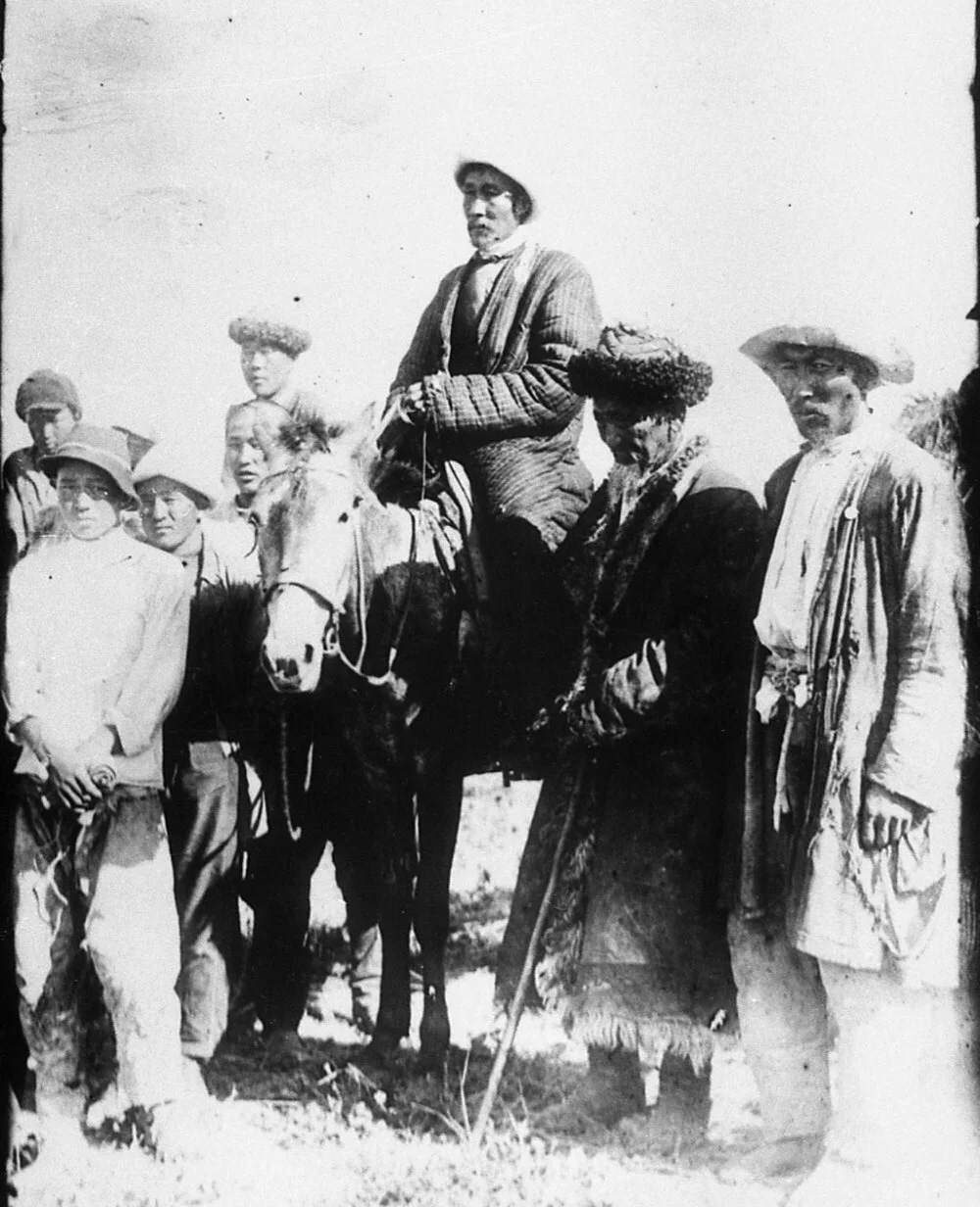
Participants in the Semirechye uprising, 1916 / Wikimedia Commons
The Kazakhs who fled from Zhetysu to Xinjiang spent about two years in exile. A vast number of people, exhausted by the hardships of the journey, fell victim to hunger and epidemics. However, it must also be noted that their fellow tribesmen living in Xinjiang showed the refugees genuine compassion and care, thereby easing their bitter fate, at least somewhat.
Post-Revolutionary Shortages and Trade
During the October Revolution in Russia, the authorities in Xinjiang closed the border crossings with Kazakhstan. However, after the Civil War, Central Asia faced a severe food shortage due to drought, and livestock farming suffered catastrophic losses. This situation forced the young Soviet government to seek opportunities to restore trade relations with Chinese Xinjiang.
In 1920, the Bolsheviks concluded the first official trade agreement with Xinjiang, and by 1921 the Khorgos checkpoint was already operating, marking the start of regular trade between Xinjiang and Soviet Kazakhstan. Over time, the geography of cooperation expanded to include Chuguchak, Aksu, and Kashgar.
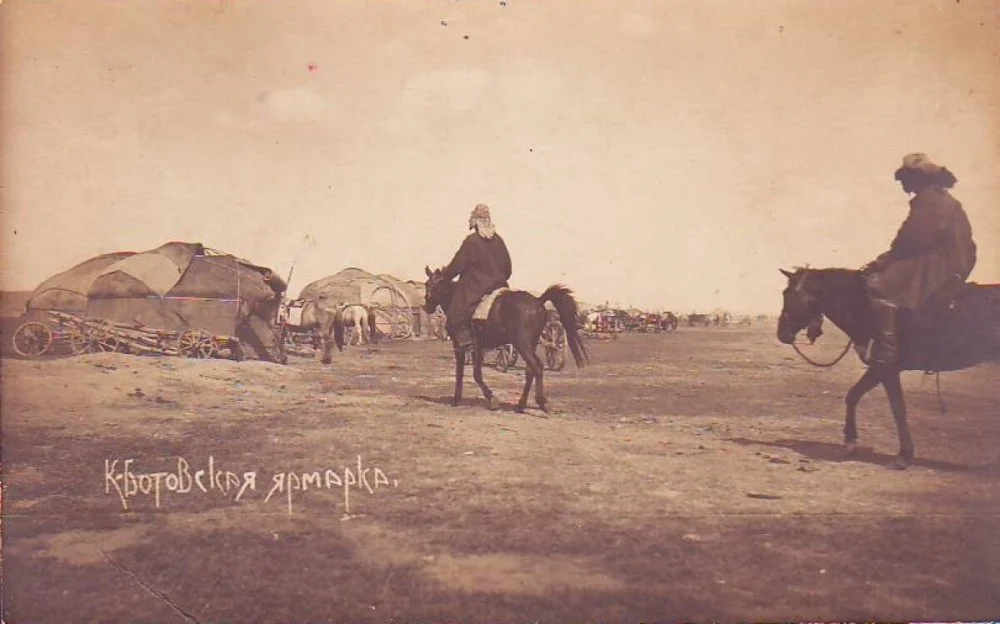
Koyandy Fair / open sources
In 1925, by mutual agreement between the parties, Soviet consulates were opened in Chuguchak, Altai (Sarsumbé), Urumqi, and Kashgar. A trade mission was established alongside each of them, enabling the opening of yet another border crossing — this time in Tarbagatai.
As trade volumes between Xinjiang and Kazakhstan grew, wholesale markets and regular fairs began to emerge. For example, between 1925 and 1927, Chinese merchants arrived in an endless stream at the famous Karkaraly and Koyandy fairs.
Statistics for 1927 show that Xinjiang exported 500,000 sheep to Kazakhstan (at 13 rubles per head), 15,000 head of cattle (at 50 rubles per head), 2–3 million tons of cow and horse hides (at 5 rubles per ton), 2 million poods of cotton (at 16 rubles per pood), and 50 poods of raw silk (at 27.5 rubles per pood)iЧэн Хуэйсың, Чэн Чао (陈慧生,陈超). Миньго Шыңжаң тарихы ( 民国新疆史). — Үрімжі: Шыңжаң халық баспасы, 1999. – 199 б. .
In 1933, Sheng Shicai assumed the post of Governor-General of Xinjiang. By demonstrating loyalty to the Communist Party, he secured comprehensive support from the Soviet Union, elevating bilateral trade relations to an entirely new level.
In 1937, after Japan invaded China, communications between the country’s interior provinces and Xinjiang were paralyzed. Under these conditions, the Soviet Union effectively became the region’s sole trading partner. Moreover, because of the Japanese occupation of northeastern China, the route through Kazakhstan into Xinjiang became a key international artery by which the USSR transported aid to the Chinese resistance.
However, in 1942, Sheng Shicai's political orientation changed abruptly: he sided with the Kuomintang and openly turned against the Communist Party and the Soviet Union. This was followed by a sharp cooling of relations, and the volume of mutual trade began to decline.
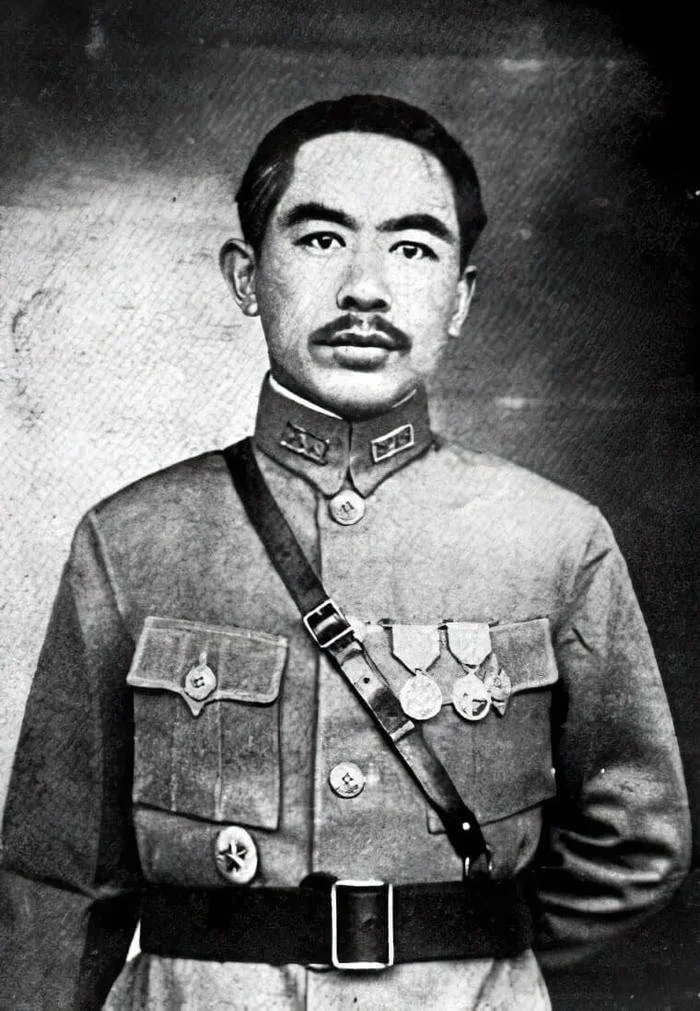
Sheng Shicai / Wikimedia Commons
In 1944, the Kuomintang government recalled Sheng Shicai and appointed Wu Zhongxin in his place. The new head of the province proclaimed a policy of “peaceful diplomacy,” seeking to ease tensions in relations with the Soviet Union. In November of the same year, the “Provisional Government of East Turkestan” was established in Kulja with economic support from the USSR. Wholesale markets reopened at the Khorgos, Bakhty, and Zhemeney (Maikapshagay) border crossings along Kazakhstan’s eastern frontier, giving a powerful boost to the revival of barter trade.
On July 15, 1949, the “Trade Agreement between the Soviet Union and Xinjiang” was signed, and already that same year total trade turnover reached 72 million rubles.
Trade relations between Soviet Kazakhstan and Xinjiang were built both at the interstate level and through non-governmental structures. This route became especially significant during the war against the Japanese invaders: military and humanitarian aid sent by the USSR to China passed uninterrupted through Kazakhstan into Xinjiang, from where it was distributed onward to Lanzhou.
A Cultural Bridge Between the USSR and China
Up until the middle of the 20th century, contacts between Soviet Kazakhstan and Xinjiang were not limited solely to military and trade interactions — cultural rapprochement was also actively developing. This was most vividly reflected in the spheres of education, literature, and the exchange of periodicals among Kazakhs on both sides of the border.
For example, in the 1930s the government of Xinjiang seriously undertook significant educational reforms, which gave a major boost to enlightenment efforts among the indigenous population. In 1933, Sheng Shicai, drawing on the Soviet Union's experience and influence, introduced a number of programs through which national schools were opened across the region on a mass scale. Kazakh and Tatar teachers from Kazakhstan were actively recruited to teach in them, while the educational process itself was based on textbooks brought from the Kazakh SSR.
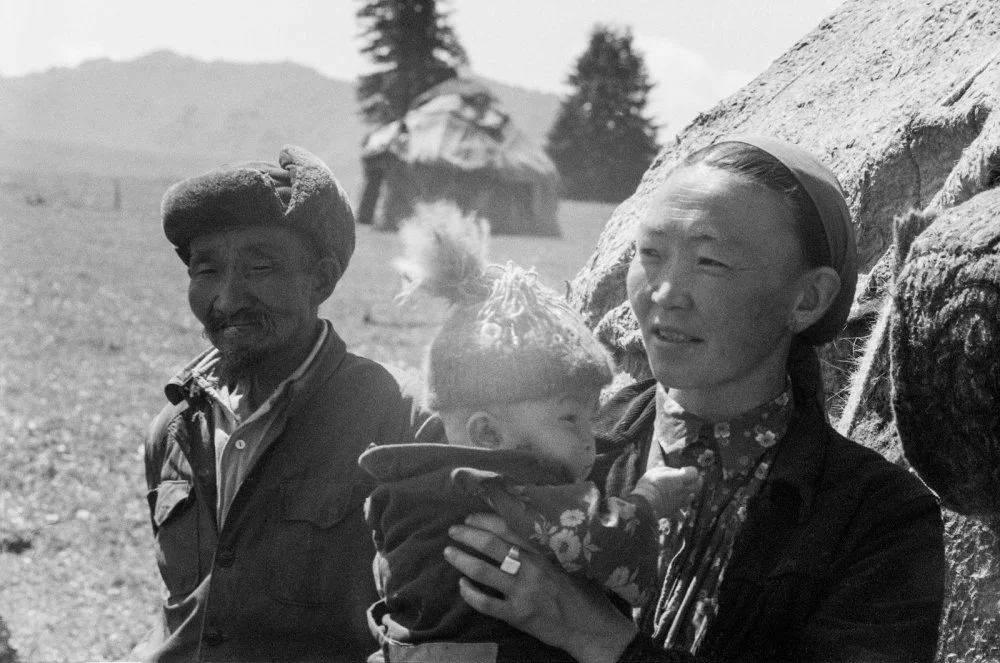
Urumqi, Xinjiang, 1956 / Getty Images
Xinjiang and the Soviet authorities developed warm relations in the field of education, sending Kazakh, Uyghur, and other national minority youth to universities in Almaty and Tashkent. One prominent graduate of that generation was Asein Zhaksylyquly. After graduating from the “Central Asian University” in Tashkent, he returned to Kulja and founded “Bilim Zhwrty” (“Land of Knowledge”) — an educational institution that laid the foundation for today’s Ili Pedagogical University — and remained its director for many years. A witness to those events, Mukash Zhakenuly, recalled:
“From the Altai district, 27 children — Kazakhs, Uyghurs, and Mongols — were sent to the Soviet Union in three groups”iМұқаметханұлы Н. ХХ ғасырдағы қытайдың тарихи үдерісіндегі қазақтардың әлеуметтік дамуы. — Алматы: Қазақ университеті, 2006. – 28 б. .
With the transition of Chinese society to a republican system, education became a priority. In particular, the Xinjiang government became deeply involved in developing the secondary education system. In 1916, teacher-training courses were established in Urumqi to prepare instructors for primary and secondary schools. In 1917, the Meng-Ha Xuetang (Mongol-Kazakh School) was opened in the Ili region, in the settlement of Kyure (Khorgos). It was this institution that produced such prominent figures as Tanzharyk Zholdyuly, Abeu Kudyshuly, and Nusipkhan Konbayuly.
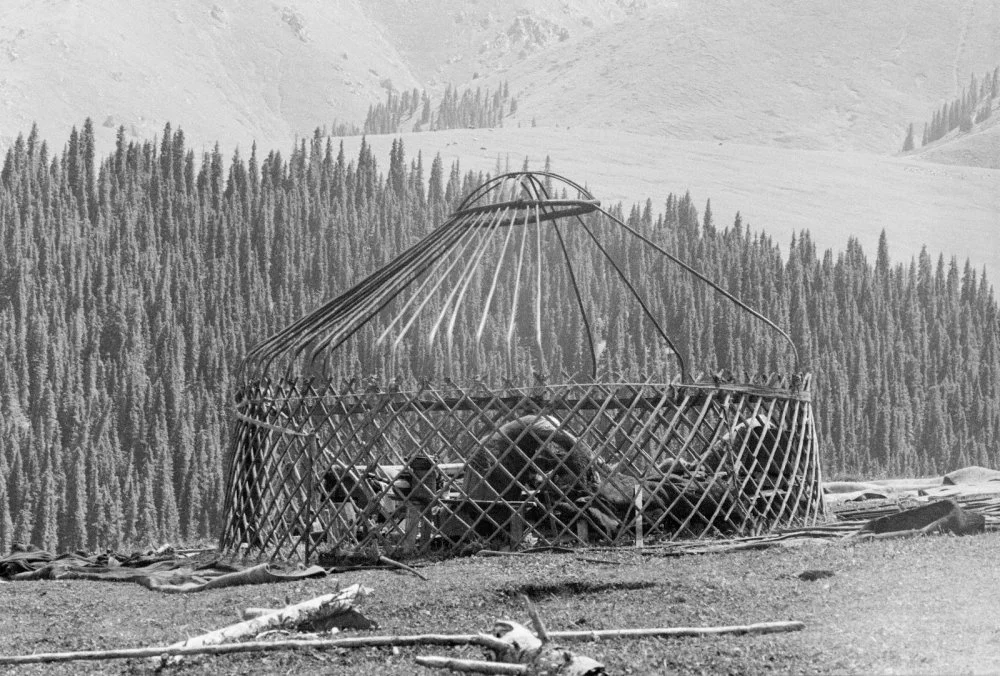
A bare frame of a yurt. Urumqi, Xinjiang, 1956. Tom Hutchins / VCG via Getty Images
In the 1920s, the Xinjiang government established the Provincial School of Russian Language and Law, the Provincial Secondary School, and a teachers’ college in Urumqi, placing them under full state support. Special priority was given to the School of Russian Language and Law: the chairman of the Provincial Education Committee, Liu Wenlong, personally headed the institution. Such close attention was explained by a strategic objective — training diplomats and legal specialists fluent in Russian for future interaction with the Soviet Union. The school’s high status is also evidenced by the recruitment of high-ranking specialists to teach there, including the deputy Russian consul general in Urumqi, Midzhed, and a certain Nikolai.
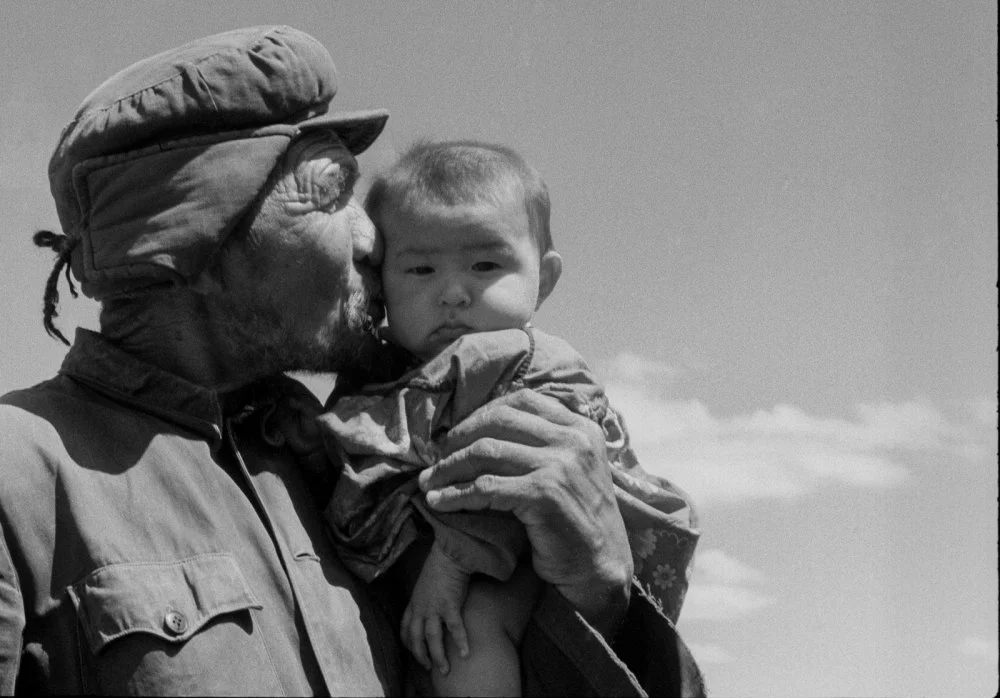
Urumqi, Xinjiang, 1956. Tom Hutchins / VCG via Getty Images
In any case, the interregional relations between Kazakhstan and Xinjiang in the first half of the 20th century were multifaceted and complex. The interactions between these two regions consistently developed within the broader framework of diplomacy between the Soviet Union and China. At the same time, Soviet power maintained a dominant influence in Xinjiang across all key spheres — from military-political and trade-economic to cultural and spiritual.
The USSR actively influenced the region’s social development and contributed to the preservation of its territorial integrity. In this regard, it is important to emphasize that it was precisely Kazakhstan and Xinjiang that served as the strategic intermediary ensuring the expansion of comprehensive ties between the Soviet Union and China.
