
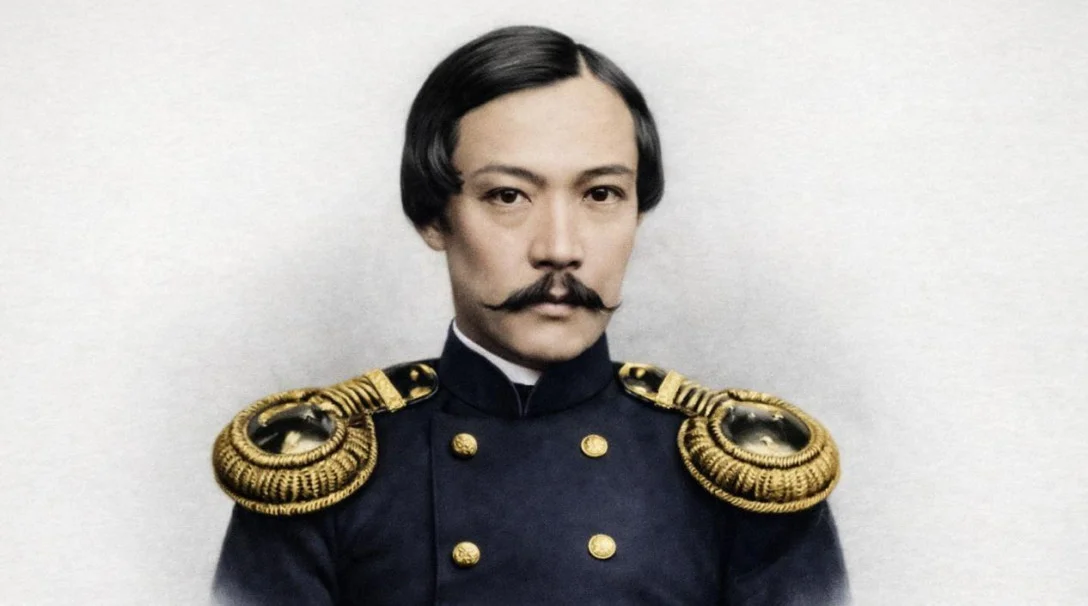
Nearly two centuries after his birth, Shoqan Walikhanov remains one of the most admired—yet still contested—figures in Kazakh history. Celebrated as a pioneering ethnographer and explorer yet also a servant of the Russian Empire, his life and work cannot be viewed simply through the lens of heroism or collaboration.
In this article for Qalam, researcher Nick Fielding revisits Walikhanov’s world and work, traces the tensions that shaped his career and asks what they reveal about knowledge, power, and empire in nineteenth-century Central Asia.
A National Hero or a Contested Figure
What are we to make of Shoqan Walikhanov in the 190th year since his birth? In Kazakhstan today, he is rightly regarded as a national hero. His image appears on the currency; schools and colleges have been named after him; and a wonderful museum can now be found in the village in which he spent the final months of his short life. His writings have established him as a great ethnographer and historian, whilst his exploits as an officer in the Russian Imperial Army are legendary, particularly his year-long undercover expedition to Kashgar in western China. There, in one of the most remote outposts of the Qing Empire, Walikhanov gathered an extraordinary body of new information about the region’s politics, culture, and everyday life.

Monument to Shokan Ualikhanov in Almaty / Getty Images
At the same time, there are countercurrents. Walikhanov came from a noble family that had long been connected to Russia and its imperial ambitions in the steppe. His great-grandfather was Abylai Khani Abylai Khan was an eighteenth-century Kazakh ruler renowned for his skilled diplomacy, which he used to navigate between rival empires while working to unify the Kazakh tribes. and his influential grandmother Aiganym—a woman of immense authority and vision, who built an estate in Syrymbet and founded a madrasa, creating an influential local center for learning and culture—regularly corresponded with senior Russian officials in St. Petersburg. Like his father, Shoqan was educated at the Omsk Cadet School, where he arrived in 1847 at the age of about eleven and spent the rest of his life working in various capacities for the Russian military.
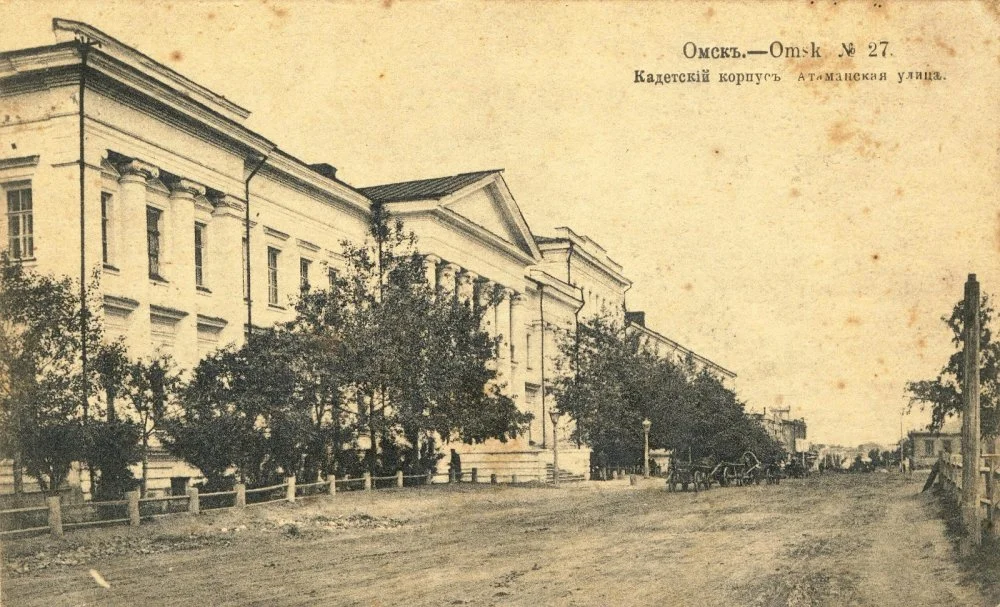
Omsk Cadet Corps, 1916 / Wikimedia Commons
These family credentials and his service in the Russian Imperial Army have sometimes been used to criticize Walikhanov as a collaborator who facilitated the annexation of Kazakh territory. This point is emphasized by contrasting his actions with those of his not-so-distant cousin Kenesary Qasymuly, the last khan of the Kazakh khanate, whose response to Russia’s spreading influence on the steppe was to instigate a revolt that almost stopped the Russians in their tracks. This strange dichotomy within the family not only made itself felt during the young man’s life, but has also dominated the debate around him ever since.
Education and Imperial Pathways
Even during his early life, Walikhanov’s sheer brilliance as a scholar whilst still studying in Omsk made him the focus of substantial attention. He read Dickens and various travel writers in English and very soon showed an interest in Kazakh national culture, Eastern philosophy, and languages. His ethnographic interests first surfaced during his first major expedition in 1856 to the Issyk Kul LakeiThe Issyk Kul Lake is a vast saline alpine lake in Kyrgyzstan. It is nestled in the Tian Shan Mountains and renowned as a historic and scenic site., under the leadership of Colonel Mikhail Khomentovsky. This was when he began his first serious studies of Turkic folklore and culture, copying down parts of the Kyrgyz national epic Manas and writing his first essay on the Kyrgyz people themselves, both of which were published by the Russian Geographical Society.
In his wider life, and in part because his father’s house was often a stopping-off point for such people, Walikhanov came under the influence of many important Russian scholars and exiles. Great geographers such as Grigory PotaniniGrigory Potanin was a nineteenth-century Russian explorer, botanist, and ethnographer who became a prominent Siberian regionalist and a key advocate for Siberian autonomy and cultural self-determination., N.M. YadrintseviN.M. Yadrintsev was a prominent nineteenth-century Siberian publicist, explorer, and ethnographer., and Pyotr SemyonoviPyotr Semyonov was a renowned Russian geographer and explorer who led the first scientific expedition into the Tian Shan Mountains. were all important influences on him and a few years later he first came into contact with the novelist Fyodor Dostoyevsky, who believed the young man was destined to play an intermediary role between the Russians and the Kazakhs.

Shokan Valikhanov and Fyodor Dostoevsky in Semipalatinsk, 1859 / Wikimedia Commons
The two men were clearly very close. In one letter to Walikhanov dated 14 December 1856, Dostoyevsky—who had spent four years in prison in Omsk before spending another five years in exile in Semipalatinsk (Semei)—responded to a request for advice:
I feel this way. Don’t stop studying. You have much material. Write an article about the steppes … It would be very good if you could succeed in writing notes about life in the steppes, about your youth here and so on. That would be a novelty which would be of interest to everybody … Is it not a great aim, a holy task, to be just about the first of your people to explain in Russia what the steppes are and their significance and about your people with regard to Russia, and at the same time to serve your native land by enlightened intercession for it with the Russians? Remember that you are the first Kazakh completely educated in the European way. Don’t laugh at my utopian ideas and prophesies about your destiny, my dear Vali-khan. I love you so, that I have dreamt about you and your destiny for days at a time …
—From ‘Dostoyevsky and Islam (and Chokan Valikhanov)’ by Michael Futrell, in The Slavonic and East European Review (57: 1 (January 1979): 21)
Kashgar and the Birth of a Legend
Pyotr Semyonov—later known as Semyonov-Tyan-Shansky because he led the first Russian expedition into the Tian Shan Mountains—also encouraged the young man to pursue further study, though it would take another two years before this actually happened. In the meantime, under Semyonov’s guidance, Walikhanov undertook what was to become his most famous expedition. Traveling in disguise as a merchant, he joined a trade caravan with the aim of gathering information on Chinese Turkestan and on the city of Kashgar in particular. This region was in turmoil and the Russians wanted to know more about what was happening just over the border.
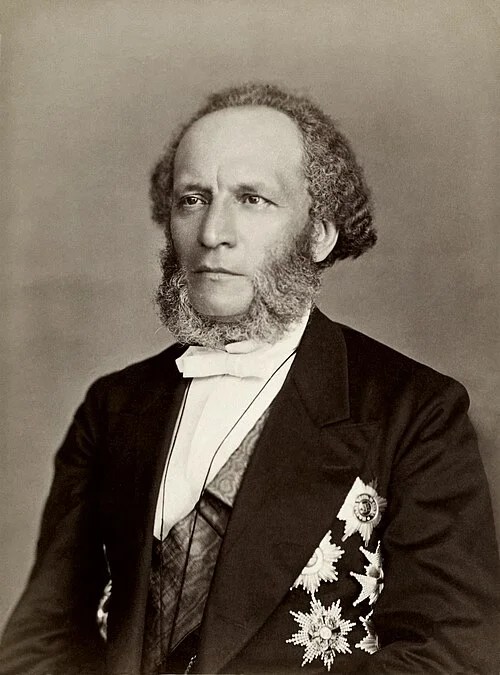
A. Kine. Pyotr Semyonov, 1870s / Wikimedia Commons
After eleven months away, Walikhanov returned to Vernyi (Almaty) in April 1859 and published his remarkable essay, ‘An Expedition to Kashgar: Conditions in Altyshahr, or Six Eastern Cities of the Chinese Province of Nanlu (Little Bukharia) in 1858-59’iFor more information, see The Selected Works of Chokan Valikhanov: Pioneering Ethnographer and Historian of the Great Steppe edited by Nick Fielding (London: 2020): 102-123. This, more than anything else, established the young man’s reputation. It is a classic piece of intelligence work, short and to the point, but packed with useful, reliable information on a wide variety of subjects, from physical geography and climate to flora and fauna and topography.
Following his return from Kashgar, Walikhanov was invited to St. Petersburg, where he became a member of the Russian Geographical Society, received a promotion in rank to captain, a medal, and a reward, and he began to mix with Russian scholars and the capital’s elite. He was even granted an audience with Tsar Alexander II, taking the opportunity to appeal to officials for a more tolerant attitude towards his people.
For the young Kazakh, these must have been heady days, although it seems that ever since he was at the cadet school in Omsk, where, because of his status as a non-Russian, he was not allowed to take his final exams, he always felt inorodetsiInorodets was the Russian Imperial legal term for a ‘non-native’ or ‘alien’, and was used to categorize non-Slavic subjects, like Central Asians and Jews, under separate, often restrictive, administrative laws., an outsider, a non-Christian who would never be entirely accepted in the heart of the Russian Orthodox establishment.
Disillusionment and Withdrawal
Despite his employment in the heart of the Russian military, where he worked in the map and cartography department, these were very productive years for the young scholar during which he was able to further investigate the culture and history of his own people. This is when he wrote his account of the stories and legends of the Great Horde of the Kazakhs, the historical legends of the batyrsiBatyr is a historical Turkic and Mongol title meaning 'hero', or 'warrior', usually bestowed upon military leaders and folk heroes for their courage, strength, and service to the people. of the eighteenth century, his account of shamanism, and articles on the legal systems then in use on the steppe and many other works.
But his health, not helped by his long Kashgar expedition, was beginning its rapid decline. In the spring of 1861, he left the capital, heading for his family home in Syrymbet in what is now northern Kazakhstan. He tried to stand in local elections for the post of elder sultan of the Atbasar Outer District but was thwarted by corrupt officials. He moved back to Omsk and for the next two years, he worked on various aspects of legal reform in the steppe.
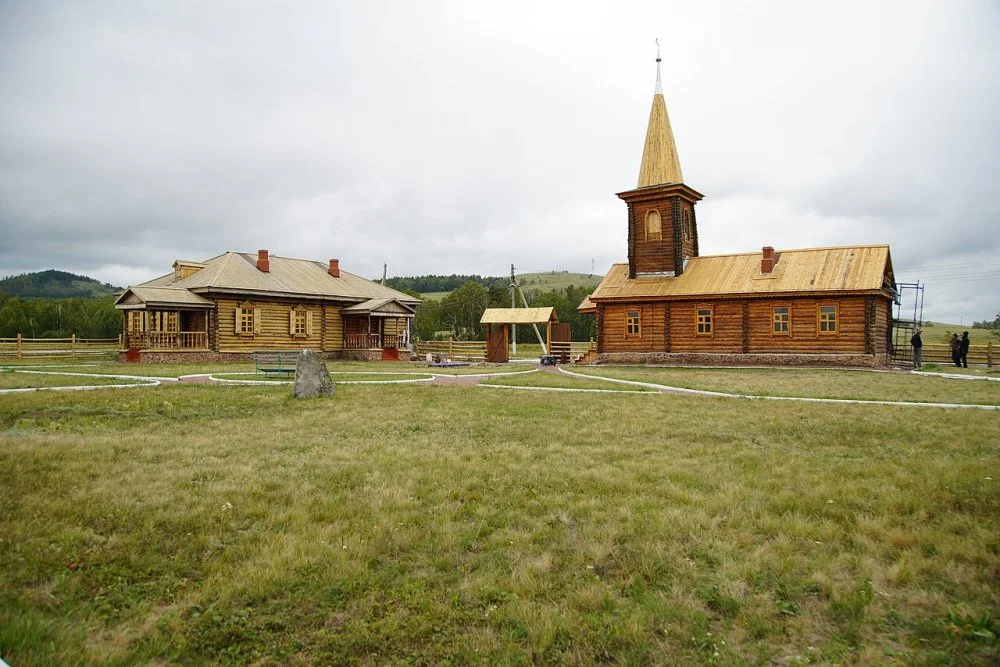
Yakov Fedorov. The Syrimbet estate / Wikimedia Commons
Two years later, in 1864, and still dogged by his ill health, Walikhanov joined a military expedition to the territories in southern Kazakh that were under the leadership of General Mikhail Chernyayev, who had been ordered to consolidate Russian control over the region. But Chernyayev’s brutal treatment of the local population, particularly the decision not to negotiate with the Kyrgyz, but to use overwhelming military force, saw Walikhanov—and a number of Russian officers as well—resign his commission. Never again would he work for the Russians.

Mikhail Chernyaev, 1882 / Vsemirnaya Illustratsiya magazine / Wikimedia Commons
Instead, he spent the last year of his life in the auliThe word ‘aul’ means ‘village’ in Kazakh, and typically encompasses 100–200 yurts. of Sultan Tezek, a distant relative living in the Altyn Emel region, close to the Ili RiveriThe Ili River is a key Central Asian river flowing from China to Kazakhstan's Lake Balkhash, historically a vital corridor through the Tian Shan Mountains.. He married the sultan’s sister and continued his work on the history and ethnography of the Kazakhs.
From the Steppe to British Print
That same year, three of Walikhanov’s most important essays were published in the book The Russians in Central AsiaiFor more information, see The Russians in Central Asia, Their Occupation of the Kirghiz Steppe and the Line of the Syr-Daria by Capt. Valikhanov, M Veniukof, et al. (London: 1865). in Great Britain. It may seem odd to some that the book’s editors, two brothers who were both well informed about Russia and probably themselves active in gathering intelligence about events in Central Asia, would choose to translate and publish the essays of a young military officer barely known outside a small circle in St. Petersburg.
At this point, the idea of the ‘Great Game’—the intense rivalry between the Russian and British empires in Central Asia—had not taken hold and there were many in Britain who regarded Russian aims in the region with great sympathy. The dozen or so Russian essays selected for the book did not support the idea that Russia was intent on creating a threat to Britain’s Indian empire, and this is what attracted the English editors to the essays. In the preface to the book, they explained that growing interest in Central Asia following the recent political developments in the Khanate of Kokand, combined with widespread ignorance in England about Russia’s actual position in the region, prompted them to compile and present key Russian materials on the subject in English.

Title page of the collection The Russians in Central Asia. Their Occupation of the Kirghiz Steppe and the Line of the Syr-Daria (Capt. Valikhanof, M. Veniukof et al., 1865). / From open sources
They added that the reason for publishing the selected Russian essays was,
… to enable the English public to form a correct idea of the present attitude of Russia in Central Asia; and in presenting to our readers these Russian narratives and descriptions, we cannot omit to point out that, as the works of geographers and men of science, it has been executed with impartiality and without any political object.
I strongly doubt that the generals who praised Walikhanov’s reports were particularly interested in the species of birds or vegetation that could be found in the foothills of the Tian Shan Mountains, or the kinds of horses that could be found or the detailed descriptions of buildings and decoration that he provided. From Walikhanov’s standpoint, it was the kind of work he was to carry out throughout his short life, in an attempt to create a history and reveal the extensive culture of his people.
The Afterlife of a Meteor
The sheer breadth of Walikhanov’s knowledge comes across in his three essays. He writes with authority and clarity on subjects ranging from the ethnography of the Kyrgyz, the caravan roads of Eastern TurkestaniHistorical Eastern Turkestan is today the territory of the Xinjiang Uyghur Autonomous Region of China., the goldmines of Kokand, the indigenous animals of Kashgaria and a description of the city itself, the early history of Buddhism, the history of Dzungaria, relations between Dzungaria and China, and relations between China and Kashgar amongst many other topics.
In fact, Walikhanov used his formidable linguistic and historical skills more as an ethnographer than a military or intelligence officer, more as a chronicler of the people he encountered than a strategist. This was, after all, the man who had singlehandedly written down and collated the great Kyrgyz epic Manas from numerous sources, which is in itself an astounding achievement.
The biggest irony in all this is that just as Walikhanov was achieving international recognition for his work, he died of tuberculosis in Altyn Emel at the age of just twenty-nine. And from that day until the present, opinions about his work have continued to divide scholars studying it. Initially, his legacy was ignored, and his writings quickly fell into obscurity. More than thirty years had passed after his death before his papers were collected and catalogued and for his writings to be published. In the wider world, the British and Russian rivalry over Central Asia had long since abated, and the Kazakh territory had become an integral part of the Russian empire, and its most fertile land was being settled by a huge influx of peasants from southern Russia.

Nikolai Pantusov. Grave of Shokan Ualikhanov, Semirechye Region, 1897 / From open sources
After the October Revolution, it was Soviet scholars who interpreted events in Central Asia, but this was always through the prism of party orthodoxy. For many of them, Walikhanov remained inorodets, ‘an outsider’, even though he was the one who provided them with the best insights into the functioning of nomadic society and the khanates of Chinese Turkestan. His many pleas for Russians to respect the legal and historical traditions of steppe nomads were comprehensively ignored. Although later, after the Second World War, his reputation was revived to some degree—when he was recast as a national hero for the Kazakhs through biographical films and a TV series—this rehabilitation had its limits due to Soviet fears of cultural nationalism.
And yet, the old suspicion still lingers, despite the fact that Walikhanov always defended the culture of his people. As Thomas G. Winner notes:
He was not, however, servile, or uncritical, and he frequently condemned what he considered high-handed attitudes towards the traditions of the Kazakhs. In several memoranda, he takes exception to the lack of consideration displayed by Russian policy towards the needs of the Kazakh people and to the preference which, he felt, the Russians were giving to the advice of the tribal leaders. In this respect Walikhanov shows the influence of the Russian social thinkers, for his approach to Kazakh social problems and to the Kazakh political hierarchy was equalitarian and democratic in spirit.
From The Oral Art and Literature of the Kazakhs of Russian Central Asia by Thomas G Winner (Durham: 1959, 106)
Today, of course, things are very different. Scholarship has moved on, and Central Asia itself now occupies a far more central role in history and ethnography than ever before. Every day Walikhanov’s writings become more relevant than ever, as historians and others seek to fill in the many blank spots in the historical record.
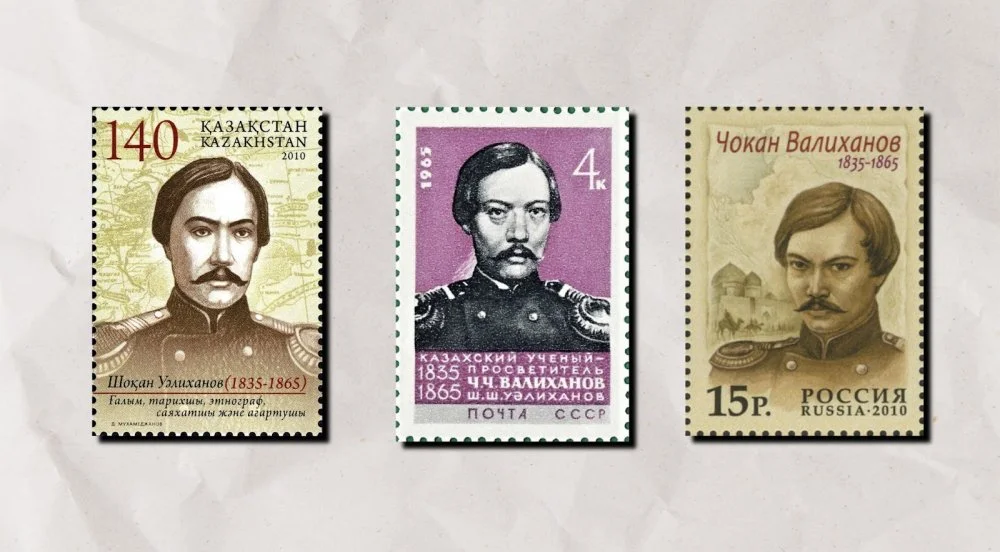
Postage stamps featuring Shokan Ualikhanov / Wikimedia Commons
Walikhanov remains the most thorough, most erudite and most human of all the nineteenth-century writers of this region. His writings on the social structure of the Kazakhs, the histories of their khans, on shamanism, legal procedures in the steppe, and his collected folk tales and song lyrics are an unsurpassed treasury of information. When he died, Russian academician Nikolai Veselovsky described him as ‘a meteor flashing across the field of Oriental Studies’. I am confident that exposing Walikhanov to new generations of English-speaking researchers and writers will lead to even more interest in his writings and will allow him to be celebrated around the world as the great scholar and champion of his people that he was.
