
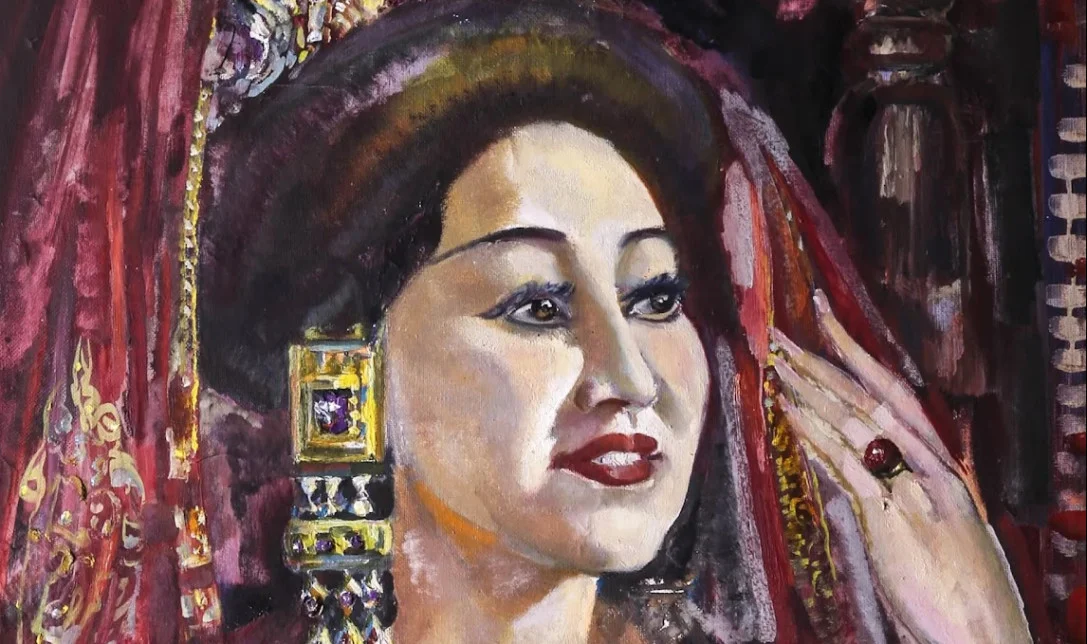
'The great artist of the Kazakh people', 'The nightingale of her time', and simply 'Our pride'—these are only some of the epithets her contemporaries used for Kulyash Baiseitova with unreserved admiration. Born in 1912, she rose to fame as a celebrated opera and folk singer in Soviet Kazakhstan, her voice capturing the soul of a people navigating profound change. Although her life was very short, she lived it with extraordinary intensity, performing on the world's stages, championing Kazakh music, accomplishing in mere decades what many could not achieve in several lifetimes. On the 114th anniversary of her birth, researchers Assel Almuratova and Liora Aizenberg reflect on who Kulyash Baiseitova truly was and why her story still matters today.
The Daughter
She was born Gulbakhram Beisova—but the world would come to know her as Kulyash. As a child, her mother called her 'Kule', and from this affectionate nickname, the name Kulyash emerged. This much is certain, as is her year of birth, which was 1912. Beyond these two facts, however, the details begin to blur, with different sources offering conflicting accounts of her life and legacy.
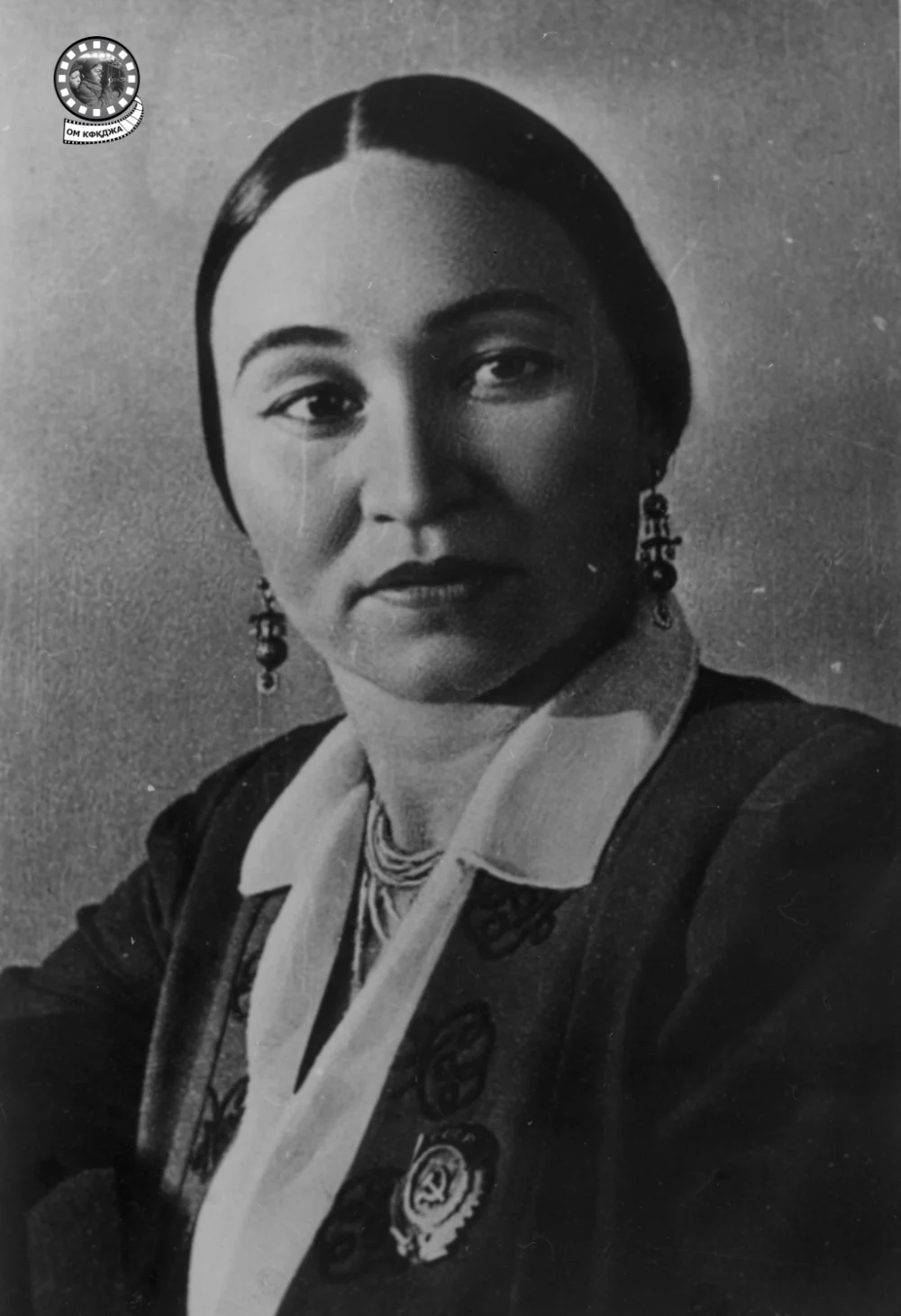
Kulyash Baiseitova, 1938 / Central State Archive of Film, Photo Documents and Sound Recordings
Her exact date and place of birth remain disputed: some sources state that she was born on 19 April (2 May in the Gregorian or New Style calendar), while others give 12 January as her birth date. There is also no consensus about her birthplace. Some sources name Almaty, while others point to the steppe auli The word aul means ‘village’ in Kazakh, and typically encompasses 100–200 yurts. of Jañaortalyq in the Karkaraly district of the Semipalatinsk region.
Very little is known about the mother of the future People’s Artisti‘People's Artist’ is the highest honorary title for cultural figures in the post-Soviet states. Much more information has been preserved about her father's role in shaping her as a singer. Kulyash sang beautifully from an early age, and it was he, Jasyn Beisov, who taught her. He worked as a craftsman shoemaker but was also known as an aqyn (a poet-singer), accompanying himself on the dombyra and performing at weddings and celebrations, singing ancient steppe songs. It is widely believed that young Kulyash inherited her love of folk music from him. She quickly memorized melodies and lyrics and began singing from an early age.
At the age of twelve, because her family was extremely poor, Kulyash was placed in a boarding school attached to an orphanage in Almaty. It was the early 1920s, a time of famine in Kazakhstan. In fact, the consequences of the Russian Civil War were felt not only in Kazakhstan, but throughout the USSR. At that time, being admitted to a boarding school was often the only chance of survival for many children.
Later, the family was reunited, though not completely, and the accounts of her father, Jasyn Beisov, differ. In the memoirs of Qanabek Baiseitov, Kulyash’s future husband, that period is described as follows:
'... I owe my acquaintance with Kulyash (her real name was Gulbakhram) to her brother Aitbek. I lived with them as a lodger for one winter. At that time, she was a very slender, petite, fragile girl, living with her mother. Her father, Jasyn, was living separately from them in the aul at the time.iК. Байсеитов, «На всю жизнь», Алма-Ата: Жазушы, 1981'
In the recollections of contemporaries who witnessed the early stage of Kulyash’s creative path, family relations are described in a more somber light. But we’ll discuss that in greater detail later in this article.
The Drama Theater Actress
After completing seven years of schooling, Kulyash enrolled in the Almaty Pedagogical Technical School. It was there, in an amateur arts circle, that her natural talent first manifested on stage. Although she never completed her training as a teacher, this period became an important stage in her artistic self-determination.
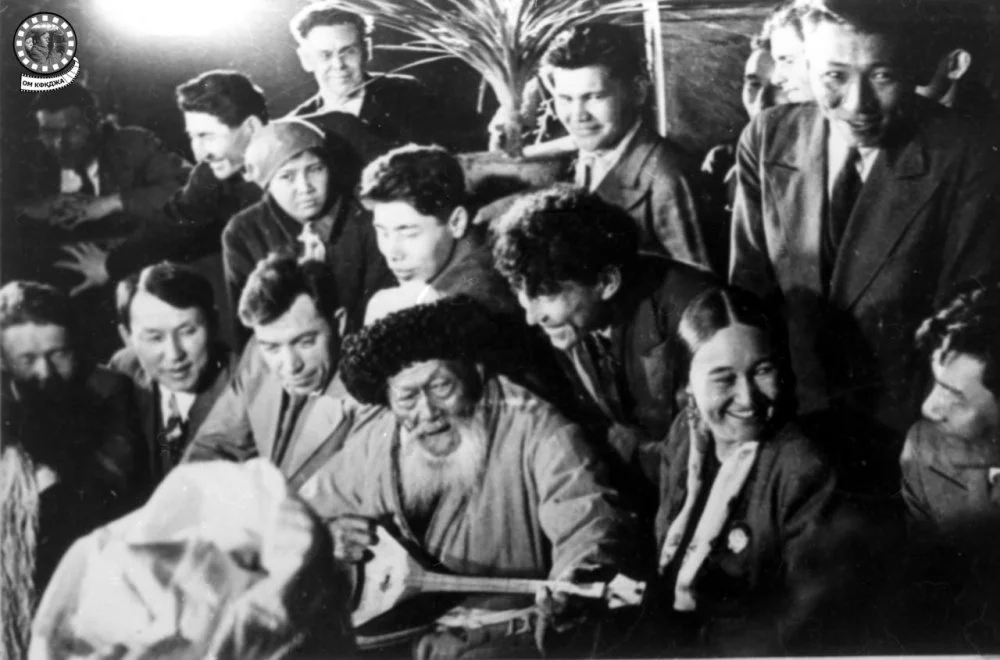
Kulyash Baiseitova among Kazakhstan’s creative intelligentsia, 1938 / Central State Archive of Film, Photo Documents and Sound Recordings
In 1929, the Kazakh Drama Theater was transferred from Kyzylorda to Almaty; it later became the Mukhtar Auezov Kazakh State Academic Drama Theater. At the time, the theatre operated as a hybrid institution, encompassing both dramatic and musical performance under one roof. Seraly Qojamqulov, one of the founders of dramatic theatre in Kazakhstan, worked there as both an actor and a director. It was under his mentorship that the seventeen-year-old Kulyash began her artistic journey after deciding to pursue a career as an actress.
'From the very first auditions, Serke [Seraly Qojamqulov] realized that the girl possessed natural talent—a fusion of word and gesture. Expressive features. Spirituality and impulse. And then her voice—pure and transparent, like the ringing flow of a spring bursting from the depths of the steppe earth. What she lacked was skill and professional mastery. But that comes with time and experience.iД. Снегин, «Куда текут родники», из сборника А. Омаровой, «Куляш Байсеитова», Алматы: Өнер, 2012 '
These recollections belong to the Soviet writer and screenwriter Dmitry Snegin. He also recalled the preparation of a production based on revolutionary events, in which Kulyash played the central role, first appearing as a young girl and later as a woman prematurely aged by hardship. At the dramatic climax, the actress was supposed to cry; however, this proved difficult for the young and naturally cheerful Kulyash. Seraly Qojamqulov rehearsed the scene with her repeatedly:
Serke did not relent. Yet one day, even he lost patience. He asked sternly, insistently: ‘Have you ever cried?’
By temperament, she was open and cheerful. In youth, one seldom cries; and if one does …
In that moment, she remembered. ‘I have. With my mother. When my father said he was leaving us forever and then abandoned us at the wintering site.'iД. Снегин, «Куда текут родники», из сборника А. Омаровой, «Куляш Байсеитова», Алматы: Өнер, 2012
These rehearsals proved decisive: on the night of the premiere, Kulyash’s performance deeply moved the audience and marked a turning point in her artistic development.
The First Opera Singer of Kazakhstan
The production that first brought Kulyash into prominence came in 1933: Eñlik–Kebek, a tragic poem and play by Mukhtar Auezov about the lovers Eñlik and Kebek by the renowned Mukhtar Auezov that had already become a cornerstone of the Kazakh Drama Theatre's repertoire. The lead role of Eñlik allowed the twenty-one-year-old Kulyash to demonstrate not only her acting abilities but also her vocal talent.
In 1934, Kulyash joined the newly established Musical Theatre, which would later become the Kazakh National Opera and Ballet Theatre (known today as the Abai State Academic Opera and Ballet Theatre). She would remain with this institution for more than twenty years—indeed, until the end of her life.
The first production of what was then still the Musical Theatre was the comedy Aiman–Sholpan, with a libretto by Mukhtar Auezov and music by Ivan Kotsyk. The role of Ayman was entrusted to Kulyash, who had only just joined the troupe. One of her stage partners, performing the role of Arystan, was Qanabek Baiseitov, whom she would later marry. Audiences warmly received the production, and Kulyash subsequently began preparing for the leading role in the opera Qyz Jibek by Yevgeny Brusilovsky, with a libretto by Gabit Musrepov, the acclaimed Kazakh Soviet writer and playwright. It was this role that brought her all-Union recognition, though that came later; at this stage, she continued refining her vocal technique.
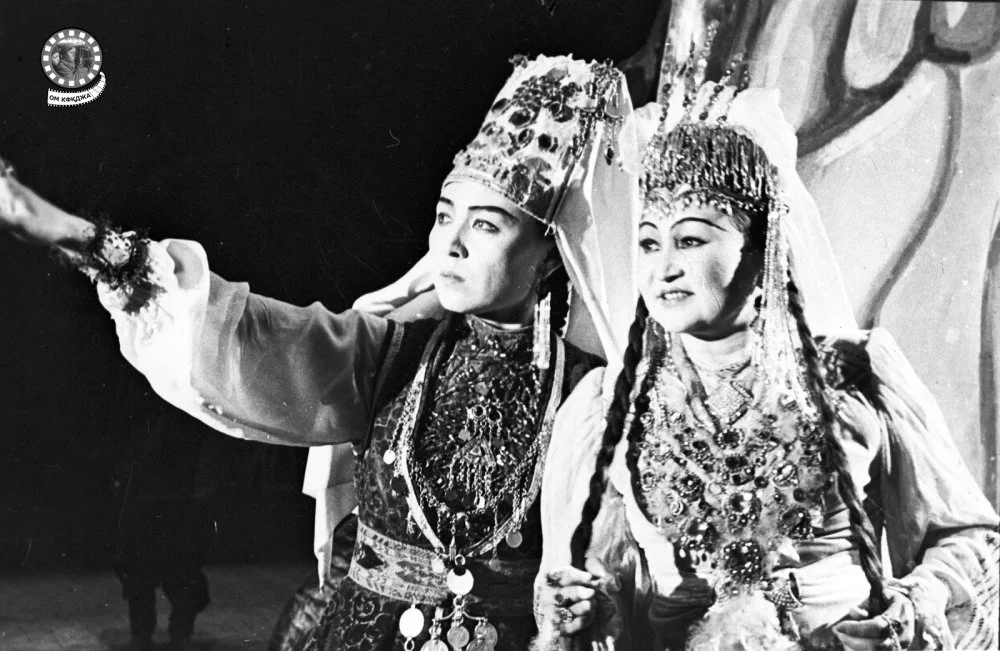
Kulyash Baiseitova in the opera Kyz-Zhibek, 1948 / Central State Archive of Film, Photo Documents and Sound Recordings
It is noteworthy that at the beginning of her career, Kulyash sang in a lower vocal register in keeping with the traditions of female folk singing. Only later was it established that her true range was that of a high coloratura soprano, which is a very high female operatic voice with an unusually silvery timbre. Qanabek wrote with admiration that Kulyash achieved what seemed impossible: working with leading vocal instructors of the time, she developed her voice to a soprano range in three months, whereas this process typically takes up to three years.
Kulyash’s artistic development was shaped not only by her innate musical sensitivity but also by exceptional discipline, diligence, and a strong capacity for transformation. For example, the role of Akjünus in the opera Er-Targyn was temperamentally the opposite of the performer herself. Yet, Kulyash rendered it so convincingly that audiences believed they were seeing a spoiled and vengeful khan’s daughter on stage. At other times, she appeared as the tender Jibek or the resolute Sara. As contemporary critics noted, having also witnessed her performances as Cio-Cio-San in Madama Butterfly, Tatyana in Eugene Onegin, and other operatic roles, Kulyash demonstrated compelling artistry in every part she undertook.
The People’s Artist of the USSR
In May 1936, during the First Decade of Kazakh Art in Moscow, Kulyash performed on the stage of the Bolshoi Theatre. As a result of this performance, Kulyash was awarded the title of the People’s Artist of the USSR, the highest honorary title for performing and visual artists in the Soviet Union. Notably, she was not only the first Kazakh woman to receive this distinction but also among the earliest artists in the Soviet Union to be granted the title. And she was just twenty-four years old.
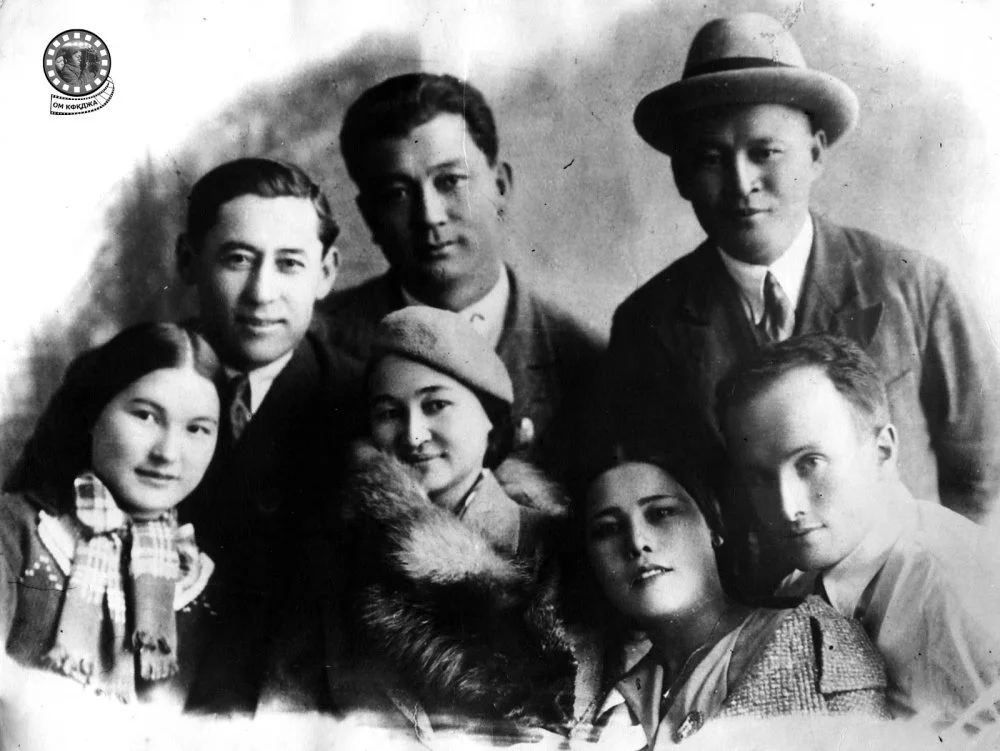
Participants in the Decade of Kazakh Literature and Art in Moscow, 1936 / Central State Archive of Film, Photo Documents and Sound Recordings
But despite her meteoric rise, Kulyash's journey was far from smooth. Representatives of state cultural authorities often criticized her singing style, claiming that she sang 'incorrectly', using the throat rather than the diaphragmatic technique. Such criticism reflected a broader Soviet attitude toward 'national' vocal traditions, which at the time were frequently regarded as technically underdeveloped. As a result, Kulyash had little choice but to take these expectations into account, making the pursuit of vocal refinement a core professional obligation. In 1939, she wrote:
I do not wish to conceal that I myself have not fully mastered vocal technique. Complete mastery of the highest vocal technique is now my primary duty, my goaliК. Байсеитова. «Сценическая правда», из сборника А. Омаровой, «Куляш Байсеитова», Алматы: Өнер, 2012 г..
'The State Muse'
The process of Kulyash’s transformation into a cultural symbol cannot be separated from the way Soviet authorities constructed cultural hierarchies. One of the central aspects of the so-called Soviet 'progress' was the Europeanization of the cultural landscape of Central Asian countries, as director A. Troitsky later wrote in his article ‘“Our Kulyash”: Soviet Art Is National in Form, Socialist in Content’iСборник А. Омаровой, «Куляш Байсеитова», Алматы: Өнер, 2012.. The most intensive phase of this transformation occurred in the 1930s.
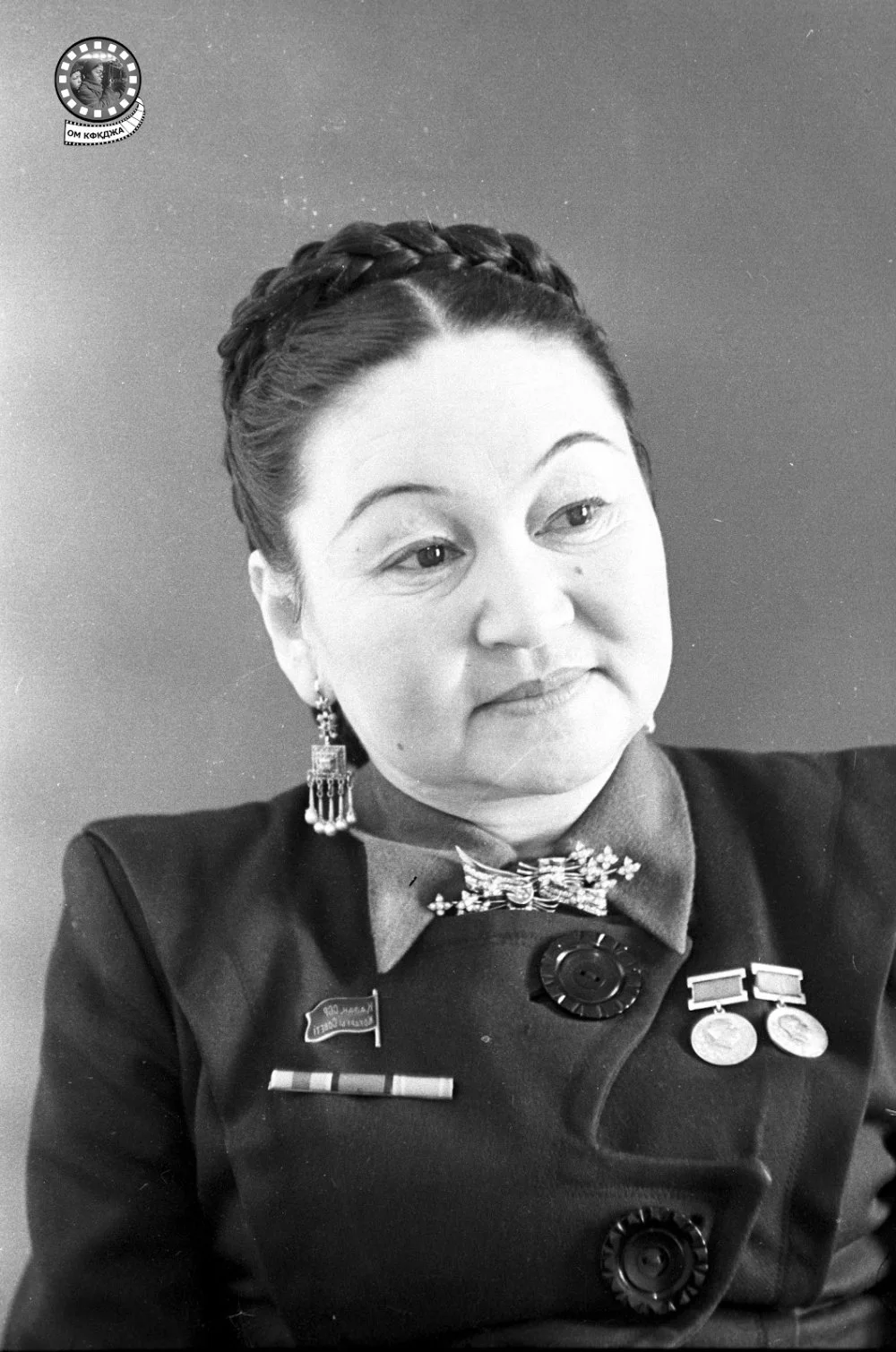
Kulyash Baiseitova / Central State Archive of Film, Photo Documents and Sound Recordings
In Central Asia, this work towards 'progress' was structured in the following way. During the 1920s, ethnographers such as Alexander Zataevich and Viktor Belyaev recorded local musical folklore. In the 1930s, this material became the foundation for operas, symphonies, and ballet productions. Opera, in particular, was generally regarded as the most 'advanced' musical genre as it combined text, vocal performance, music, and visual and stage arts.
Within this framework, in each Central Asian republic, special attention was lavished on young female performers who were hailed as the first stars of national opera. In Kyrgyzstan, this was Saira Kiizbaeva; in Uzbekistan, Halima Nоsirova; and in Kazakhstan, Kulyash Baiseitova. But these artists were more than just stars. They were also regarded as embodiments of 'Soviet modernization'. They did not merely perform on stage, but they did so within the framework of institutionally defined 'high culture' as articulated by cultural institutions in Moscow.
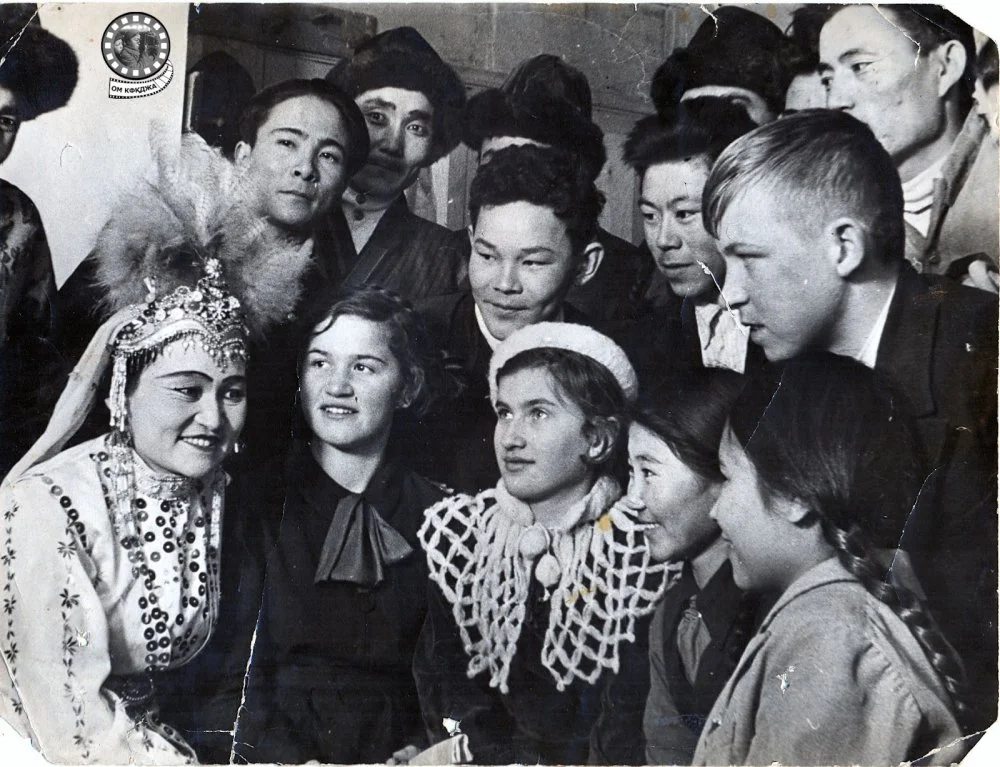
Kulyash Baiseitova meeting with admirers, 1930s–1940s / Central State Archive of Film, Photo Documents and Sound Recordings
At the same time, Soviet cultural policy treated the development of theater, opera, and ballet as part of a broader 'cultural revolution'. In Kazakhstan, the theater was most certainly a space for artistic expression but, above all, it was a state institution of cultural education and an instrument for social transformation.
Alongside ideological propaganda, the authorities sought to reshape everyday perceptions—including views on the role of women and the place of national culture within the new Soviet state—through performances, concerts, and radio broadcasts. In official discourse, this was explicitly described as a struggle for new arts and a new way of life. But Baiseitova’s story of success is, in fact, not primarily a story of Soviet cultural policy. Her achievement rested on her singular, captivating talent.
In his memoirs about Kulyash Baiseitova, Gabit Musrepov wrote:
Kulyash herself was a song; she was art. Pure talent—without embellishments and without ‘artifice’. In a word: a miracleiГ. Мусрепов, «Чудо», из сборника А. Омаровой из сборника А. Омаровой «Куляш Байсеитова», Алматы: Өнер, 2012 г..
On the surface, Kulyash's rise seemed almost like a fairy tale—a swift ascent powered by raw, undeniable talent. Yet behind that dazzling success lay sustained, largely invisible labor. Her husband, Qanabek Baiseitov, recalled that Kulyash sometimes rehearsed and worked for up to ten hours at a time, striving to perfect her vocal quality and achieve precision in her roles.
The Public Figure and 'Outcast'
Outside of performances and concerts, Kulyash had little opportunity to rest. She served as a deputy to the Supreme Soviet of the Kazakh Soviet Socialist Republic (Kazakh SSR) across multiple convocations, and people from all over the country came to her with requests for assistance. Archival materials indicate that she helped secure housing for low-income families, assisted with employment, facilitated pension arrangements for disabled war veterans, supported legal cases, and advocated for single mothers whose former husbands failed to pay child supportiЦГА РК Ф. 1630, Oп. 1, Д. 78, 79, 80.
Then came the war. In 1942, Kulyash joined a concert brigade of artists traveling to the front lines, bringing music and solace to soldiers enduring unimaginable hardship. For this work, she was later awarded the medals For Valiant Labor in the Great Patriotic War 1941–1945 and For the Victory over Germany. These were honors that recognized not just her talent but her courage and service to her country in its darkest hour. In 1949, she became a member of the Soviet Committee for the Defense of Peace. Her public role also entailed international travel, which in the Soviet period was a significant privilege.
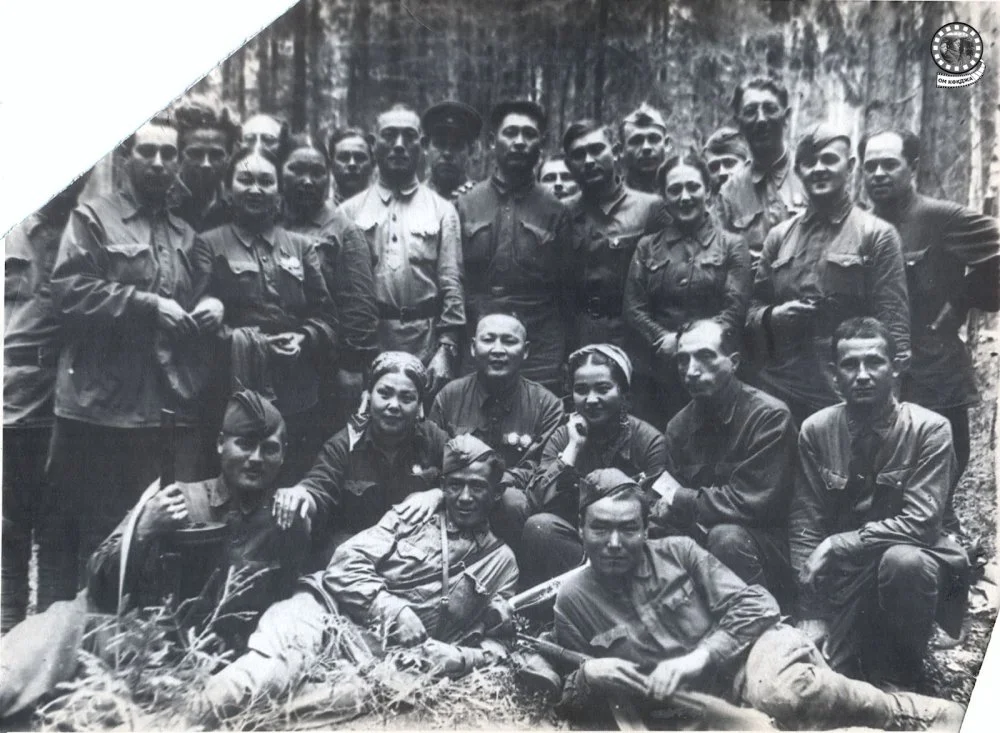
Artists of a concert brigade from Kazakhstan with front-line soldiers, 1942 / Central State Archive of Film, Photo Documents and Sound Recordings
Meanwhile, behind the scenes, a different reality existed: envy and internal competition within the theatre environment. The culmination of this pressure was a 1956 denunciation signed by six colleagues. Baiseitova had been scheduled to travel to the People’s Republic of China with a solo concert at the personal invitation of Chairman Mao Zedong. However, she was not allowed to go. Her colleagues submitted a complaint to the Central Committee alleging that she 'was inclined to drink alcohol and led an immoral lifestyle’. Later, in an interview with Sara Latieva, Gabit Musrepov noted that those who had written the letter were the ones who ultimately traveled to Beijing in her place, although he did not name them.
According to writer Beksultan Nurjekeev, who recorded the memoirs of Qanabek Baiseitov, Kulyash experienced this event with great emotional distress. Deeply shaken, she perceived the accusations as a profound humiliation:
Better to die than endure such shame, KanaiБексұлтан Нұржекеұлы, «Күләштің құдіреті», из сборника Б. Нуржекеұлы «Күләш Байсеітова туралы естеліктер», Алматы; Білім, 2004, p. 227.
The Friend
Beyond the stage, Kulyash possessed a rare gift for connection—she knew how to make friends and effortlessly won people over. This warmth is palpable in the articles and interviews left behind by the most prominent cultural figures of her time, including writer Gabit Musrepov, playwright Mukhtar Auezov, and composer Latif Khamidi. Their recollections paint a portrait not just of a brilliant artist but of a woman whose presence could light up a room. In fact, the adjective most frequently used by her contemporaries to describe her was 'charming'. In his memoirs, Sabit Mukanov wrote that: ‘... she was a wonderful person, very lively and sociable. She had a gift for connecting with people; everyone loved her—from elders in remote auls to children.'iС. Муканов, «Имя, которое помнит народ», из сборника А. Омаровой «Куляш Байсеитова», Алматы: Өнер, 2012
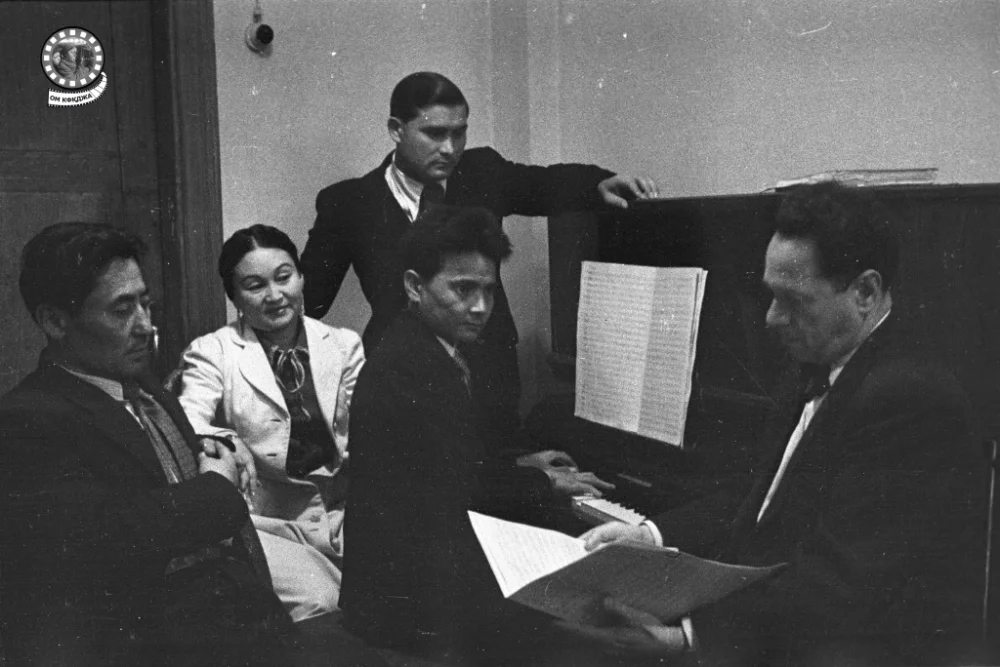
The production team of Mukan Tulebayev’s opera Birzhan and Sara / Central State Archive of Film, Photo Documents and Sound Recordings
Kulyash was also described as charming in the press. In his article on Baiseitova, music critic Vladimir Messman recalled that even during her triumphant performances in Moscow in 1936, the newspaper Pravda—the authoritative voice of the Soviet Union—singled out not just her talent but her ‘charm’. He added on his own behalf:
Perhaps no better words could be found to characterize the performance of this remarkable actress. … In Kulyash’s appearance, the most captivating features were her noble simplicity, emotional depth, and gentlenessiВ. Мессман, «Великая артистка казахского народа», из сборника А. Омаровой «Куляш Байсеитова», Алматы: Өнер, 2012 г..
Perhaps the most vivid and intimate portrait of Kulyash comes not from critics or officials, but from the memoirs of her close friend Shara Jienkulova. She and Kulyash were contemporaries, beginning their careers together at the Kazakh Drama Theatre and later continuing at the Opera and Ballet Theatre. Both eventually married senior colleagues from the stage: Kulyash married Qanabek Baiseitov, while Shara married Qurmangazy Jandarbekov. Years later, Jienkulova-Jandarbekova recalled her famous friend as follows:
She was an exceptionally vivid and distinctive personality. I see many talented actresses today, but who among them can match Kulyash in her intensity, her devotion, her ability to command an audience—to make it applaud, respond with fervor, and listen to her singing in breathless silence? In twenty-five years of touring, I have traveled almost the entire world and learned that audiences are not always receptive. Sometimes it is simply not possible to win them over. Kulyash, however, was always received with enthusiasmiШ. Жиенкулова, «'Казахский вальс' в Тбилиси», из сборника А. Омаровой «Куляш Байсеитова», Алматы: Өнер, 2012 г..
Their friendship was forged not only on stage, but through many shared trials. For example, many articles on Kulyash Baiseitova recount an episode during a tour when she fell ill with tonsillitis and developed a fever nearing 40° Celsius (104° Fahrenheit). In her absence, Jienkulova was set to perform the role of Jibek. She was already made up and preparing to go on stage when Kulyash, gathering her remaining strength, arrived at the theatre determined to perform herself.
Jienkulova’s memoirs also describe another significant episode that took place in 1948 in Tbilisi, which further reveals the depth of the artists’ close bond. Shara Jienkulova was on an extensive tour across the Baltics, Ukraine, and the Caucasus. All the tickets had been sold, and a performance was scheduled for that evening. Suddenly, the telephone rang in her room. On the line was Kulyash, explaining that she was scheduled to sing that night in the opera Daisi and feared she might fail:
It turned out that Kulyash had agreed to perform the role of Maro in Zacharia Paliashvili’s opera on the stage of the Tbilisi Theatre. And now she was feeling anxious. After all, she was to appear alongside an already well-established ensemble of performers—and not just any performers: all of them steeped in strong national traditions and trained in the Italian school. Moreover, they would be singing in their own language, while she would be singing in hersiШ. Жиенкулова, «'Казахский вальс' в Тбилиси», из сборника А. Омаровой «Куляш Байсеитова», Алматы: Өнер, 2012 г..
The opera that had so unsettled Kulyash was Daisi—a Georgian opera by Zakaria Paliashvili. Its premiere had taken place in Tbilisi in 1923, and twenty years later, in 1943, it was staged at the Almaty Opera and Ballet Theatre. The leading female role of Maro was performed by Kulyash, and by 1948, it had been part of her repertoire for five years.
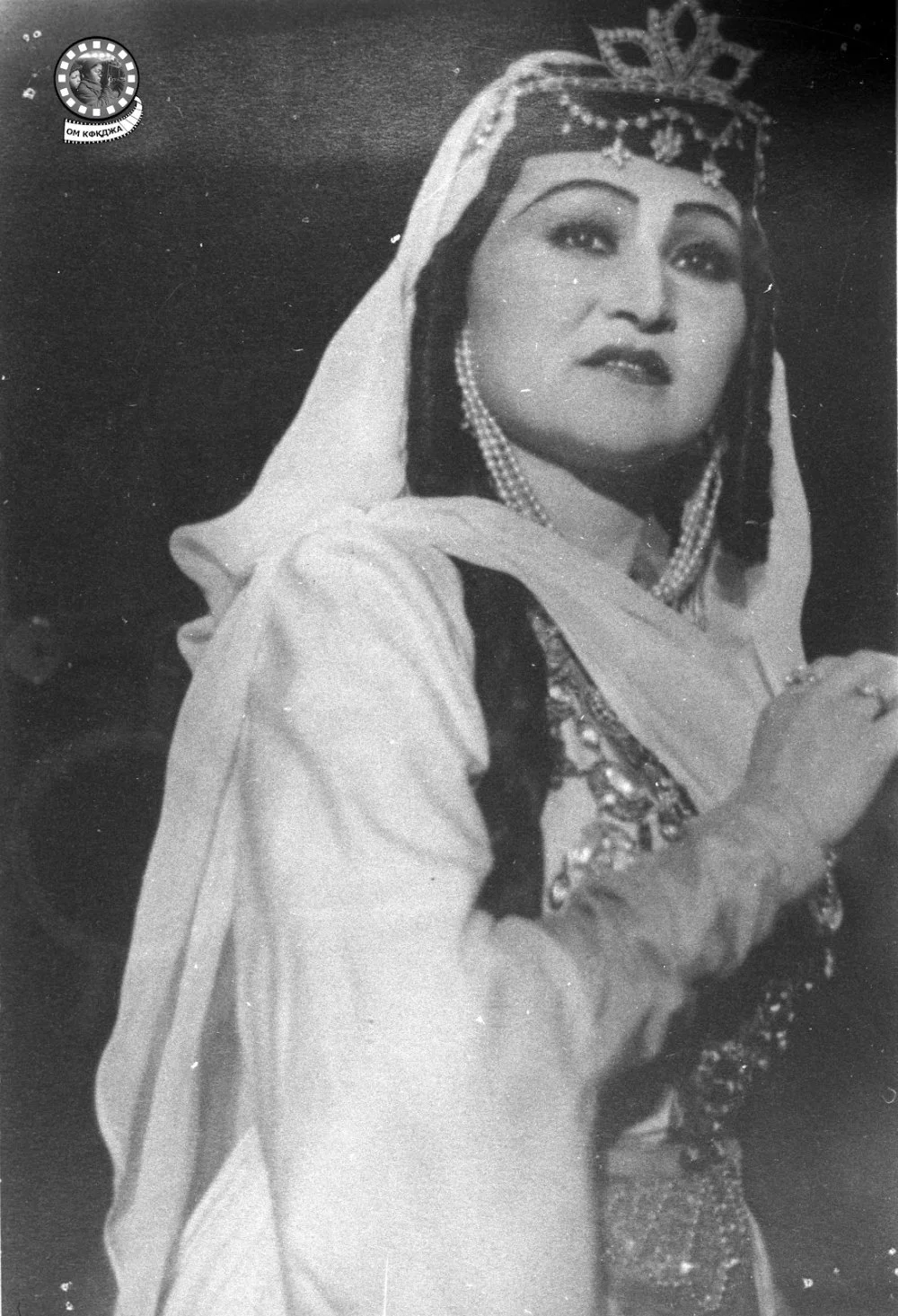
Zakarii Paliashvili’s opera Daisi, with Kulyash Baiseitova in the role of Maro / Central State Archive of Film, Photo Documents and Sound Recordings
Nevertheless, despite her experience, Kulyash was still afraid to go on stage and asked her friend to come and support her. Without hesitation, Jienkulova canceled her own performance, for which all tickets had been sold out, and went to attend Baiseitova’s appearance. The Georgian audience initially received the artist rather coolly, but everything changed as soon as Kulyash began to sing:
… The hall would fall silent whenever Kulyash appeared on stage, dressed all in white—slender, fragile, deeply moving. She was magnificent! … The curtain fell, and for a few moments the hall remained in complete silence before erupting into a storm of applause. A large group of spectators even prevented the car we were in from starting; they pushed it by hand all the way to the hotel. Then, gathering beneath Kulyash’s balcony, they refused to disperse, calling out to her. I brought my musicians, and we all stepped out onto the balcony together. The musicians struck up Khamidi’s Kazakh Waltz, Kulyash sang, and I danced. … It was a true triumphiБ. Жандарбеков, «Диалог о великой актрисе», из сборника А. Омаровой «Куляш Байсеитова», Алматы: Өнер, 2012.
The Wife of a Famous Artist
The life of Kulyash Baiseitova offers a striking example of the contrast between the Soviet project of 'emancipating' Kazakh women and the enduring force of traditional social norms. On the one hand, she embodied the ideal image of a Soviet woman: she was an artist, a deputy, a public figure, and a star of all-Union stature. On the other hand, like all Soviet women, she was still expected to be a devoted wife and mother, a homemaker and guardian of the domestic sphere.
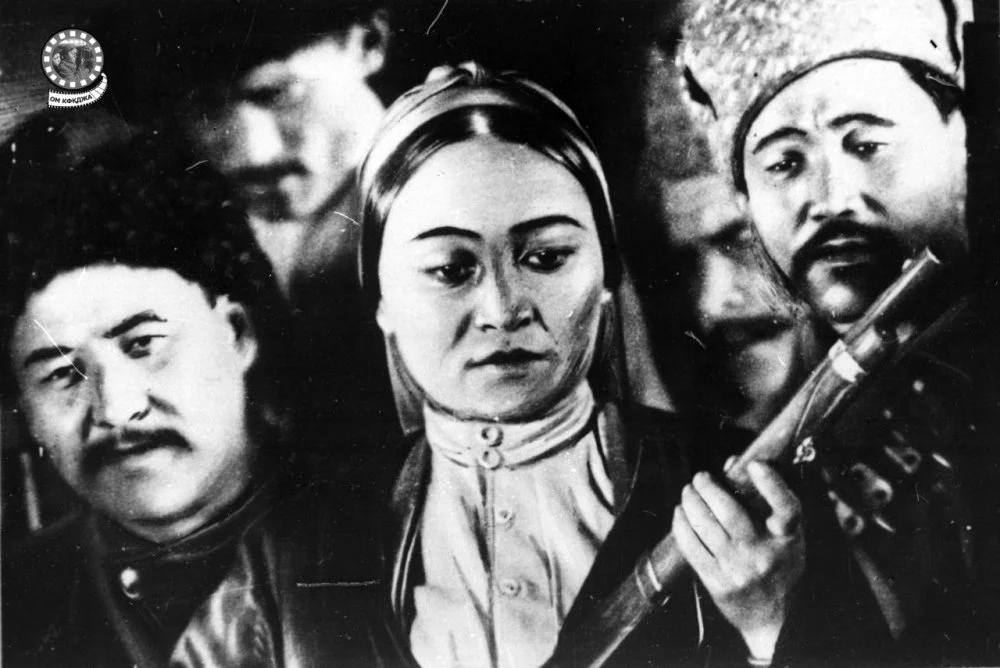
Kulyash Baiseitova in the opera Teren-Kul on the stage of the Kazakh Opera Theatre, 1939 / Central State Archive of Film, Photo Documents and Sound Recordings
In the memoirs of Qanabek Baiseitov, a domestic and almost intimate portrait of the singer emerges. Even as a People’s Artist of the USSR, she ‘did her own laundry and washed the floors, remaining the mother and mistress of the house’. Friends even advised her to delegate household responsibilities to others:
Giving birth and raising children, and managing the household, is harmful for artists in general, and especially for singers. From exposure to heat and cold, and from irregular routines, one can even lose one’s voice …
But Kulyash had her own 'theory':
Family is never a burden for a woman. And children only adorn her. Otherwise, what is a woman for? The voice also becomes purer … stronger … iК. Байсеитов, «На всю жизнь», pp. 88-89
The Baiseitovs were regarded as a 'power couple' in the Kazakh art landscape; however, behind this celebrated union lay a profound personal drama. Two strong creative personalities lived and worked together, yet the honorary title of 'People’s Artist of the USSR' was only held by one spouse.
According to the recollections of the poet Mariam Khakimzhanova, the Baiseitov household was often the site of heated quarrels. She noted that Kulyash took these conflicts deeply to heart, sometimes coming to her in tears as she spoke about her emotional distressiразговор с М. Хакимжановой, из книги Сары Латиевой «Бұлбұл».
Similar accounts appear in the memoirs of Gabit Musrepov. The Baiseitov family lived near his home, and they often met and were good friends. According to the writer, the singer’s domestic life was far from easy: disputes frequently arose in the household, and her marital happiness remained fragile and unstable. As Musrepov later recalled:
Many bitter circumstances contributed to Kulyash’s death: profound emotional isolation and a lack of harmony and understanding in her domestic lifeiразговор с Г. Мусреповым, из книги Сары Латиевой «Бұлбұл».
After Kulyash died in 1957, Qanabek Baiseitov remarried for the third time.
The Mother and Sister
Despite a difficult marriage, the Baiseitovs had three daughters, Quralai, Qarlygash, and Qarshyga. Qanabek also had a son from his first marriage, Aldabek, whom Kulyash raised as her own. However, both the son and the youngest daughter died during Kulyash and Qanabek’s lifetime.
In 1947, Kulyash's daughter Qarshyga died at just five years old, following a food poisoning incident at her kindergarten. The loss was devastating, and Baiseitova endured it with a grief so profound and prolonged that those close to her could see it had fundamentally changed her. Surviving diary entries reveal the depth and almost solitary nature of her grief:
O my God, almighty and all-powerful, on 2 October, at four in the afternoon, she fell ill, and fifteen minutes before midnight, she died. She was my soul, my beloved child. My heart, my life. What am I to do now, my dear … May you be at peace where you lie, my light; the earth that has taken you is cold.
I long for you—what am I to do? How am I to go on? I cannot change anything. In 1948, I placed a fence on her grave—a large white otaui An otau is a yurt-like funerary structure.—between June and August. On 19 January 1949, I set up a fir tree on her grave and decorated it with ornaments. I went there alone and wept for a long time. As for her father? Ah, leave that …iЦГА РК Ф.1630, Oп.1, Д.53
Yet even in the depths of her grief, life offered a quiet measure of consolation. In the same year that Qarshyga died, Kulyash's sister Raihan gave birth to a daughter, Raushan, and entrusted the child to her elder sister to raise. Raushan grew up in the Baiseitov household and would later follow in her aunt’s creative footsteps and became a ballet artist.
In the autumn of 1952, the family was struck by another tragedy—the death of Aldabek. The young man had just graduated from the Almaty Law Institute and had received an appointment as an investigator at the regional prosecutor’s office in Taldykorgan in the Jetisu region. This seemed to mark the beginning of the independent life his parents had long hoped for. Kulyash herself volunteered to accompany him on the journey. Qanabek later recalled seeing them off with particular emotion: he borrowed a car from friends, gave his son his own rifle—as a symbol of maturity and trust—and sent them on their way. But this journey ended in tragedy. Aldabek died from a stray bullet. The very rifle his father gifted Aldabek misfired during a hunting trip.
Kulyash experienced this tragedy with profound grief and a strong sense of guilt: 'How could I, being right next to him, not have watched over him? I took him away alive and brought him back dead!' she wept. According to Baiseitov, after their son’s death, they both seemed to lose their sense of reality and lived in a state of emotional emptinessiК. Байсеитов, «На всю жизнь», pp. 111-112.
After Kulyash’s own death, the responsibility of raising the remaining daughters fell to her mother Zibajan. However, the spate of family tragedies did not end there. Raihan, the biological mother of Raushan, the child adopted and raised by the Baiseitovs, died a year later, in 1958. Quralai, Kulyash’s eldest daughter, also did not live to see the age of forty.
Kulyash Baiseitova and Contemporary History
At the beginning of June 1957, Kulyash Baiseitova traveled to Moscow, where the Decade of Tatar Culture was taking place. As a member of the Kazakh SSR delegation and an honored guest, she performed at the banquet concluding the official program. Due to a severe headache, she returned to the hotel immediately after the concert, earlier than the others. There, in the bathroom of her hotel room, she was later found dead by a chambermaid. The official cause of death was a cerebral hemorrhage. Kulyash Baiseitova was only forty-five years old.
Today, Kulyash Baiseitova is remembered primarily as the first Kazakh opera singer and one of the youngest People’s Artists of the USSR. Streets, music schools, and concert halls bear her name. In Soviet historiography, she was often presented as a symbol of the triumph of national art and as proof that Soviet modernization had created a 'new Eastern woman'—educated, talented, and free. Yet behind this success stood decades of intense labor and a personal life marked by significant loss and hardship.
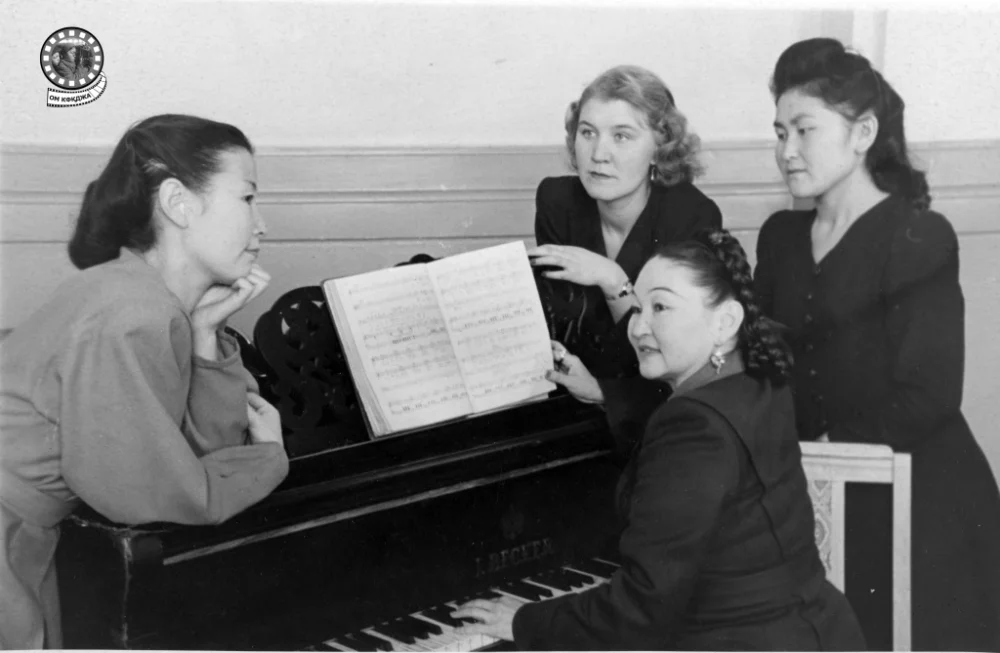
Kulyash Baiseitova during a creative meeting (at the piano), 1954 / Central State Archive of Film, Photo Documents and Sound Recordings
The producer and co-author of the Qazaq Roses project, Nargiz Shukenova, describes the phenomenon of the first Kazakh opera singer as follows:
Kulyash sang, and this allowed her to become famous, to be heard, and to be seen thanks to her natural talent. She was truly a gifted phenomenon. … But even if she had not become an opera singer, she would likely still have been a great singer in the steppe, and this is also worth noting. She did not owe everything, in a purely absolute sense, to the Soviet Union, to schools, technical colleges, or conservatories. Even without all of that, she would still have been a true Qazaq Rose.
The editorial team of Qalam expresses its gratitude to the Central State Archive for its assistance in preparing this publication.
