
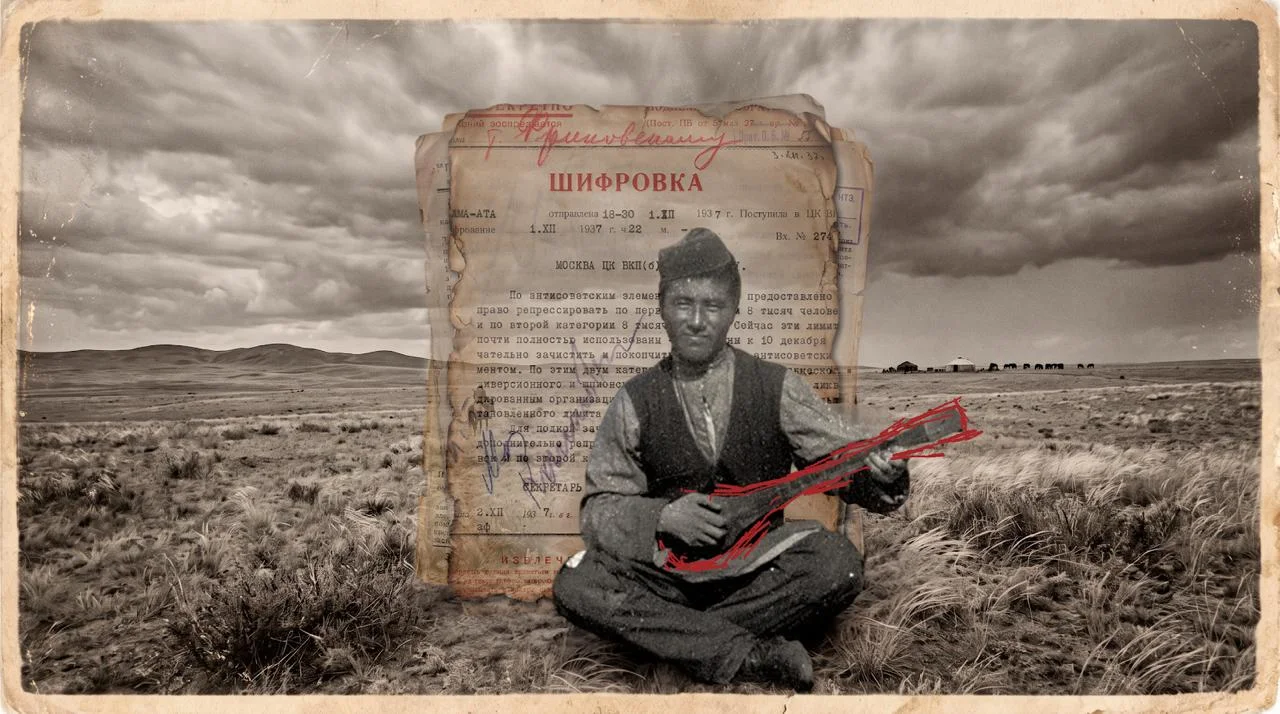
Following the consolidation of Soviet power in the 1930s, the Kazakh steppe experienced not only irreparable economic and demographic devastation but also a profound assault on its spiritual and cultural life. During the years of political repression, the Soviet authorities targeted not only public and political figures but also members of the artistic intelligentsia. The küishis, in particular, were subjected to especially severe persecution: many were arrested, exiled, or imprisoned, while others were executed by firing squad.
Why, then, did the Soviet government see the küishis as a threat? Exclusively for Qalam, küishi and art historian Jangali Jüzbai spoke about the fate of repressed musicians, banned küis, and the devastating impact these repressions had on the art of küi itself and its subsequent development.
Kazakh Art During the Tsarist Period
Although national liberation uprisings and resistance movements erupted in various parts of the Kazakh steppe throughout the nineteenth century, the Kazakh people ultimately failed to free themselves from imperial rule. In the second half of the nineteenth century, after the great uprisings led by prominent resistance leaders as Isatay Taimanov, Makhambet Utemisov, and Kenesary Khan had been crushed, the Kazakh lands were finally brought under the complete control of the Russian Empire.
By decree of the tsarist administration, many military forts and new towns were established throughout the Kazakh steppe, marking the empire's growing control over the land. At the same time, waves of peasant settlers from elsewhere were relocated to the region, steadily reducing the lands available to the Kazakh population. Political authority increasingly passed into the hands of local officials appointed by the imperial government.
Political power passed entirely into the hands of local officials appointed by the tsarist government. Yet, even under these adverse conditions, some Kazakhs managed to achieve remarkable economic and cultural advances. Trade expanded, and the first steppe fairs were established, helping to give rise to the first generation of representatives of the Kazakh bourgeoisie. The opening of new schools, in the meanwhile, stimulated the growth of educational initiatives and resistance to colonial policies.
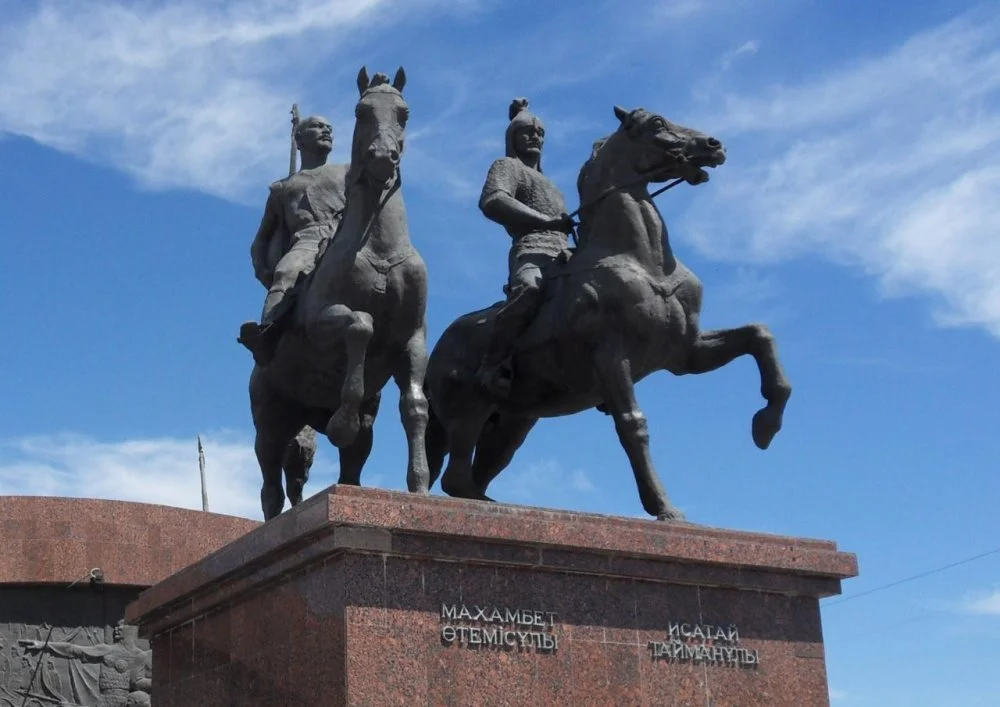
Monument to Isatay Taimanov and Makhambet Utemisov / From open sources
Yet, if we listen more closely to the küis composed during the second half of the nineteenth century, a striking paradox emerges. One is left with the impression that the pain and bitterness that had so recently consumed the Kazakh people had, at least for a time, receded. It is as if the freedom-loving singers of an earlier era had given way to flattering aqyns (poet-singers) and compliant küishis who had reconciled themselves to the new political order. It is no coincidence that during this period, a number of prominent Kazakh poets began composing laudatory works for the tsar, for local administrators and military commanders, as well as for senior sultans and volost rulers. Even within the Zar Zaman (Age of Lament) movement—a literary current whose poetry was defined by its mourning of the lost nomadic world—one can find poets who hedged their sorrow with praise, sometimes singing the very praises of the new order they were supposed to be lamenting.
These sentiments were reflected in both vocal and instrumental art: with works calling for submission and glorifying tsarist rule appearing with increasing frequency. Meanwhile, incorporating Russian speech into songs and Russian musical intonations into traditional music came to be perceived as a sign of artistic progress.
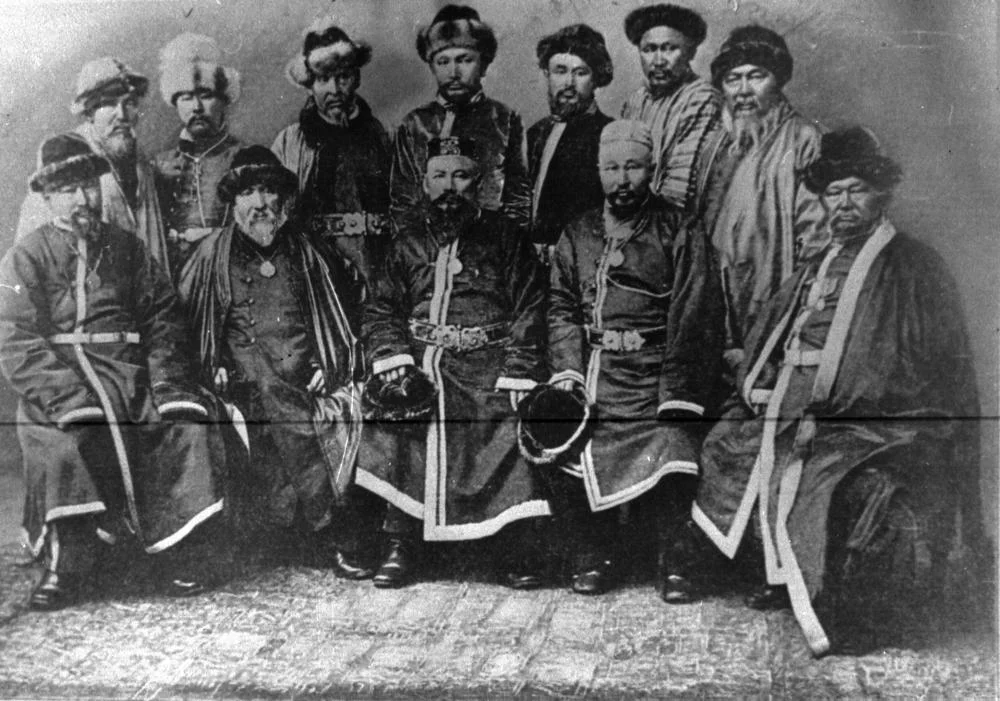
Kazakh nobility: Tattimbet is standing second from the left. 1862 / From open sources
The legacy of this era of accommodation is written not only in the historical record, but in the music itself. Songs such as 'Astyma Mingen Atym Genadushka' (a folk song), 'Kypchak Fair' (by Jayau Musa), and 'Peruaiym' (by Aqan Seri) are all testament to this period of adjustment. This pattern can also be seen in the küis of the times, for example, in küis such as Kamarinskaya (by Zhaldybai), Shtat (by Kazangap), Jarym Patsha (by Ykylas), and others.
Moreover, even the governors-general who ruled the Kazakh steppe in the nineteenth century became the subjects of küis, for example, figures such as Vasily Perovsky and Konstantin Kaufman. Among the sal and seri—folk poets and composers—there were those who traveled to St. Petersburg, received the attention of the tsar, and were given horses and money as gifts by the authorities. Quite a few renowned dombyrai a traditional two-stringed long-necked lute players also served under senior sultans.
Although Russian melodies differed from traditional Kazakh music in their musical character, they gradually spread throughout the Great Steppe and exerted an increasing influence on it. The sound of the balalaikaiThe balalaika is a traditional Russian stringed instrument with a distinctive triangular wooden body and three strings, derived in the eighteenth century from the dombyra. and accordion blended with local musical traditions, giving rise to a distinctive musical subculture. Even in the works of the great masters of Kazakh musical art, one can discern ‘Russian’ melodic intonations and titles of compositions in the Russian language. Reflecting on the spread of this trend, academician Akhmet JubanoviFor more information, please see the article ‘The Father of National Art’ on the Qalam website. wrote:
Some folk composers came into direct contact with representatives of the progressive Russian intelligentsia who were documenting Kazakh traditions, music, and musicians ... Others became well acquainted with Russian folk instruments and musical traditions. Some came to believe that the traditional term ‘küi’, used to denote all instrumental compositions, did not always fully convey the content and character of a musical work, and sought to differentiate among genres using titles that more accurately reflected their expressive qualities. This is why some chose to call their compositions March. Others, although they could easily have given their works Kazakh titles, instead named them Hunting, Machine, Don't Shout, Don't Make Noise, Caspian, and The Outcome. None of this was accidental; rather, it reflected a natural creative impulse to respond to the demands of the time and the spirit of a new eraiЖұбанов А. Ғасырлар пернесі. Қазақтың халық сазгерлерінің өмірі мен шығармашылығы туралы очерктер. Алматы: Дайк-Пресс, 2002. p. 23..
This duality persisted until the first decade of the twentieth century. A turning point came only after the tsarist government’s 1916 decree calling for the ‘non-Russian’ population of the Steppe Region and Turkestan to be conscripted for labor behind the front lines. The decree triggered a national liberation uprising, which was also reflected in the music of the time. It was then that Dina NurpeisovaiDina Nurpeisova (1861–1955) was a legendary Kazakh dombyra player and student of Qurmangazy. She gained fame in her late seventies, composing enduring küis like Bulbul and earning the title National Artist of Kazakhstan in 1944..
(1861–1955) composed the mournful küi 16 Jyl (The Year 1916), while the küi 17 Jyl (The Year 1917) by Mamen Yergaliuly (1868–1931) sounded like a battle march calling people to rise up. The composition Zaman-ai by küishi Seitek Orazalyuly (1861–1939) became a musical meditation on the grief and anxiety that had befallen the people. These events marked the beginning of the tragic succession of mass calamities that would afflict the Kazakh people throughout the twentieth century.
Terror Against Culture
But the accommodation of the late imperial era would soon give way to something far more destructive. With the Bolsheviks coming to power, a new social order began to take shape in the former colonial peripheries of the Russian Empire. One of the first political campaigns directed against national culture was the notorious policy of the ‘Little October’ carried out by the Soviet authorities from 1925 to 1928. Its aim was nothing less than the eradication of the old nomadic world and the creation of a new, Soviet way of life. It was during this period that musicians, educators, poets, storytellers, and singers became some of the first victims of repression.
The küishis were hit particularly hard: they were not only persecuted but also frequently sentenced to execution. This policy of ‘cultural cleansing’ was carried out in two broadly defined stages: the Goloshchekin period and the Mirzoyan period.
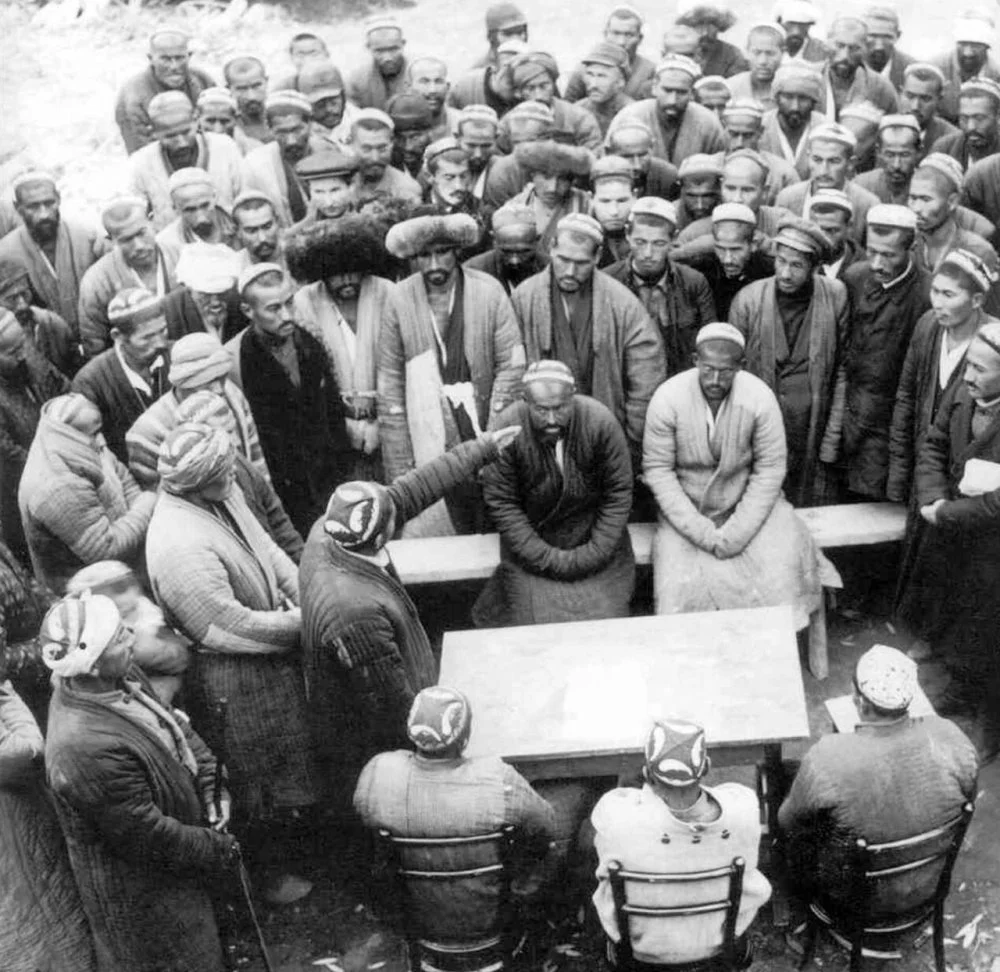
From 1930 onwards, fearing social unrest due to forced collectivization, the 1932–1933 famine, and massive peasant migration into cities, Soviet authorities launched a series of purges. Between 1930 and 1939, hundreds of thousands of people perished / Alamy
From 1925 to 1933, Kazakhstan was led by F.I. Goloshchekin, who brought the policy of the Little October to the Kazakh steppe. The policies implemented under his leadership resulted in a deliberately engineered famine, known as the asharshylyqiAsharshylyq is the Kazakh word for the devastating man-made famine of 1930–1933 in Kazakhstan that resulted in the death of approximately 1.5 million people devastating policies imposed by the Soviet government. that led to mass deaths among the population. During these same years, repression against folk performers intensified, and increasingly, they were exiled for political reasons to what the people called Itjetken, a popular Kazakh euphemism for exile in Siberia or Siberia itself.
From 1933 to 1938, L.I. Mirzoyan served as First Secretary of the Kazakh Regional Committee of the Communist Party. His name went down in history primarily as that of one of the organizers of the persecution of members of the Alash Orda movement. The Kazakh people, having endured the asharshylyq with immense difficulty, were hardly in a position to resist the policies of the Soviet authorities. Meanwhile, Soviet ideologues actively used songs and küis to promote the new political order, the socialist economy, and the collective farm system. It was during this period that poems, songs, and küis dedicated to Stalin and Moscow began to appear on a massive scale.
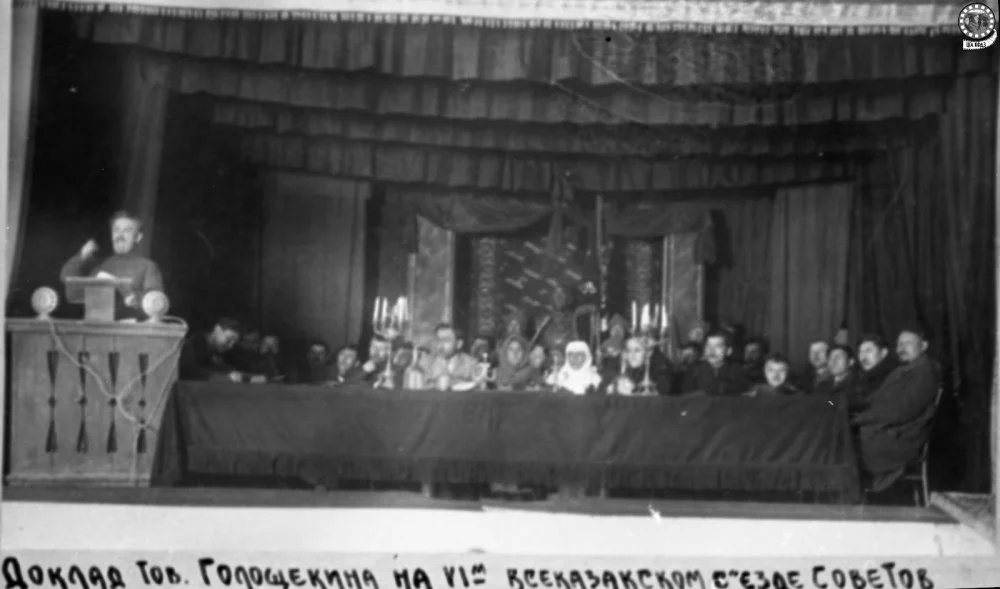
Comrade Goloshchekin delivering a report at the VI All-Kazakh Congress of Soviets. 28.03-03.04.1927 / Reproduction from Party archive documents / Central State Archive of Film, Photo Documents and Sound Recordings of Kazakhstan (CSAFPDSR)
On 30 July 1937, the People's Commissariat for Internal Affairs of the USSR issued an urgent and top-secret Order No. 00447 titled ‘On the Repression of Former Kulaks, Criminals, and Other Anti-Soviet Elements’. In this document that was signed by the People's Commissar for Internal Affairs of the USSR Nikolai Yezhov, special quotas for executions were established for each Soviet republic. On the basis of these quotas, representatives of the creative intelligentsia and custodians of Kazakhstan's traditional cultural heritage were systematically identified and sentenced to the highest measure of punishment in every region of Kazakhstan. Among those targeted were ishans (Sufi religious leaders) and mullahs, poets and jyrau (oral epic bards), performers of dastans (heroic oral epics) and qissas (narrative poems, often of religious or historical origin), as well as renowned performers on the qobyzia traditional two-stringed bowed spike fiddle, the dombyra, and the sybyzğyia traditional Kazakh transverse wooden flute.
The Execution of Küishis in Saryarqa
The persecution of küishis assumed particularly large proportions in Saryarqa in northern and central Kazakhstan. Under the pretext of combating the ‘idealization of the feudal-baiiA bai was a wealthy landowner, livestock owner, trader, or moneylender. past’, the Soviet authorities launched a systematic campaign to eliminate renowned folk musicians.
Most of the artists executed during the 1930s were convicted under the notorious Article 58 of the Soviet Criminal Code. This provision criminalized treason, participation in uprisings, contacts with foreign states, espionage, sabotage, terrorism, anti-Soviet agitation, and a broad range of other activities deemed hostile to Soviet rule.
One of those convicted under this article was the küishi Akhmetjan Sarmantaiuly (1862–1930). Undaunted by the Soviet machinery of repression, he dared to dedicate one of his compositions to the same article that had destroyed the lives of countless people. Thus was born the küi Article 58, which became a musical testament to the tragedy of those years, carrying the weight of a people's suffering in its melody.
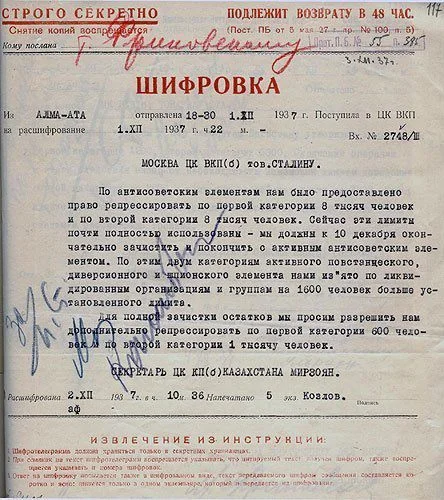
Coded message to Stalin / From open sources
But such audacity could not go without consequences. The famous küishi was arrested in 1930 and, by decision of an extrajudicial troika (a three-member administrative tribunal in the Soviet Union), he was sentenced to death. He was executed in the Karkaraly prison, charged under the very same Article 58 that he had immortalized in his küi. The ironies of history could hardly be more brutal.
After the execution of Akhmetzhan Sarmantaiuly, both the performance of the küi Article 58 and any mention of it whatsoever were prohibited. Those who remembered the great küishi’s legacy did not dare to call the composition by its real name for many years and performed it under the title Akhmetzhannyn Kosbasary. The writer Kulyash Sardarbek, who was the first to reveal the history of this küi, writes that after the küishi was executed, the secret police, fearing that his burial place might become known, tied a stone to his body and threw him into the Karkaraly RiveriСардарбек К. 58 статья зарзаман. Алматы: Дайк-Пресс, 2007. p. 136..
Yet history has a way of reclaiming what was taken. In 2010 the küi was restored to the Kazakh cultural canon. Recorded in a performance by the art historian Bazaraly Muptekeyev, it was subsequently included in the anthology One Thousand Traditional Kazakh Küis, a fitting tribute to a man whose music outlived his persecutors.
Informers, Executions, and Bans
Another figure who met a similar fate was Sembek Aidosuly (1864–1930). He was one of the most outstanding küishis of the Saryarqa region. Considered a successor to the tradition of Tattimbet and Itayak, he was renowned for his many striking küis and for his unwavering sense of justice. So highly was he regarded by the people that he earned the popular nickname Sary Bi, the word bi meaning judge in Kazakh. But in the eyes of the new Soviet order, his reputation and influence made him a target.
Sensing the impending campaign to confiscate property, Sembek left Saryarqa and took refuge in a remote, deserted area. The writer Kamel Zhunistegi wrote that the küishi was arrested on the banks of the Shu River in the Khantau area. Before he was executed, his boots and his last remaining money were taken from him. Sembek was then forced to play a küi, after which his dombyra was confiscated. Remarkably, his instrument, crafted by a renowned master, has survived to the present day.
Like Akhmetjan Sembek expressed his protest against the brutality of the Soviet authorities not through words but through music. Thus, his küi Sezbes was born—a composition in which he unleashed his fury with astonishing force against those who were destroying people's lives and destinies.
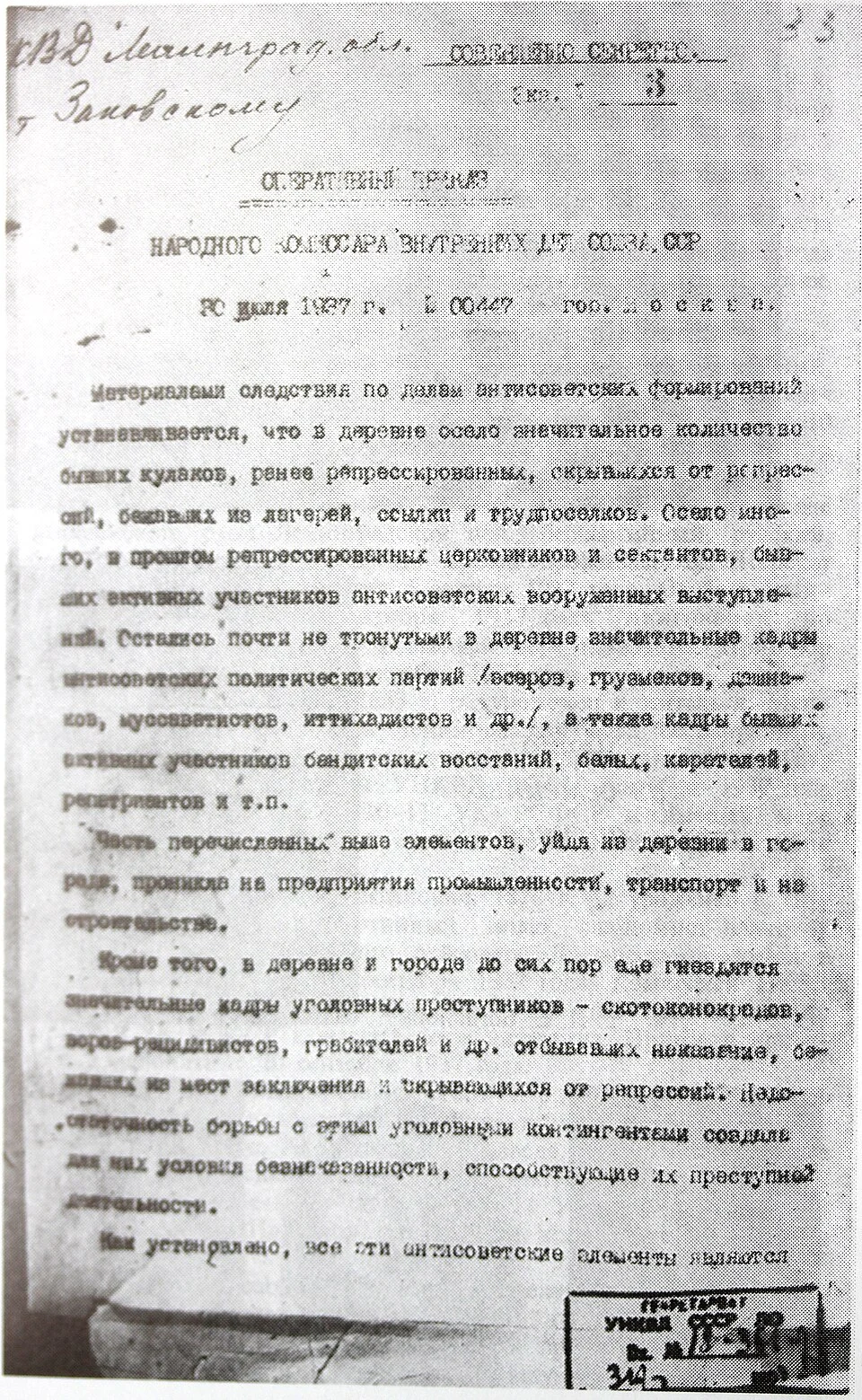
NKVD Order No. 00447 / From open sources
The title of this küi was not incidental. Sezbes was the term commonly used among the people to refer to informants of the GPU (the Soviet secret police). In an era when individuals could be compelled to denounce even their own relatives, identifying such informers was often nearly impossible. Ironically, it was a false denunciation by one of these very sezbes that led to the execution of the renowned küishi in 1930.
Sembek’s küis became a musical reflection of the pain felt by all those Kazakhs who refused to reconcile themselves to Soviet rule. Sezbes was also banned, its performance was prohibited, and the küi itself was declared illegal. It was only after the küishi was posthumously rehabilitated in 1989 did his works become available to listeners once again, thanks to dombyra players Dauletbek Saduakasov and Oral Isatayev. And it was only after Kazakhstan gained independence that recordings of these küis could finally be released on vinyl records and audio cassettes.
For decades, Sembek's music, like that of so many others, was silenced, his name erased from the official record. The first to recover this küi and restore Sembek's place in the history of Kazakh musical art was the folklorist and scholar Tymat Mergaliyev. But the work of revival was not left to scholars alone. Among those who had heard Sezbes performed by folk musicians since childhood, and who would later play a direct role in returning the banned küi to the cultural heritage of the people, was Sembek's own descendant, the renowned violinist Duisen Kasseinov.
The Sorrowful Qosbasar
Another victim of the era of repression was Abdi Rysbekuly, who was killed by the secret police. He left behind the well-known küi Zar Qosbasar.
Abdi was arrested in 1929 in the Kyzyl-espe area of the Karaganda Region in central Kazakhstan and sent to prison. However, in 1930, he managed to escape with the help of Jünis Ybyshev. Soon afterward, the secret police picked up his trail again and arrested him that same year in Aksu-Ayuly. GPU officers imprisoned the küishi in Karkaraly Prison, where an extrajudicial troika sentenced him to death.
According to the recollections of his contemporaries, before his execution, the küishi made one final request to the prison guards: ‘Call Abiken Khasen. Let him preserve one of my küis.’ Abiken listened to Zar Qosbasar twice and managed to reproduce it entirely from memory. Later, during the Khrushchev ThawiThe Khrushchev Thaw refers to the decade-long period in Soviet history following Joseph Stalin’s death, when Nikita Khrushchev’s leadership ushered in a relative easing of censorship, repression, and political control across the USSR., he recorded the küi on a gramophone record in 1958.
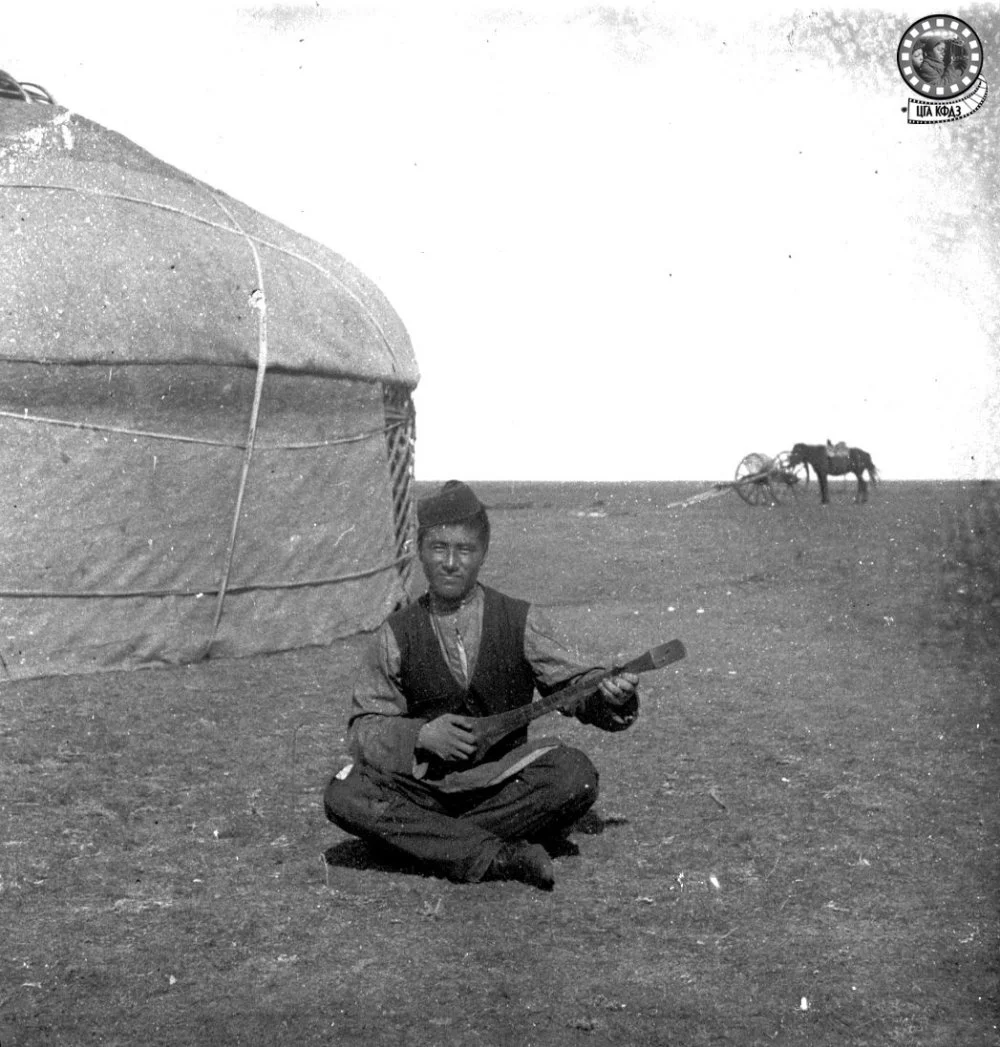
E. Alexander. "Dombra Player (Dombyrashy)". Pavlodar. 1911 / Hamburg Ethnographic Museum collection / Central State Archive of Film, Photo Documents and Sound Recordings of Kazakhstan (CSAFPDSR)
Abdi was a supporter of the Alash Orda movement and openly opposed the policies of the Soviet authorities, which deprived people of their property and confiscated their livestock. Not content with protesting, he took up arms and joined the armed resistance. In 1930, the anti-Bolshevik Betpakdala Uprising broke out in what is now the Shet district of the Karaganda Region. It was led by Alash movement figures Jaqyp Aqpaev and Alimkhan Yermekov. The participants sought to save the people and preserve their livestock, planning to leave Saryarqa by crossing the Betpak-Dala desert and heading toward Jetisu. Yerkebek Duisenov led the uprising. Later, in OGPU (Soviet secret police and intelligence agency from 1923 to 1934) documents, the investigation was referred to as the ‘Duisenov Case’. Abdi Rysbekuly is also mentioned among the active participants in the uprisingiM. Absemetov. Saken Seifullin—Chairman of the Council of People's Commissars of Kazakhstan (г. Оренбург, 1922–1924 гг.). Астана: «Рух-пресс», 2006. p. 205..
Abdi’s küi, which resounded throughout Saryarqa, was called Qarğys (The Curse). Like Zar Qosbasar, this tragic composition became a musical curse upon the terrible events of those years. The writer Kamel Jünistegi wrote about the origins of this küi:
Abdi dedicated the küi Qarğys to the leaders of that era and to the very age that had deprived the people of their livestock and condemned them to death by starvation, while offering neither sympathy nor assistance from the authorities. By that time, Abdi himself was already being persecutediК.Жүністегі. Шырағдан, p. 95..
During the Soviet era, no one dared to perform the küi Qarğys. According to the recollections of contemporaries, only the küishi Begimsal Orymbekov continued to perform the composition unofficially. The küi itself did not disappear, but survived under the title Äbdidiñ Qosbasary and circulated in several distinct versions. Thus, of the nine qosbasarsia traditional Kazakh instrumental genre or concluding section of a küi, often expressing sorrow, reflection, or farewell attributed to Abdi that have survived to the present day, it is now impossible to determine with certainty which one originally bore the title Qarğys.
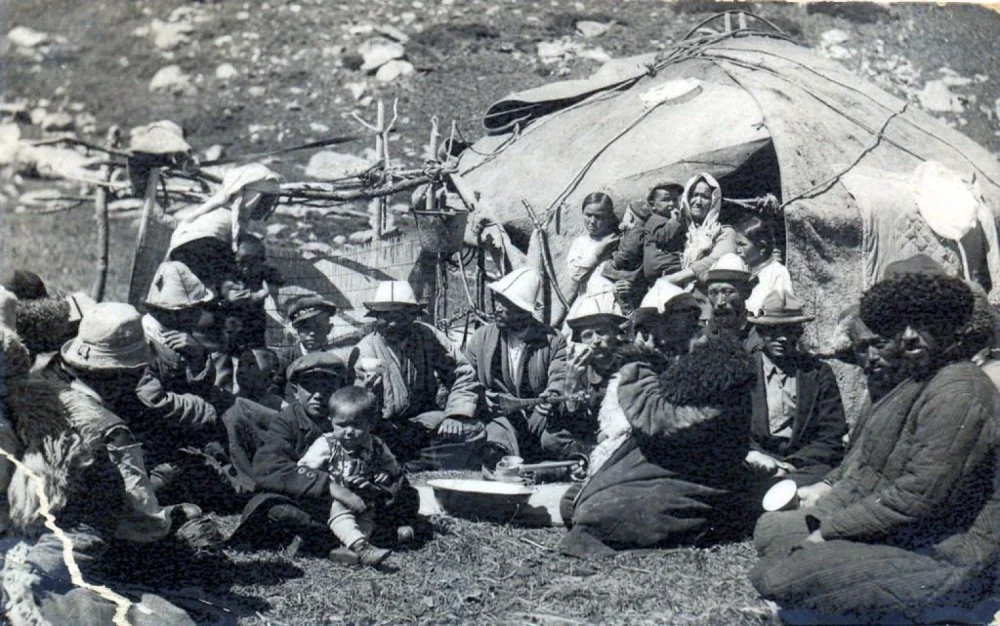
Still from the film "Asharshylyk 1933" / From open sources
Aqseleu Seidumbek, who performed Qarğys beautifully in the Apike version, wrote: ‘Abdi composed many wonderful küis. However, only two of his works have survived to the present day—Qarğys and Zar Qosbasar.iА. Сейдімбек. Қазақтың күй өнері. Монография. Астана: Күлтегін, 2002. p. 791.’
The Unintended Transformation of the Küi
After the period of persecution and executions that befell the küishis, a new era began—a time when küis increasingly celebrated Soviet rule, socialism, and communism. This period lasted for nearly half a century. Although the art of the küi had developed as an independent cultural tradition over many centuries, Soviet cultural policy regarded it merely as a form of folklore. It was believed that the further development of Kazakh music was possible only through the adoption of the European classical music tradition. Accordingly, a large-scale effort began to arrange and adapt traditional music for stage and chamber performance. The creation of orchestras and ensembles dedicated to traditional instruments marked a decisive turning point. From this period onward, the art of the küi underwent rapid transformation, evolving in a fundamentally different direction.
Of course, it cannot be denied that professional music education significantly expanded the expressive and technical possibilities of the Kazakh küi. It was during this period that a culture of stage performance began to take shape, giving rise to the first generation of professional Kazakh musicians and dombyra performers trained in European musical notation. They worked in concert ensembles of various levels and taught at educational institutions.
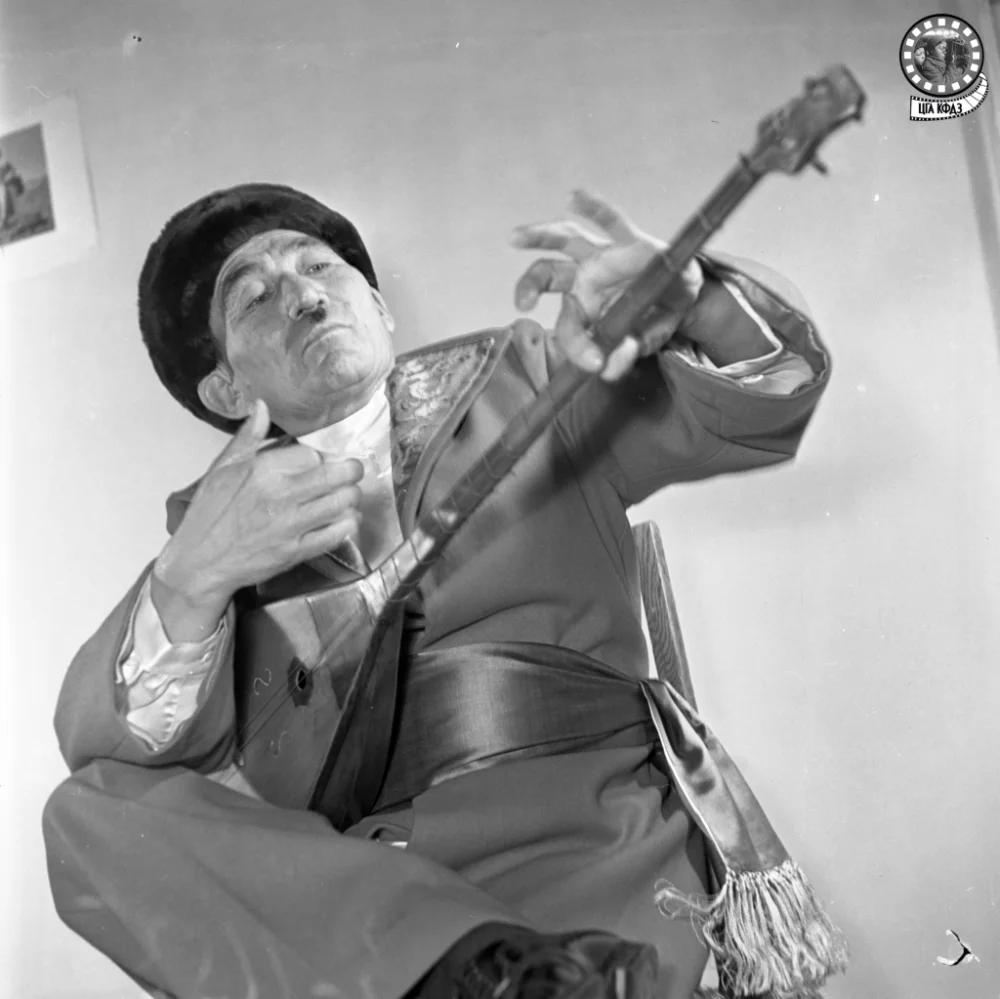
V. Pozdenko. "Uskenbaev M. — Akyn-Improviser, Composer, Virtuoso Dombra Player" (inv. No. 109). Alma-Ata. 1958 / Central State Archive of Film, Photo Documents and Sound Recordings of Kazakhstan (CSAFPDSR)
Having mastered musical notation, dombyra players gained the ability to perform works by Western European and Russian composers. Compositions for dombyra and piano also began to flourish, and concert works written specifically for this combination of instruments emerged.
The thematic content of Kazakh küis also changed, becoming increasingly shaped by political ideology. Compositions dedicated to the leaders of the proletariat, the Communist Party, workers and peasants, as well as the labor of rural populations became an established norm of creative expression.
Today, however, the system of dombyra training that took shape during the Soviet period has since undergone substantial revision. Modern curricula now place greater emphasis on the study of küi traditions, improvisational performance practices, the distinctive features of individual genres, and regional schools of interpretation.
Nevertheless, certain elements of Soviet-era methodology continue to persist. For example, the requirements of some küi performance competitions still mandate the inclusion of works by Western European and Russian composers, an approach that many regard as a legacy of the Soviet period. The appropriateness of such requirements remains the subject of ongoing debate among art historians, performers, küi scholars, and specialists in music education.
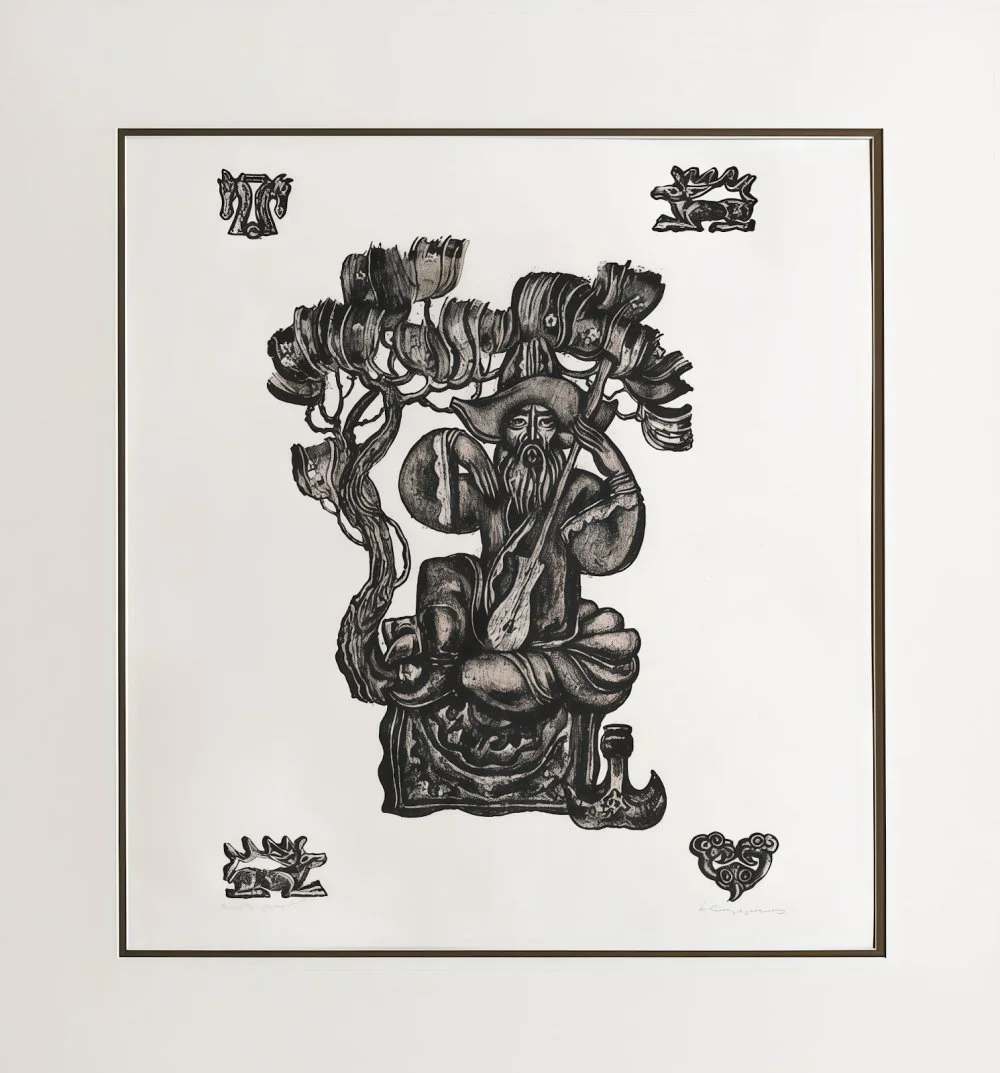
Yevgeny Sidorkin. "Storyteller" from the series "From the Mist of Centuries". 1971 / Bonart.kz
Be that as it may, the surviving works of Saryarka’s great küishis—including Sembek, Abdi, and Akhmetzhan—enable us to better comprehend the tragedy of a people that lived through years of national catastrophe. While this brief account of the lives and fates of Kazakh küishis during the radical upheavals of the twentieth century focuses on only a handful of figures, it nevertheless conveys both the suffering endured by traditional musicians and the profound blow dealt to the spiritual and cultural heritage of the Kazakh people. It was therefore no accident that the küishis expressed their judgment of Soviet power through music itself, leaving behind their own verdict—their own qarğys (curse).
