
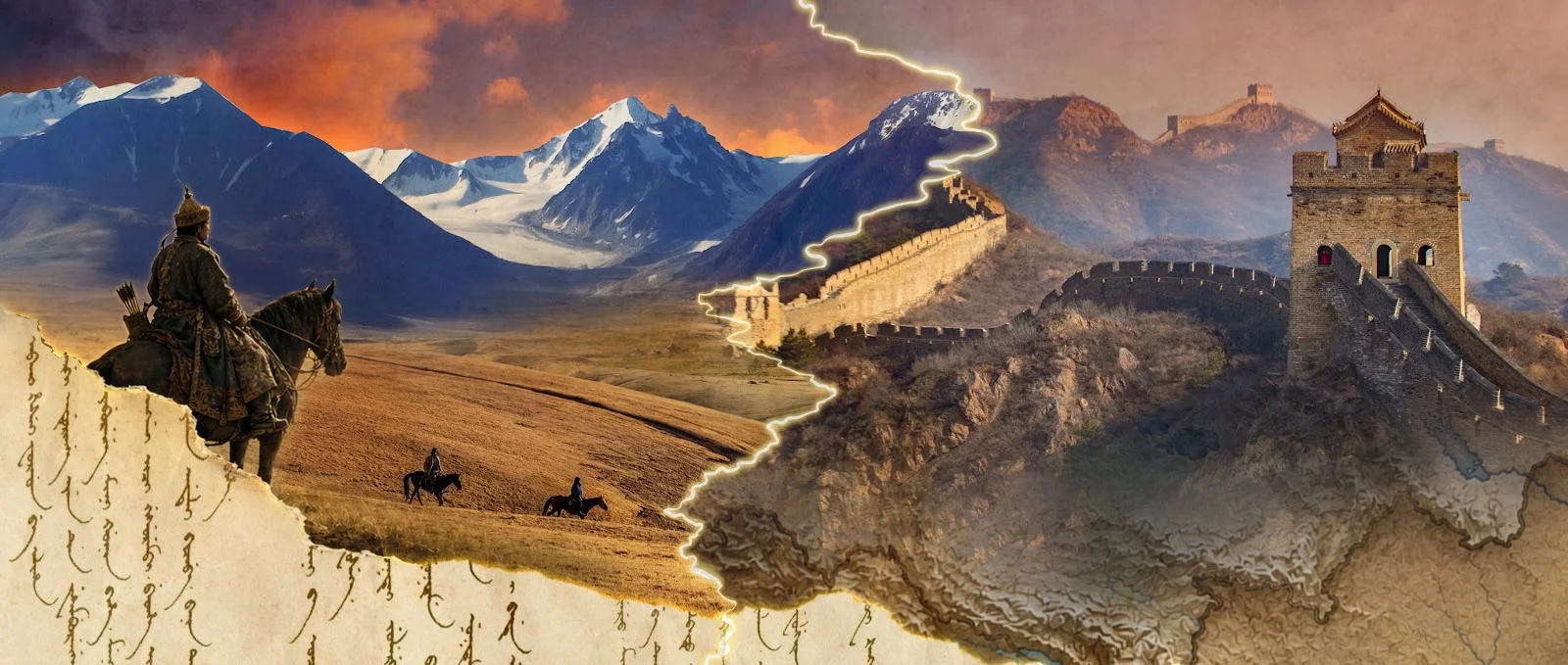
For nearly 5,000 years, states have drawn lines on maps—and then proceeded to dispute borders, sign peace treaties, and transform these dividing lines into spaces of trade and cooperation. The history of the modern Kazakh–Chinese border is no exception. It is not merely a story of twentieth-century diplomacy; it is instead the culmination of a centuries-long process stretching across the eras of the Xiongnu, the Turkic Khaganate, the Mongol Empire, and the Kazakh Khanate. And it is only in our own time—after millennia of shifting sands and loyalties—that the border was finally demarcated. This is the tale of how an ancient corridor of collision became a modern border of cooperation in the twenty-first century.
When the First Borders Appeared
Few conflicts in human history are as enduring as territorial disputes between states because at their heart, these are about the legal ownership of land, or more precisely, over where the borders between nations should lie. And too often, such disputes have led to war and even today, in the twenty-first century, they unfortunately continue to spark armed violence.
Perhaps the best example of this is the War of Umma and Lagash, the earliest documented conflict in history. It was fought nearly 4,500 years ago between the Sumerian city states of Umma and Lagash—roughly 1,250 years before the traditionally accepted date of the Trojan War—over the Gu'edena plain, a fertile borderland between the two states. This conflict is significant not only because it is the oldest recorded interstate war but also because of why it broke out. According to inscriptions carved into the walls of Lagash, the tensions erupted after the people of Umma violated a previous border agreement. In other words, the earliest-known chronicle of war refers to an even older treaty defining the boundary between the two states, a treaty whose text, unfortunately, has not survived.
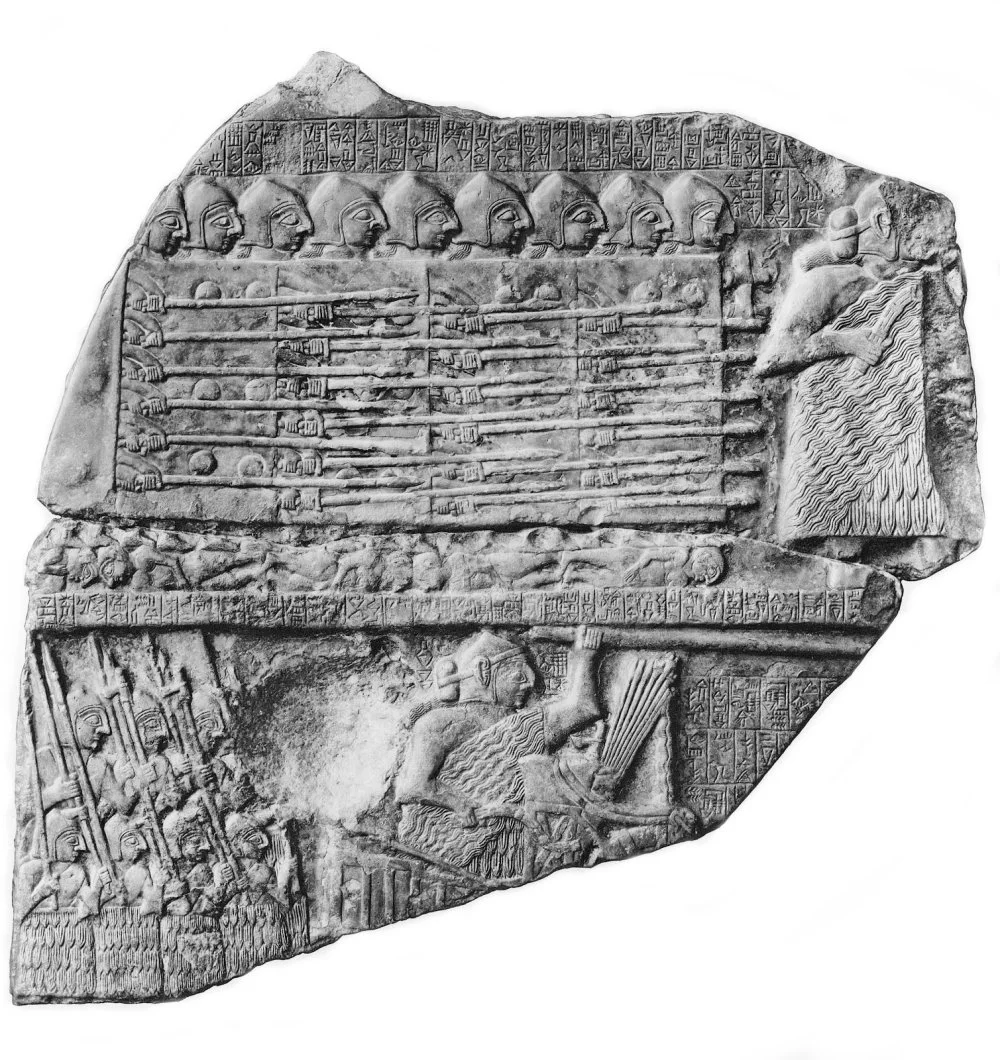
Stele of the Vultures: King Eannatum leading the army of Lagash over the bodies of defeated enemies. Girsu, c. 2450–2425 BCE / Musée du Louvre
Likewise, the oldest surviving peace agreement between two states—the Egyptian–Hittite Peace Treaty, concluded about 3,300 years ago and better known as the Treaty of Kadesh—also dealt with the division of Egyptian and Hittite lands. However, unlike the agreement between Umma and Lagash, it did not define the border in detail. Concluded by Ramesses IIi Ramesses II, often called Ramesses the Great, was the third pharaoh of Egypt's 19th Dynasty. He is renowned for his military campaigns and his extensive building projects like the Temple of Abu Simbel. and Hattusili IIIiHattusili III was a king of the Hittite New Kingdom who came to power after deposing his nephew and is most renowned for signing the earliest surviving peace treaty with Ramesses II. after years of warfare, the treaty introduced into diplomatic language many now-familiar pledges of eternal peace, friendship, and brotherhood, as well as mutual military assistance in the event of an attack by a third party. The treaty was written in two languages, authenticated with the official seals of both states—as international agreements still are today—and reinforced with a solemn guarantee of compliance and punishment for violation:
May the house, the land, and the servants of him who violates these words perish. May health and life be granted to him, his land, and his servants who preserve themiИстория дипломатии. Т. 1 / под ред. В. П. Потемкина. Москва, 1941. С. 22..
Steppe Diplomacy: Peace Instead of War
The practice of high diplomacy and the spirit of such international peace treaties were also widespread across the Great Steppe. The clearest example is the series of peace agreements between the nomadic Xiongnu EmpireiThe Xiongnu state was a powerful nomadic confederation, founded by Modu Chanyu, that dominated the eastern Eurasian Steppe until its fragmentation in the first century CE. and China's Han DynastyiThe Han Empire was China's second imperial dynasty (202 BCE–220 CE), a foundational golden age that expanded territory, opened the Silk Road, established Confucianism, and gave the Han Chinese their name.. China's policy toward the Xiongnu—sometimes referred to as the Huns—extended far beyond the construction of the Great Wall, just as the Xiongnu, often regarded as the ancestors of both Turkic and Mongolic peoples, pursued more than raids and warfare.
As with the world's earliest international peace treaty, which, in many ways, became the prototype for future diplomatic agreements, peace treaties between the Xiongnu and Han China were also concluded after prolonged periods of military conflict. The negotiations were conducted in accordance with what we would recognize today as standard diplomatic protocol: through official embassies and correspondence headed by senior officials. Some issues were settled during negotiations, while particularly important matters were addressed directly to the rulers in personal letters.
The best-known agreement, concluded in 162 BC between the Xiongnu and Han empires, clearly demonstrates the structure of an international peace treaty. Fortunately, the entire diplomatic process was meticulously recorded in the Shiji (Records of the Grand Historian) by Sima Qian, the official historian of the Han dynasty, widely regarded as the father of Chinese historiography. He also preserved the letter sent by Laoshang Chanyu, the ruler of the Xiongnu Empire, to Emperor Wen of Han:
Peace has been established between our two states on the basis of kinship. We, the rulers of both realms, enjoy this peace, have ceased our wars, given our soldiers rest, and turned our horses out to pasture. Generation after generation, the people will prosper and rejoice, and in tranquility begin a new lifeiСыма Цянь. Исторические записки (Ши цзи). Том VIII. Москва. 2002. С.338.
The emperor's reply to the Xiongnu ruler was equally rich in the language of goodwill and brotherhood, a rhetoric not always characteristic of the Chinese imperial court:
I cast my thoughts back to the past, when petty matters and insignificant grievances, together with the misguided counsel of advisers, nearly destroyed the joy of our brotherly relations. I have heard that Great Heaven does not shelter one group alone, and that Earth bears all people without distinction. Therefore, let both you, Chanyu, and I cast aside the small troubles of the past and embark upon the Great Way, erasing former wrongs for the sake of a lasting future, so that the peoples of our two states may become the children of one familyiСыма Цянь. Исторические записки (Ши цзи). Том VIII. С.339..
Nevertheless, despite the exceptionally warm and diplomatic tone of this more than 2,000-year-old treaty ‘founded upon kinship’, it contained explicit provisions concerning the border between the two empires along with severe penalties for violations:
The Xiongnu shall not enter the border zone, and the Han shall not cross their own frontier. Anyone who violates this condition of the treaty shall be put to death. This will preserve our lasting friendship and spare us future calamities, serving the common interests of both sides. I have already approved these terms and ordered that the treaty be proclaimed throughout the empire for all to knowiСыма Цянь. Исторические записки (Ши цзи). Том VIII. С.339-340
Where Does the Silk Road Begin?
It is worth remembering that the treaties between China and the great empires of the steppe were concerned with more than strategic affairs and border delimitation. They also covered extensive commercial relations, in which the Xiongnu—and later the Turkic states—played a crucial logistical role, often serving as the sole official intermediaries in the silk trade. So influential were these middlemen that silk itself became, for a time, an international currency, exchanged for the one thing that China coveted and valued above all else: horses.
Indeed, according to Chinese chronicles, the very idea of establishing the Silk Road was directly linked to the renowned Han dynasty diplomat and explorer Zhang Qian's diplomatic mission to Central Asia, which was undertaken in an effort to acquire the region's famed ‘Heavenly Horses’ for Emperor Wu of Han.
At the same time, the Xiongnu alone received twenty-seven tons of silk annually from the Han Empire as tribute in return for maintaining peaceful relations. This gave them control over enormous flows of silk, much of which they sold through Sogdian merchants. But it is worth remembering that silk and horses were far from the only goods traded. During his journey, Zhang Qian also described thriving frontier markets that were located where the territories of the Han Empire and the Xiongnu intersectediNicola Di Cosmo, ‘The Relations between China and the Steppe: From the Xiongnu to the Türk Empire’, in Empires and Exchanges in Eurasian Late Antiquity. Rome, China, Iran, and the Steppe, ca. 250–750, eds. Nicola Di Cosmo & Michael Maas (Cambridge: 2018): 40.
With the rise of the Turkic Khaganate and following its transformation into a vast transcontinental empire, this strategy of defining borders, fostering good neighborly relations, and keeping the frontier trade flowing passed to the Turks. As Chinese sources documenting diplomatic relations during the Northern Zhou, Sui, and Tang dynasties tell us, China's foreign policy was largely focused on the Eastern Turks. However, the Turks themselves were playing a different game; they were driven primarily by economic profit rather than by military or political interestsiГаниев Р. Т. Внешняя политика Китая в VI–VIII вв. по отношению к восточным тюркам в Центральной Азии // Известия Уральского государственного университета. Сер. 2: Гуманитарные науки. 2011. № 3 (93). С.66.
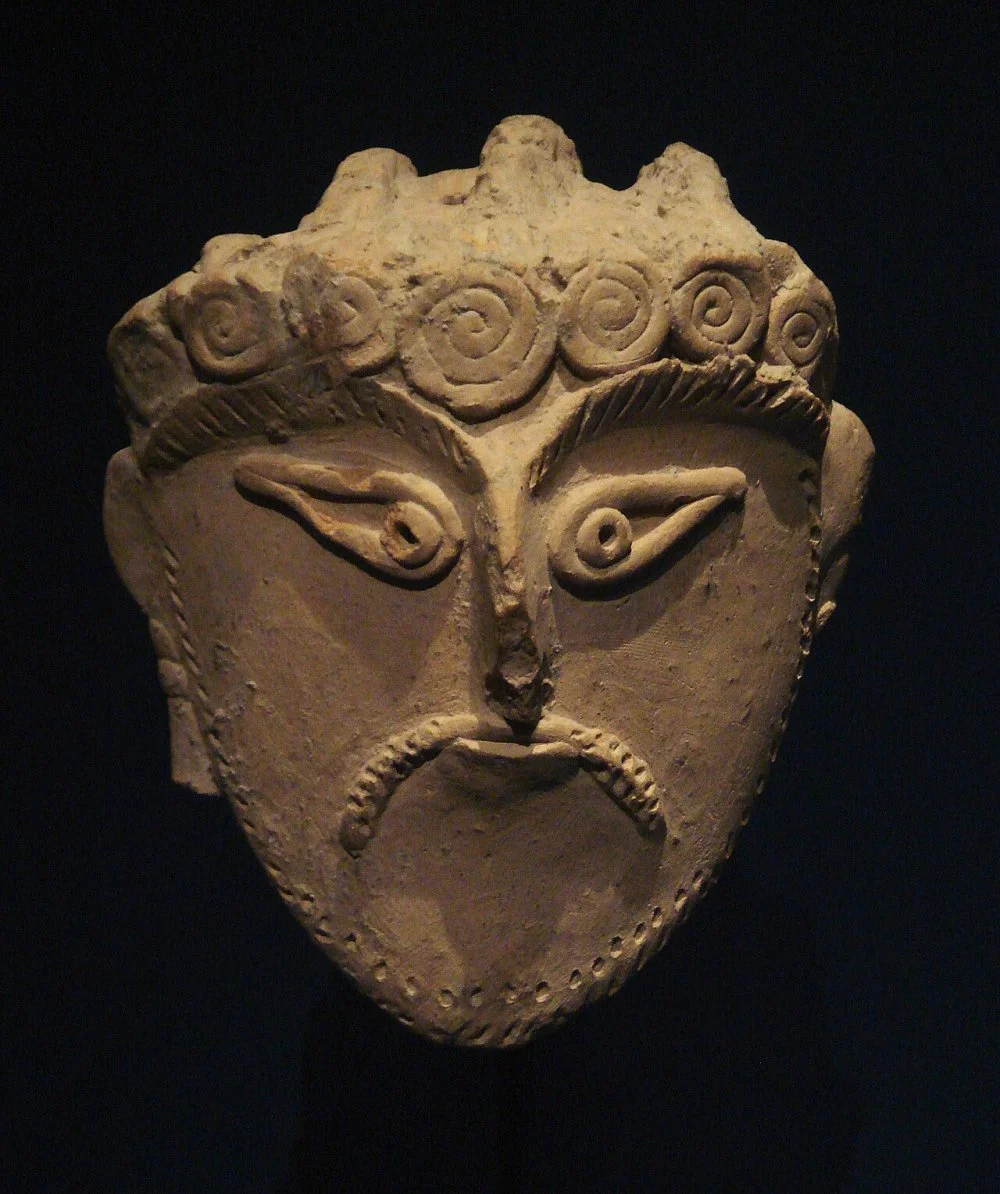
Turkic head, 5th–7th centuries CE. Afrasiyab, Samarkand (photograph of the artifact) / Wikimedia Commons
According to these Chinese sources, such mutually beneficial relations—built upon prior agreements, including the mutual recognition of borders and territories—became a cornerstone of regional stability. With its extensive sphere of influence, the Turkic Khaganate safeguarded China's northern frontier, while commerce flourished, providing both powers with stable and secure markets for their goods.
Along with dynastic marriages, diplomatic exchange between the two states also relied upon ceremonial gifts for rulers and elites. The Chinese primarily presented silk, while the Turks offered horses. Yet Chinese sources do not always distinguish clearly between diplomatic gifts, tribute, and reciprocal trade. For example, the Zhou Shu (The History of the Zhou Dynasty)iThe Zhou Shu (The History of the Zhou Dynasty) is the official history of the Northern Zhou dynasty compiled in the seventh century under the supervision of the historian Linghu Defen. records an annual ‘gift’ of 100,000 bolts of silk to the Turks, while the Tang Shu (The Book of Tang)iThe Tang Shu is an official history of China's Tang dynasty, compiled during the Song dynasty in 1060, and is part of the Twenty-Four Histories. refers to a special imperial authorization allowing the Turks (Tujue) to conduct trade in the western regions of the Tang EmpireiIbid., 68.
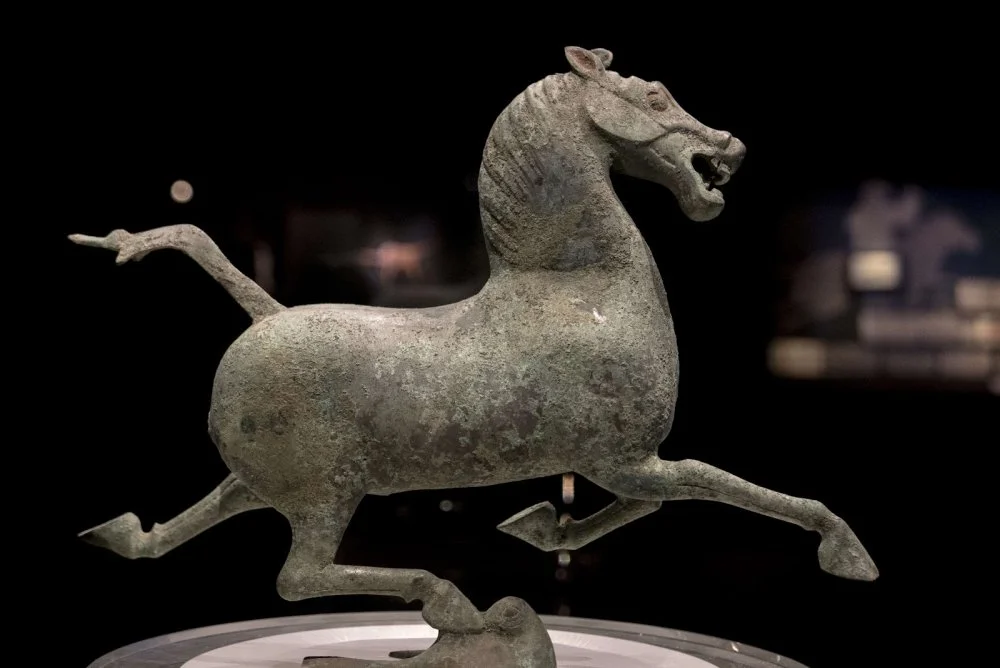
Flying Horse. Bronze statuette. China, Gansu Province. Han Empire period (2nd–3rd centuries CE). Similar depictions of horses spread in China after the introduction of horses from Central Asia, which were regarded as “heavenly” creatures / Getty Images
This traditional pattern of diplomatic and commercial relations between China and the Great Steppe was temporarily interrupted during the height of the Mongol Empire. In the thirteenth century, Chinggis Khan united the previously fragmented Turkic and Mongol tribes, and his descendants went on to conquer all the neighboring states, including China. And thus emerged the largest contiguous empire in human history, encompassing all of the principal overland routes of the Silk Road. International borders that had previously separated individual states were, for a time, absorbed into a single imperial realm.
As stability gradually returned to the region after the devastation of war, trade routes and economic ties were restored. The introduction of the yam postal relay system, special travel passes known as paiza guaranteeing safe passage and authority along the way, and the standardization of currency, weights, and measures fostered an unprecedented expansion of commerce across Eurasia.
The subsequent disintegration of the Mongol Empire—and later of the Golden Horde (the Ulus of Jochi)—led to the emergence of new states, among which was the Kazakh Khanate. At the same time, the rapid expansion of the Qing Empire following the fall of the Dzungar Khanate once again brought China and the states of Central Asia into direct diplomatic contact, renewing frontier trade and raising the need to regulate their common border.
Ablai Khan and Kazakh Diplomacy
No figure looms larger in the story of the relations between the Qing Empire and the Kazakh Khanate than Ablai Khan himself. An outstanding military commander and statesman, he succeeded in preserving Kazakh statehood during an era marked by devastating wars, internal strife, and the ever-present shadow of two towering empires vying for dominance over Eurasia.
Following a series of meetings and negotiations with Qing representatives, Ablai dispatched a diplomatic mission to the Qianlong EmperoriThe Qianlong Emperor (1711–1799) was the fourth Qing emperor whose six-decade reign marked the dynasty's territorial zenith and cultural golden age. in 1757. The emperor welcomed the Kazakh envoys with these words:
You Kazakhs were unable to send us envoys and tribute only because the Dzungars blocked your way. The emperor wishes for you to live in prosperity and contentment. You may continue to follow your own customs. Whether or not you pay tribute is your own decision. But should you send envoys to pay their respects to the emperor, he will show you special favoriНабижан Мухаметханулы, «Казахское ханство и Империя Цин. Лекция 4», Qalam.
From that moment onward, diplomatic relations between the Kazakh Khanate and the Qing Empire acquired official status. At the same time, however, both states quietly entered into a struggle over the former territories of the Dzungar Khanate, where Qing authorities began constructing frontier embankments and military outposts stretching from the Irtysh River to the Ili Valley.
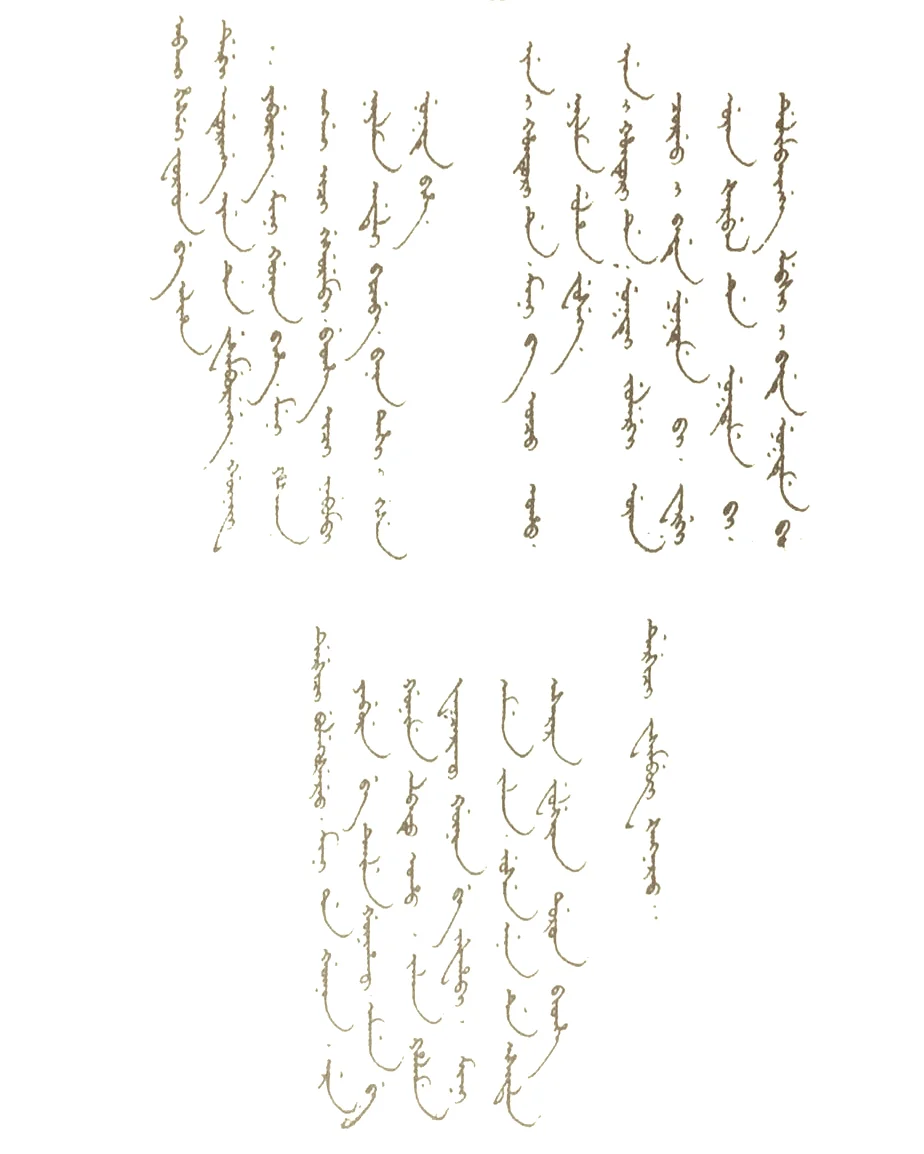
Letter of Abylai Khan to the Chinese Emperor. 1760 / Wikimedia Commons
Thus began Ablai Khan's sustained diplomatic campaign to recover what he regarded as the ancestral lands of the Kazakhs—Altai, Ili, and Tarbagatai—which had come under Qing control after the collapse of the Dzungar Khanate. In response to his petition requesting permission for Kazakh herders to graze their livestock in the Ili region, the Qing court dismissed his claims as ‘excessive’. Nevertheless, in 1767, the Qing Empire ultimately yielded to Ablai Khan's persistence and political arguments, allowing the Kazakhs to use pastures beyond the frontier in exchange for payment of a land tax.
It is important to remember that despite the profound crisis facing the Kazakh Khanate at the time, relations between the Kazakh Khanate and the Qing Empire were conducted on the basis of sovereign equality. The Qing authorities neither sought to interfere in Kazakh internal affairs nor attempted to station officials to oversee Kazakh governance.
In the meantime, the establishment of formal diplomatic relations also encouraged the growth of frontier trade. Beginning in 1760, special markets were opened in the Khorgos region specifically for commerce with the Kazakhs. These proved so successful that similar centers soon followed in Tarbagatai.
What made this trade unique was its official character. On both sides, the Qing and Kazakh governments oversaw every aspect of the exchange—this was commerce by design, not by accident. Unlike merchants from other Central Asian states, who were subject to customs duties, trade with the Kazakh Khanate was conducted duty-free, a diplomatic gesture with real economic weight.
This arrangement endured until the beginning of the nineteenth century, when the Russian Empire annexed the territories of the Kazakh Khanate and advanced to the frontiers of the Qing Empire. Thereafter, virtually all negotiations and disputes concerning the border were conducted between the Russian and Qing empires, with little direct participation from the Kazakh side. The same situation persisted throughout the Soviet era.
The Last Border of Eurasia
Ironically, the principal source of the later territorial disputes between the Soviet Union and the People's Republic of China (PRC) lay precisely in the treaties concluded between the Russian Empire and the Qing Empire—or, more accurately, in their ambiguity and lack of precision. The conflict reached its peak with the armed clashes between the USSR and the PRC in 1969. Thus, by the time the Soviet Union collapsed and the Central Asian republics gained their independence, the states bordering China faced the difficult and protracted task of resolving long-frozen territorial disputes and completing the final demarcation of their international borders.
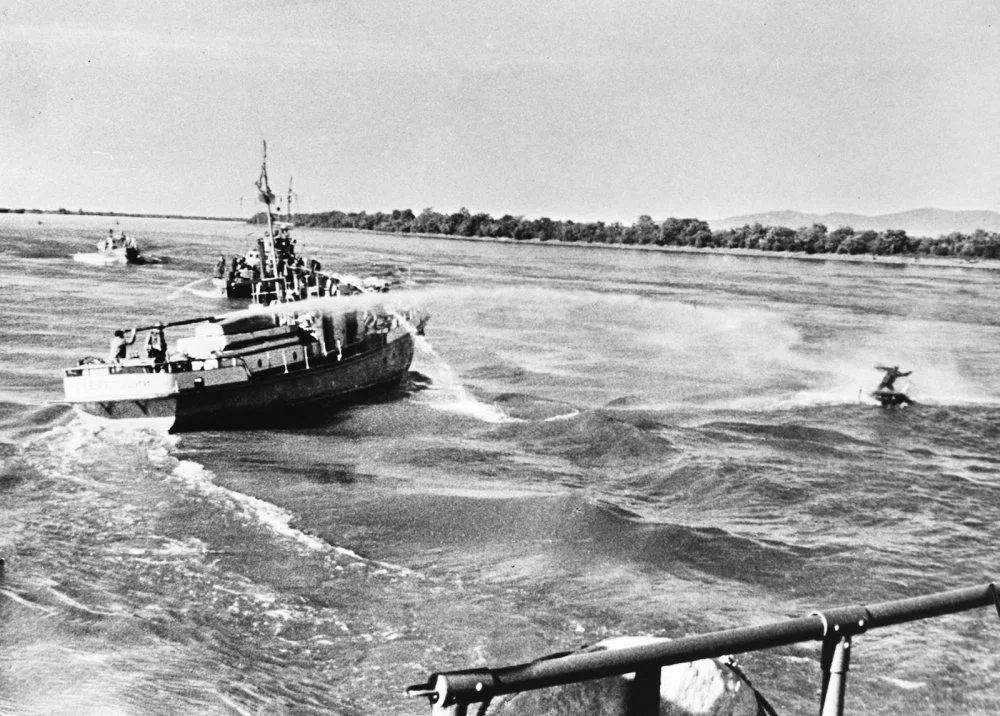
A Soviet vessel sprays a Chinese fishing vessel with a water cannon during the Sino-Soviet border conflict. Ussuri River, 6 May 1969 / China Photo Service, Nationaal Archief of the Netherlands
Along the Kazakhstan–China frontier, there were fifteen disputed sectors. Like the earlier disagreements, they stemmed from the Russo-Qing treaties of the nineteenth century, and some had never been physically demarcatediM. Taylor Fravel, Strong Borders, Secure Nation. Cooperation and Conflict in China's Territorial Disputes (New Jersey & Oxford: 2008).
Following several rounds of negotiations in April and July 1993, Kazakhstan and China reached preliminary agreement on most of these sectors. After two additional rounds of talks, the two sides signed the Agreement on the Kazakhstan–China State Border on 26 April 1994, which entered into legal force on 11 September 1995. Under its terms, some of the disputed areas came under Chinese sovereignty, while others passed to Kazakhstan.
The next stage was the hard part: a lengthy and demanding process of physically demarcating the border. Between 1996 and 2001, six joint working groups—composed of Kazakh and Chinese surveyors, cartographers, and officials—fanned out across the vast steppe. They worked together to demarcate a 1,783-kilometer frontier, stretching across deserts, mountains, and grasslands. In some places, the boundary followed rivers and lakes, winding with the natural curves of the water; in others, it cut straight across open country, marked by concrete posts and stone pillars.
The process was formally concluded on 10 May 2002 in Beijing, when the Ministers of Foreign Affairs of the Republic of Kazakhstan and the People's Republic of China, Kassym-Jomart Tokayev and Tang Jiaxuan, signed the Protocol on the Demarcation of the Kazakhstan–China State Border.
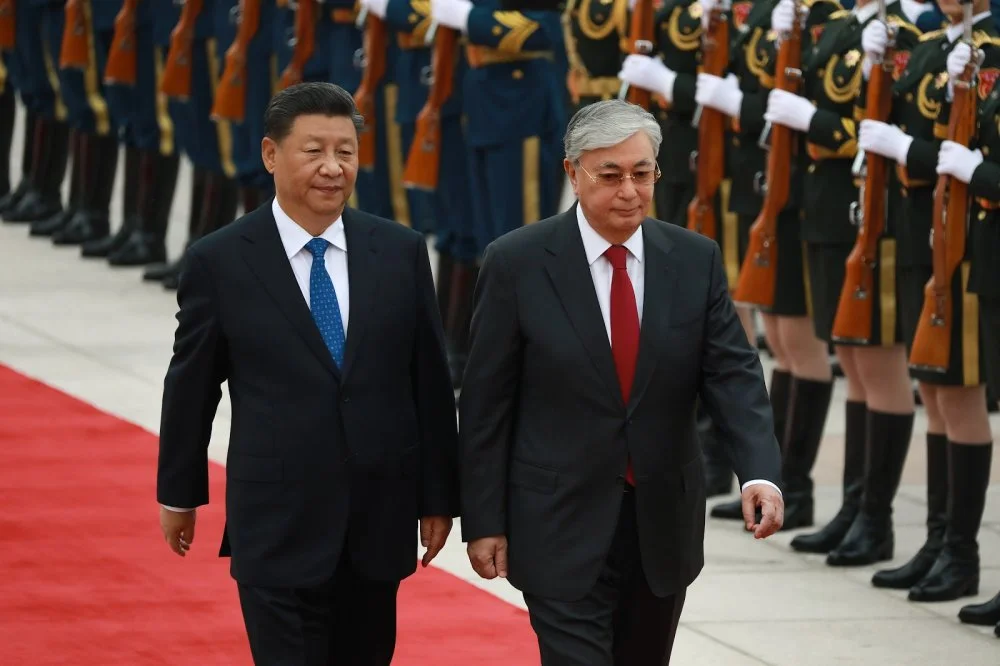
Kassym-Jomart Tokayev and Xi Jinping during the official welcoming ceremony at the Great Hall of the People. Beijing, China, 11 September 2019 / Getty Images
For thousands of years, the border between states has alternated between serving as a line of division and a space for cooperation, where wars gave way to negotiations and diplomacy opened the door to trade. Today, as in the era of the Great Silk Road, the Kazakh–Chinese border is once again becoming a bridge between East and West, connecting the largest markets of Eurasia and reaffirming a simple historical truth: the strongest borders are those that unite.
